Yogyakarta
Borobudur
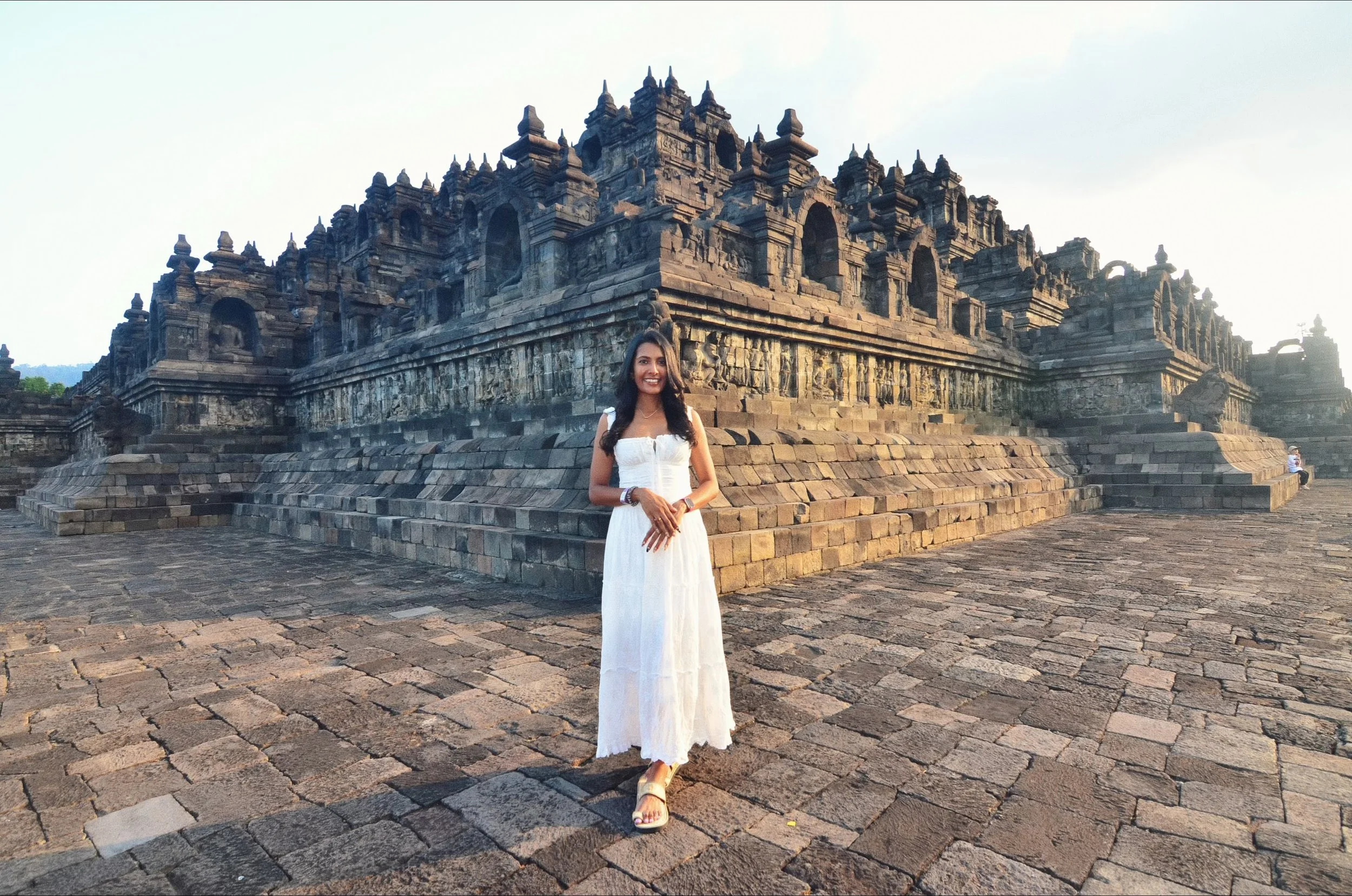
There is something magical about arriving at Borobudur as the afternoon heat begins to soften. The crowds gradually thin, the light turns golden, and one of the world's greatest monuments seems to slow down with the setting sun.
For international visitors, admission to climb the temple structure costs IDR 455,000 and includes a scheduled guided tour. To protect the ancient stone from erosion, every visitor exchanges their own footwear for a pair of traditional Upanat sandals, specially designed with soft soles that are gentle on the temple. You are allowed to keep the sandals as a souvenir after your visit.
Before ascending, visitors are also given a lightweight shawl to wear. Besides adding a sense of ceremony, it reflects the respect shown towards this sacred UNESCO World Heritage Site. Dressed in our shawls and carrying our new sandals, the experience felt less like entering a tourist attraction and more like stepping into a place of quiet reverence.
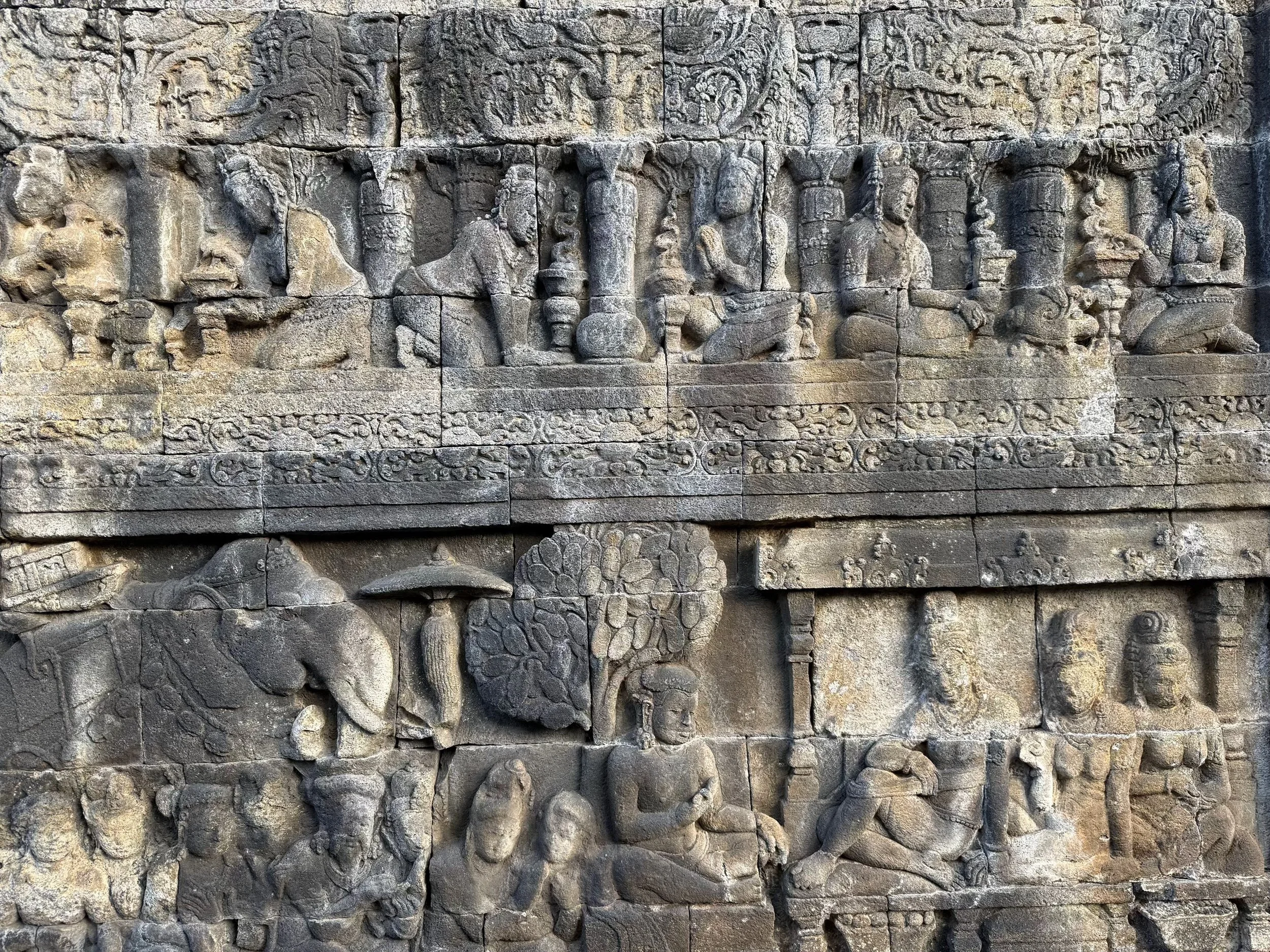
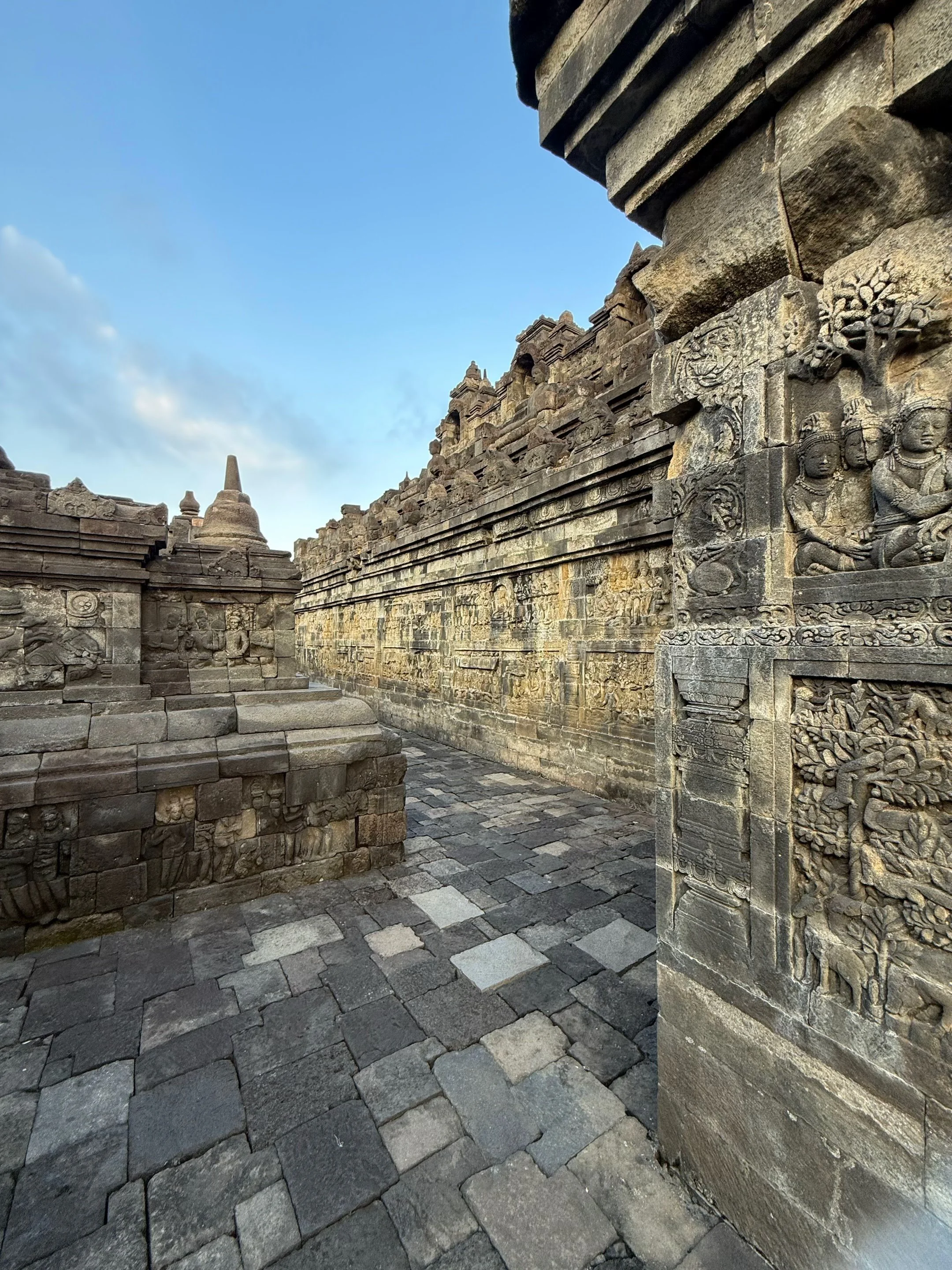
Our guide led us through centuries of history as we slowly climbed the terraces. The temple's thousands of volcanic stone reliefs tell stories of compassion, wisdom, and everyday life in ancient Java. Every carving seemed to reveal another detail that would have been easy to overlook without someone to explain its meaning.
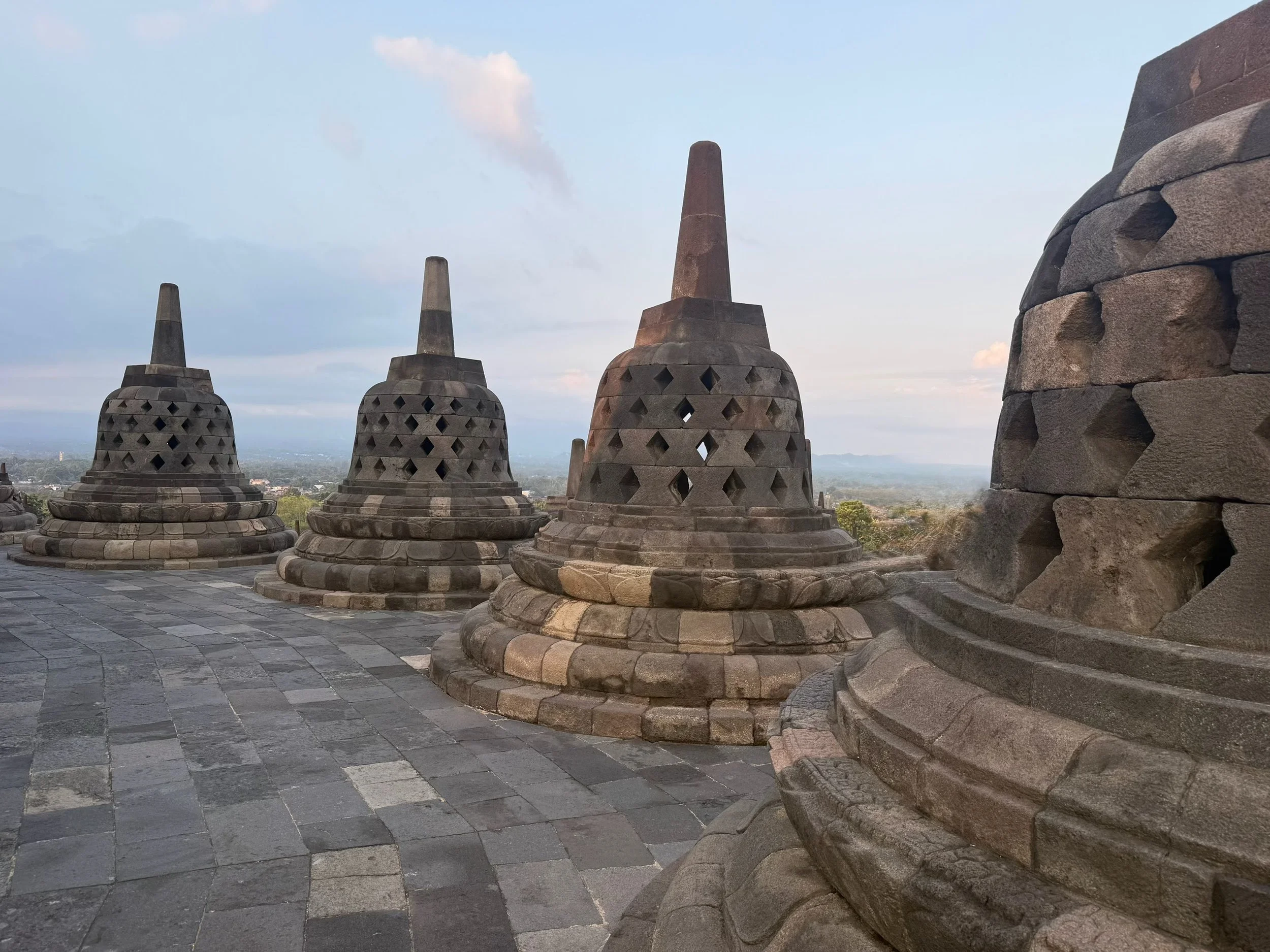
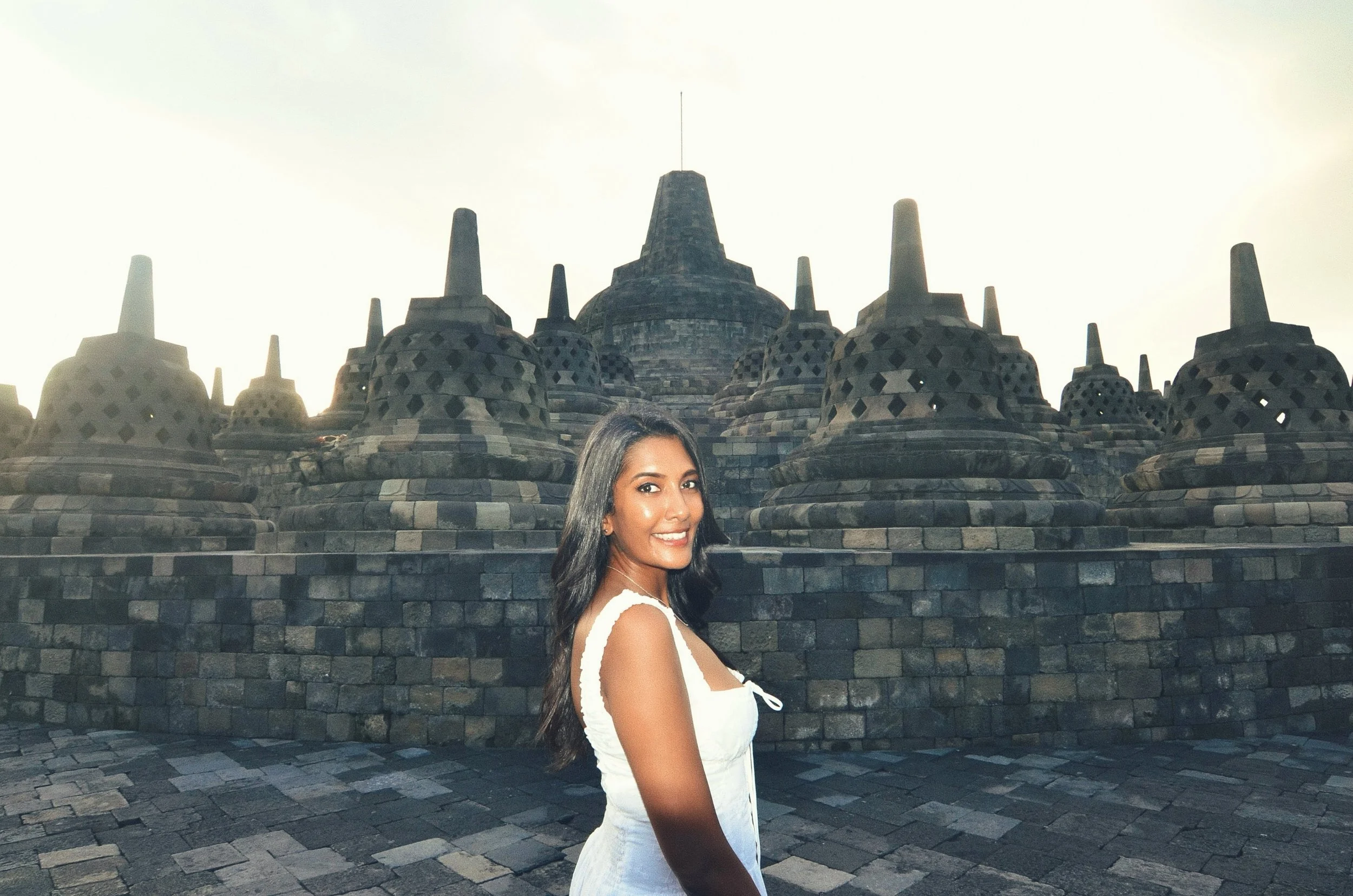
By late afternoon, the sun began casting long shadows across the bell-shaped stupas. The harsh midday light had disappeared, replaced by a warm amber glow that transformed the grey volcanic stone into shades of gold. It was impossible not to stop every few steps simply to admire the changing colours.
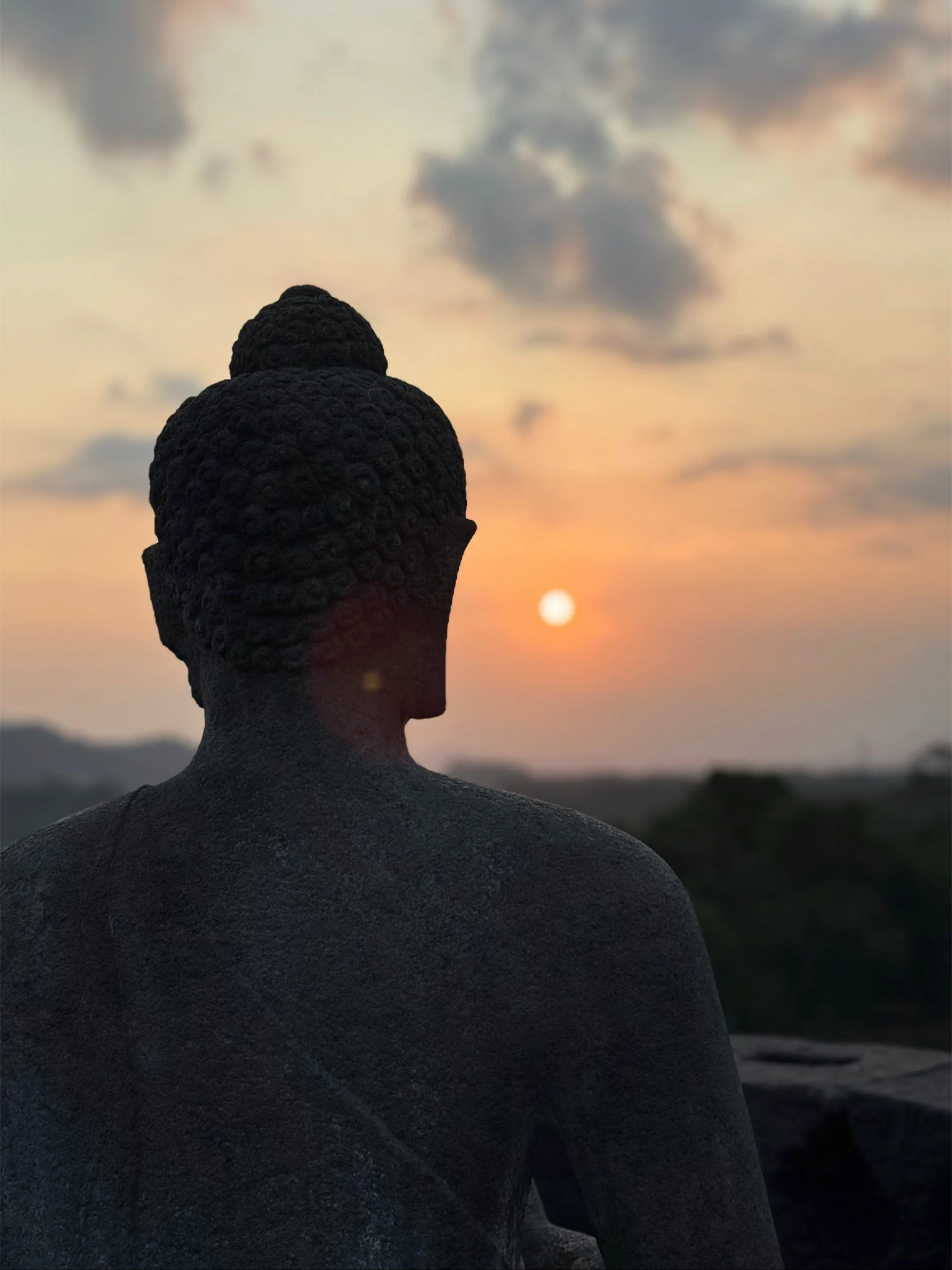
Standing on the highest terrace, the landscape stretched endlessly in every direction. Rice fields shimmered in the fading light while the silhouettes of Mount Merapi and Mount Merbabu stood proudly on the horizon. As the sun slowly dipped below the mountains, the sky turned from gold to soft pink before fading into deep shades of orange and purple. It was one of those rare moments when an entire crowd became silent, content simply to watch nature perform.
Field Notes
10 floors to reach the top of Borobudur
You can engage photographers ( dressed in blue) to take pictures of you in Borobudur. Approx. USD 50-70 for all raw images ( negotiable)
USD 25 entry fee
A free tram service brings you from the entrance of the complex to the temple entrance
Plaosan Temple
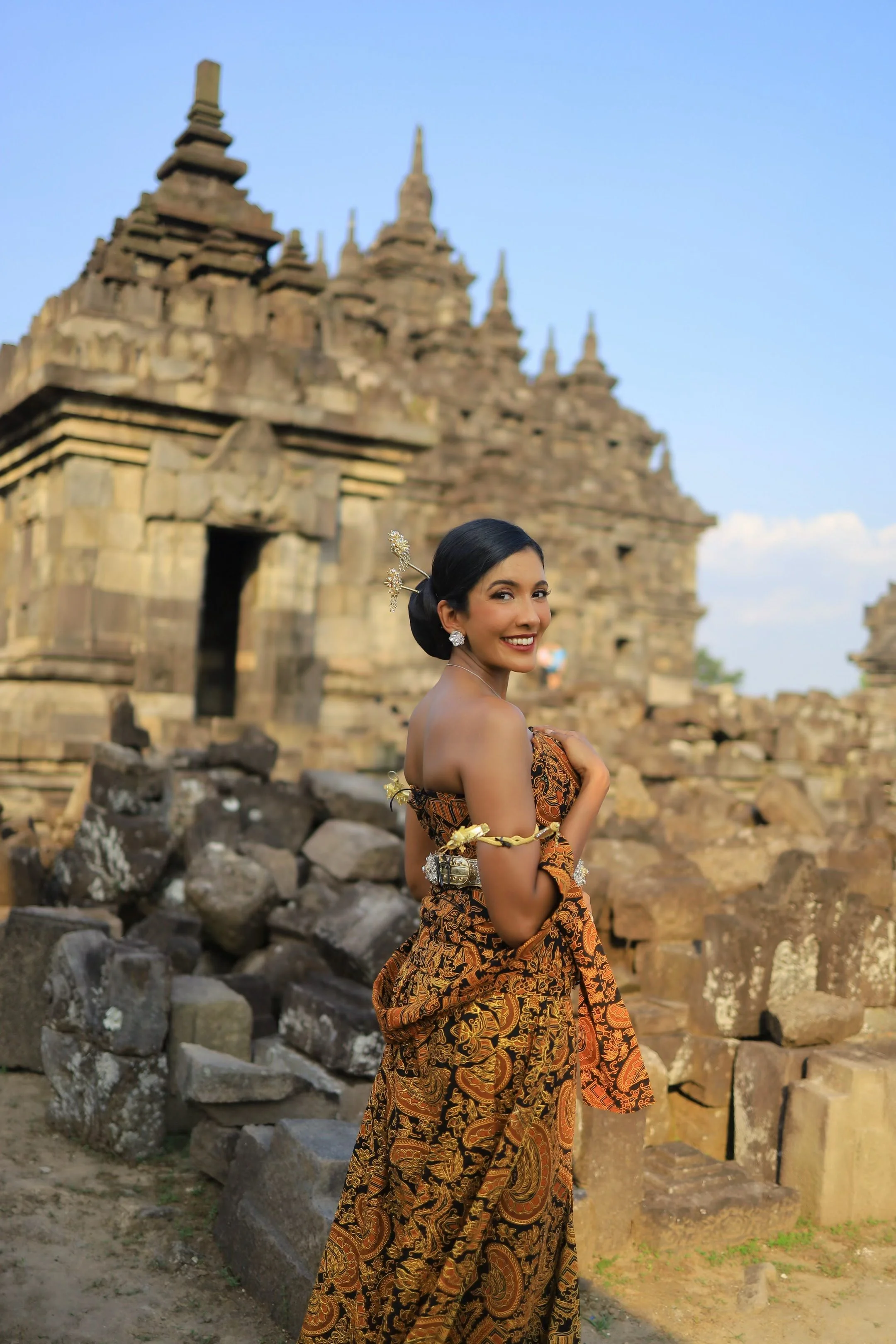
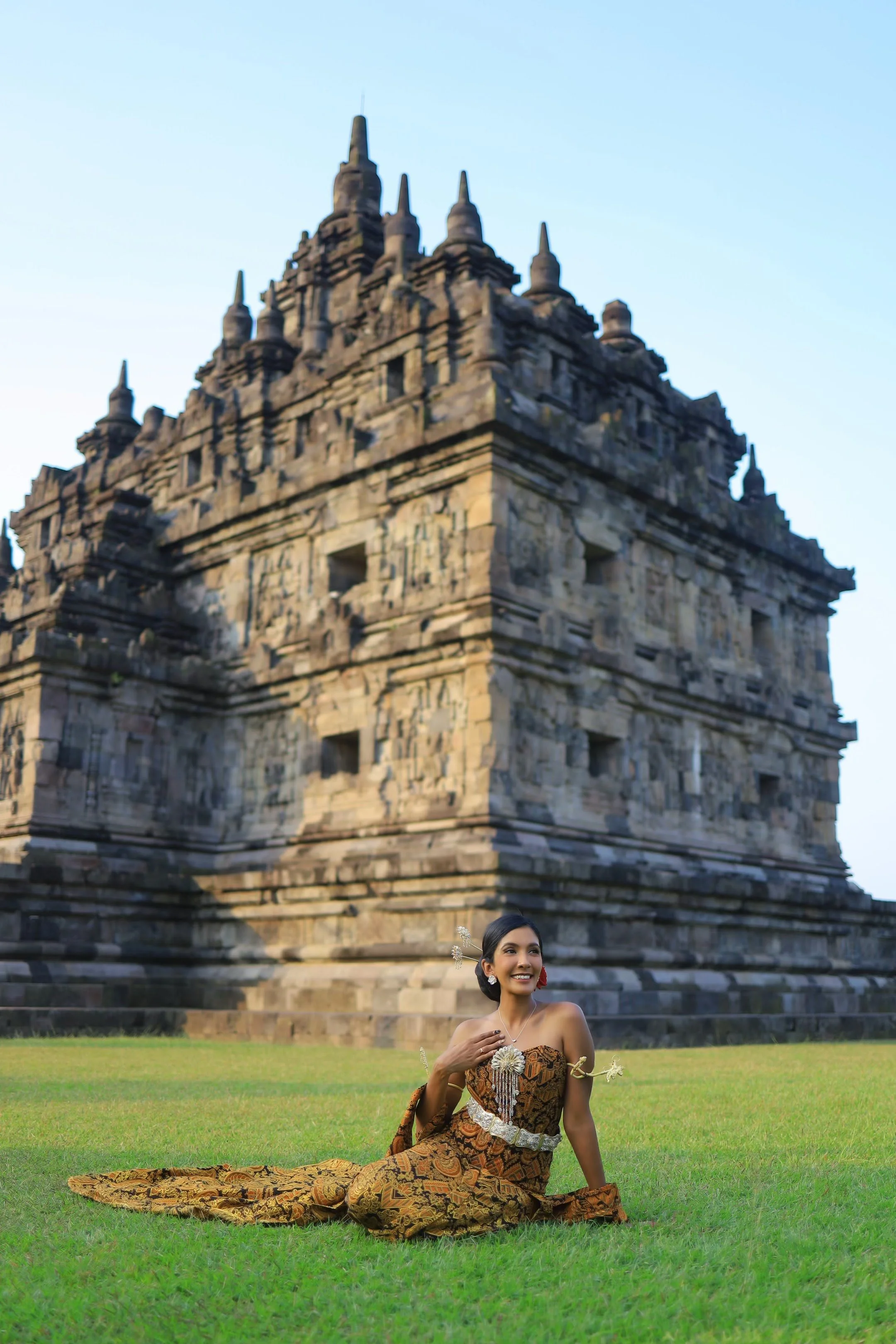
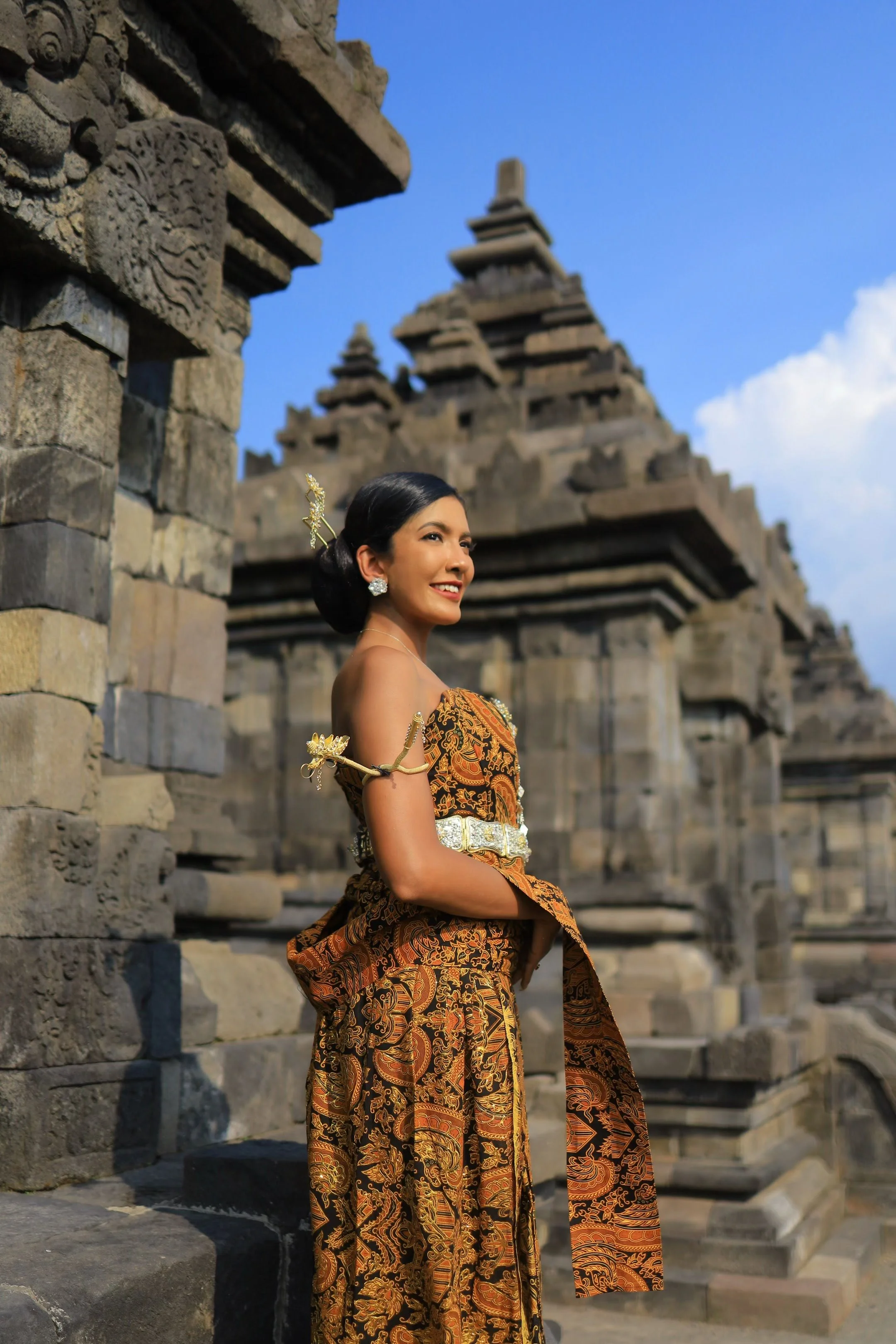
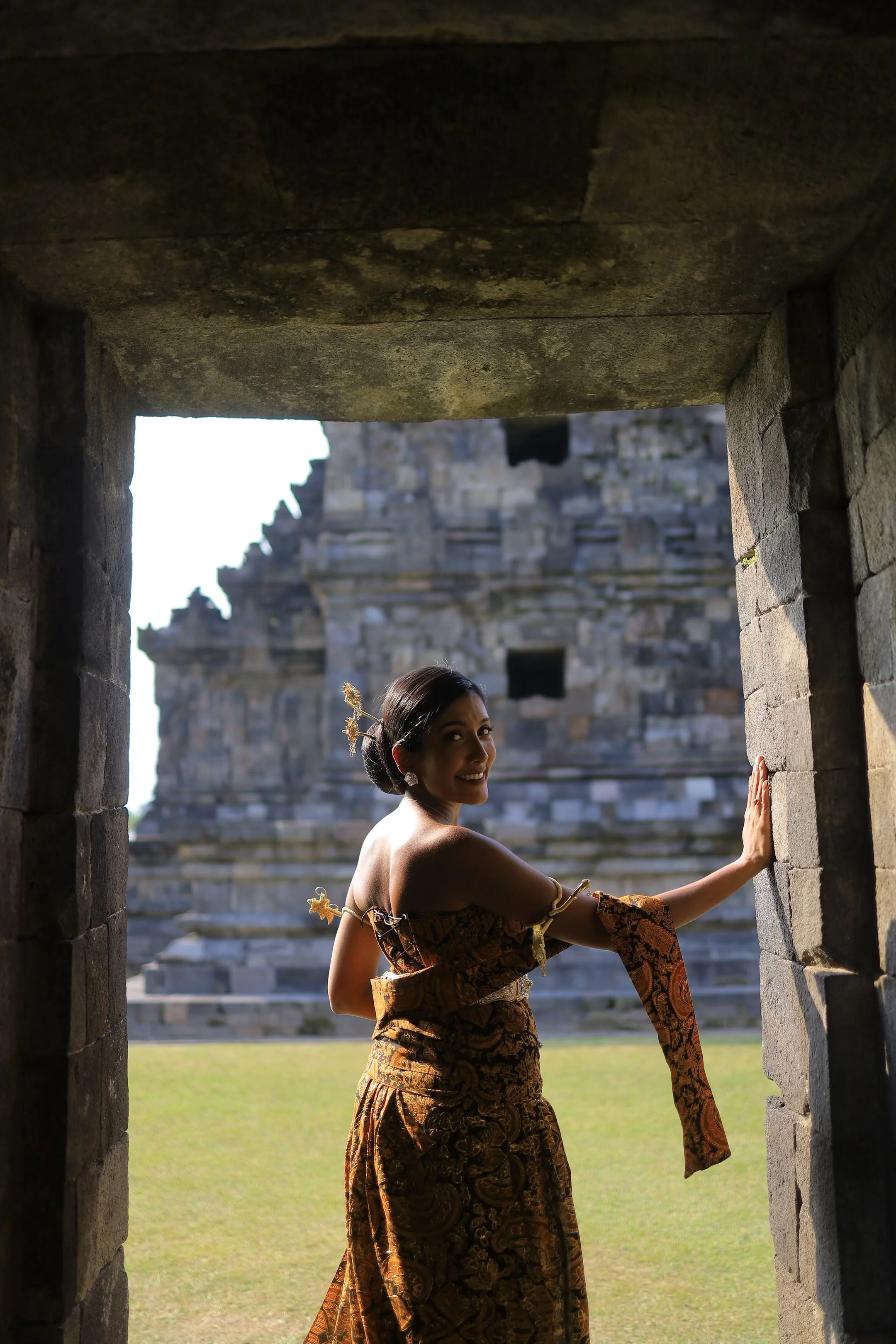
One of the highlights of our Yogyakarta journey was dressing in traditional Javanese attire for a photoshoot at Plaosan Temple.
Unlike the bustling crowds at Borobudur, Plaosan offered a quieter and more intimate setting. Surrounded by lush rice fields and framed by the distant slopes of Mount Merapi, the 9th-century Buddhist temple provided a breathtaking backdrop where history and nature blended effortlessly.
Plaosan is often known as the Temple of Love, believed to have been built by the Buddhist Princess Pramodhawardhani and her Hindu husband, Prince Rakai Pikatan—a remarkable symbol of harmony between two faiths. That story gave the experience even greater meaning, making every photograph feel like a celebration of love, unity and cultural heritage.
Dressed in an elegant kebaya, complete with intricate batik fabrics, traditional accessories and beautifully styled hair, we wandered through the temple complex as our photographer guided us between weathered stone corridors, towering stupas and centuries-old carvings.
Field Notes:
Photoshoot at Plaosan: Rosimotoo +62 81224412073/ @rosimotoo. It costs about USD 50- 100, depending on the package you pick. My outfit rental, makeup, and hair cost me approximately USD 55
Arrange your own transport to Plaosan, and your photographer will apply for the necessary permits (cost included in the photoshoot price). All raw images will be sent to you via Google Drive
I would suggest bringing your own makeup, I am 99% sure I contracted conjunctivitis after using their eye makeup :(
Do not sit or rest on the ruins; the temple is patrolled by security and drones
Jomblang Cave
Hidden within the karst landscape of Gunungkidul, about 90 minutes from Yogyakarta, Jomblang Cave isn't a cave you simply walk into. It's a vertical sinkhole, formed thousands of years ago when the earth collapsed, creating a 60-metre shaft that leads to an underground world unlike anywhere else in Indonesia.
After a safety briefing, we were fitted with helmets, harnesses and gumboots before approaching what looked like a giant opening in the forest floor. One by one, each of us was carefully lowered into the darkness using a traditional rope-and-pulley system, operated by an experienced local team. As the surface slowly disappeared above us, towering walls draped in ferns and moss surrounded us, making the descent feel both exhilarating and surreal.
The moment my feet touched the cave floor, it felt as though I had stepped into another world.
At the bottom lies an ancient forest—an isolated ecosystem that has flourished for centuries after the collapse carried soil and vegetation deep underground. Giant trees, vines and lush greenery thrive beneath the towering limestone walls, creating a hidden oasis untouched by time. The silence was remarkable, broken only by dripping water and the occasional call of birds echoing through the cavern.
From there, we trekked through a muddy tunnel, scrambling over rocks and navigating shallow streams beneath a ceiling adorned with stalactites. Headlamps lit the way as we ventured deeper into the cave, never quite knowing what awaited around the next bend.
Then, almost without warning, the darkness gave way to light.
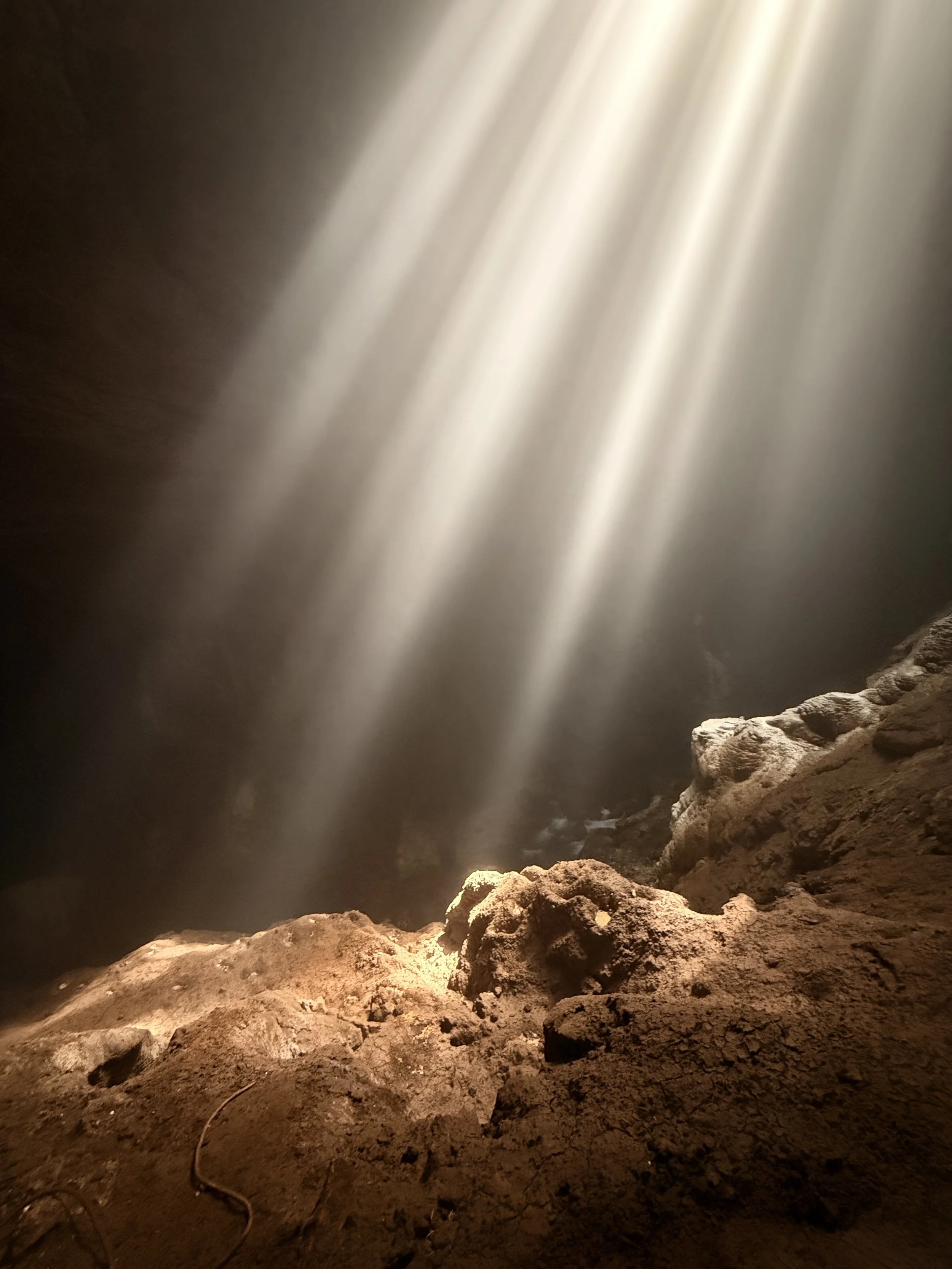
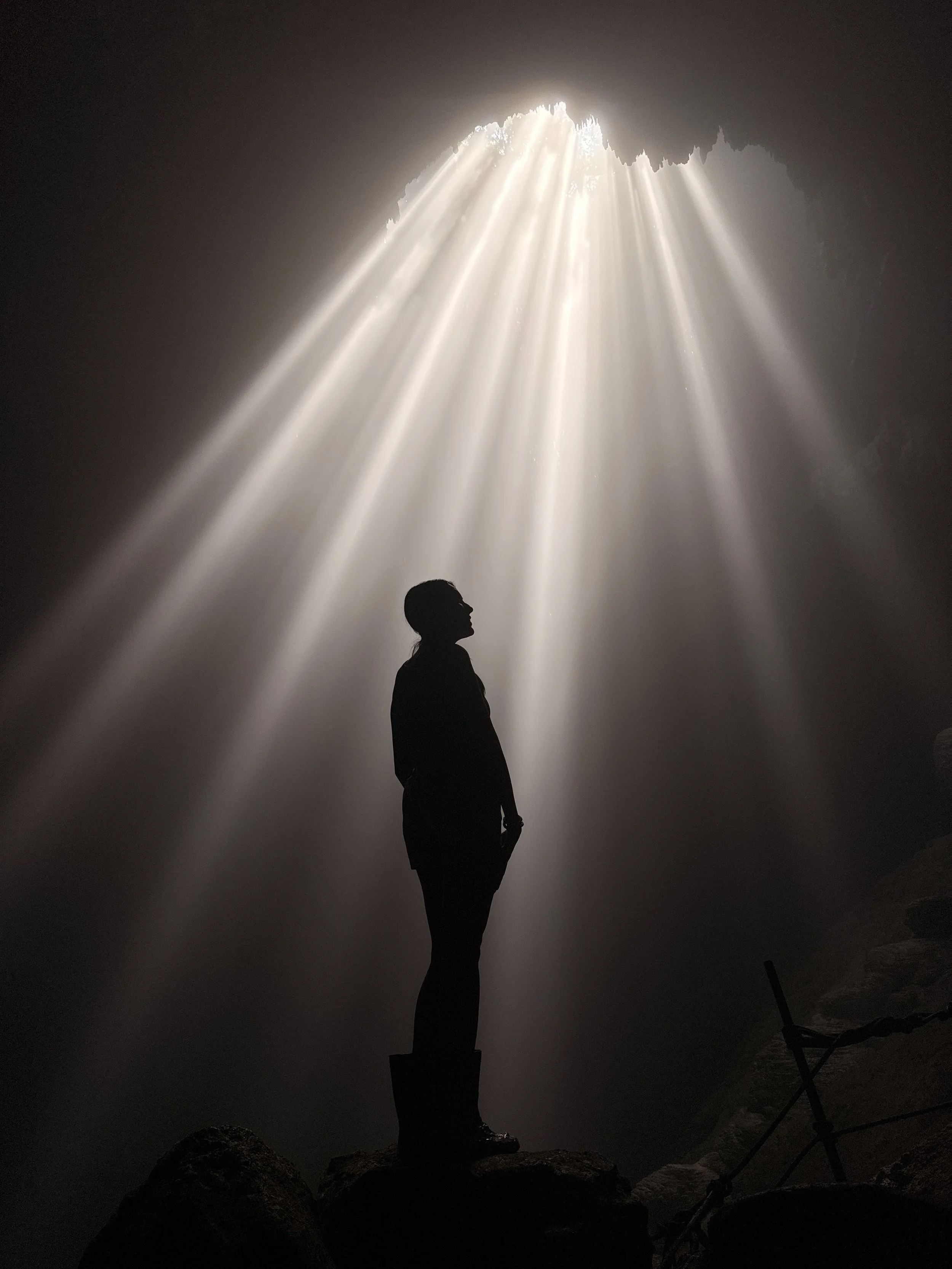
Standing inside Grubug Cave, a brilliant shaft of sunlight streamed through a hole high above, piercing the darkness like a spotlight from the heavens. Fine mist drifting through the cave transformed the beam into what locals fittingly call the "Light of Heaven." For a few magical moments around midday, the angle of the sun creates one of nature's most breathtaking spectacles
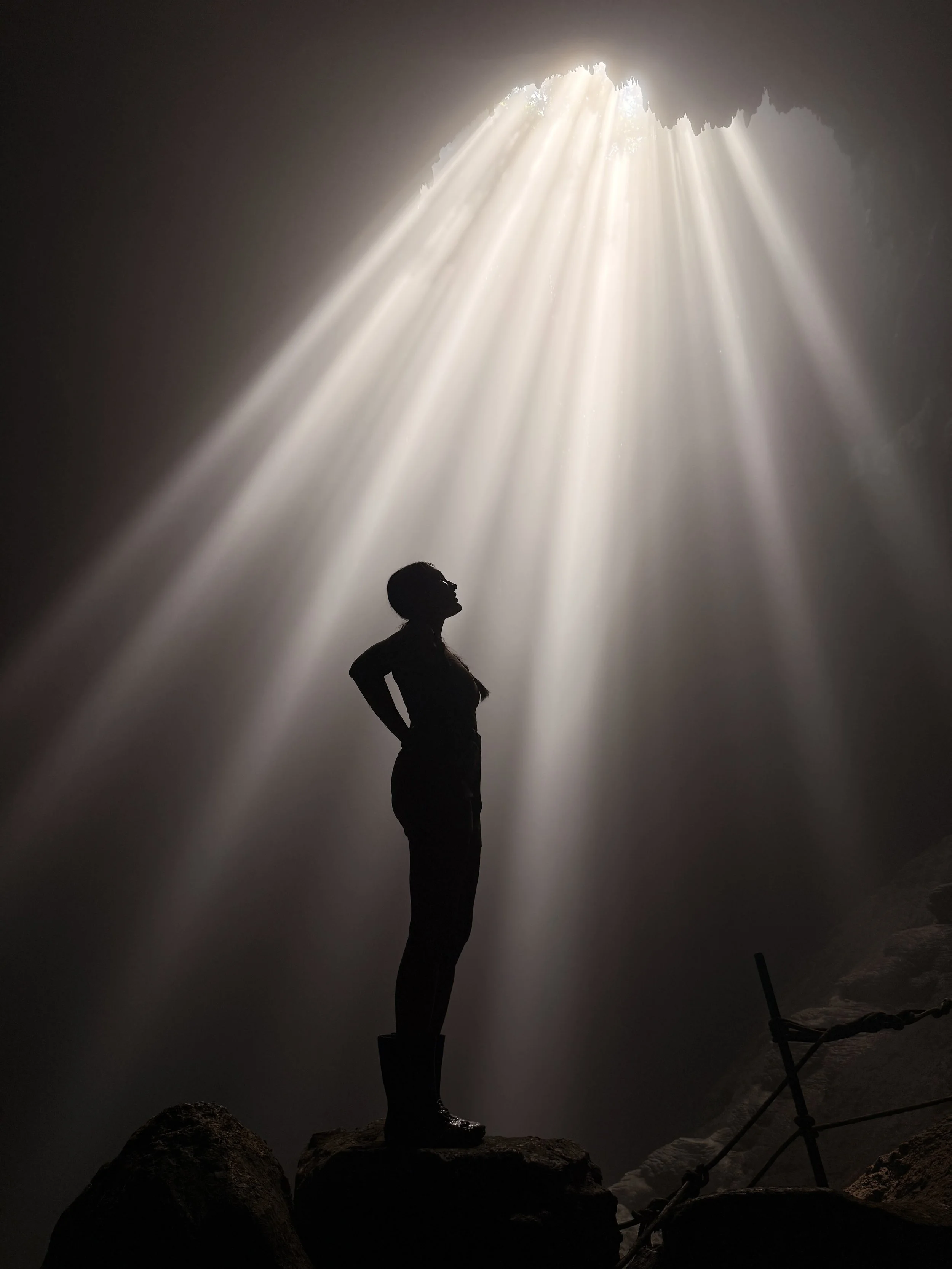
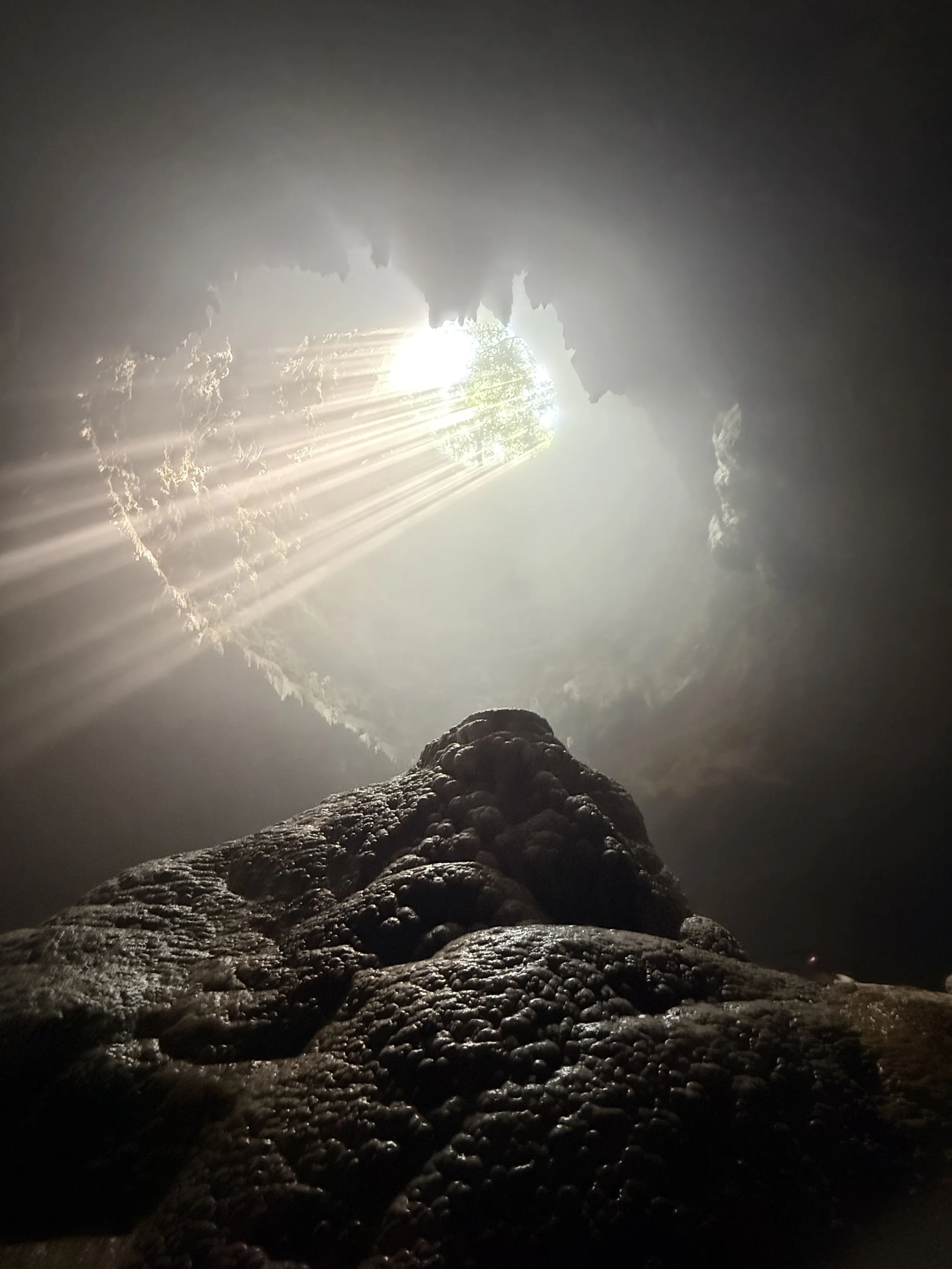
WHEEEE!
Field Notes:
USD 31 to visit the cave. Packed lunch included
Difficulty level: Easy unless you have a fear of heights
Approx 2 hrs from Yogyakarta
Aim to be there between 1000 and 12 pm to view the “light of heaven”, weather conditions permitting
Guides are stationed in the cave for your safety and, of course, to help you capture these gorgeous shots
Miscellaneous Field Notes
Accommodation: Aveta Hotel Malioboro, right in the heart of Yogyakarta ( USD 50-90 per night)
Food: The House of Raminten for traditional Javanese food. Ayam Peda Artomoro for traditional grilled chicken
Hiring a driver for the whole duration of your trip would be the most cost-effective. A 5-day package cost 3 of us 214 USD ( 71 USD pp)
