Surabaya- Mount Bromo & Tumpak sewu
Mount Bromo
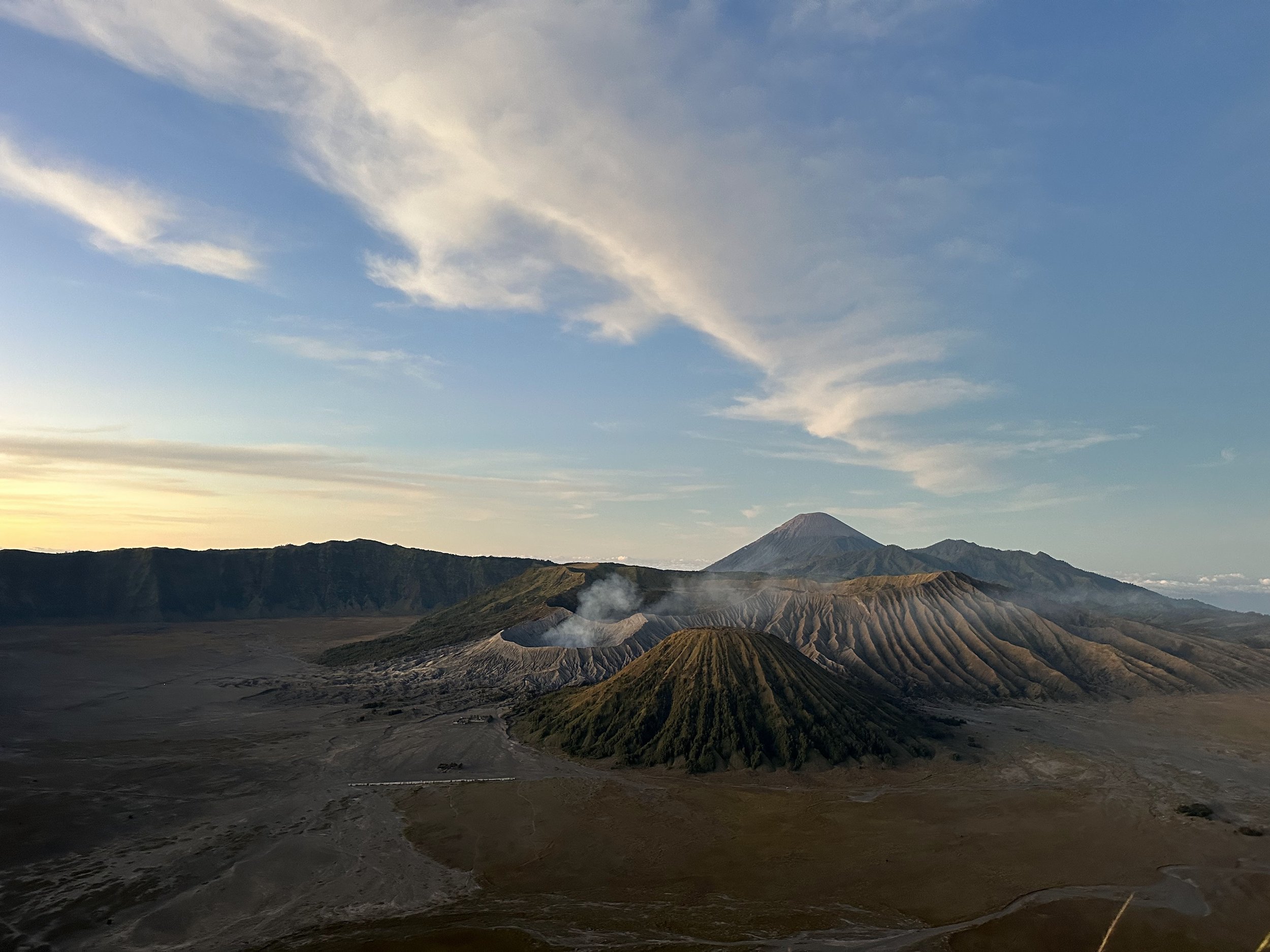
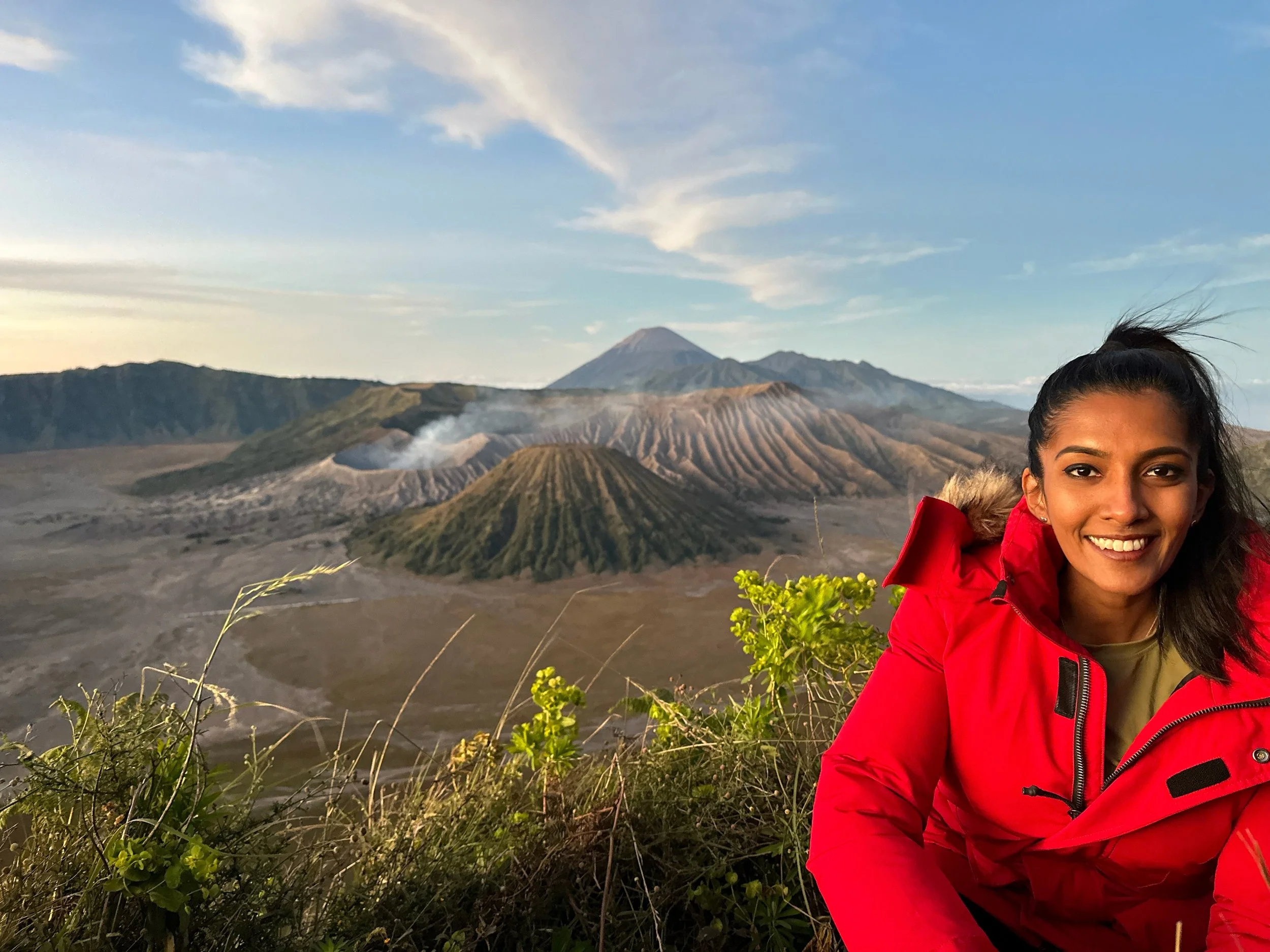
Watching the sun rise over Mount Bromo is an experience that photographs never fully capture.
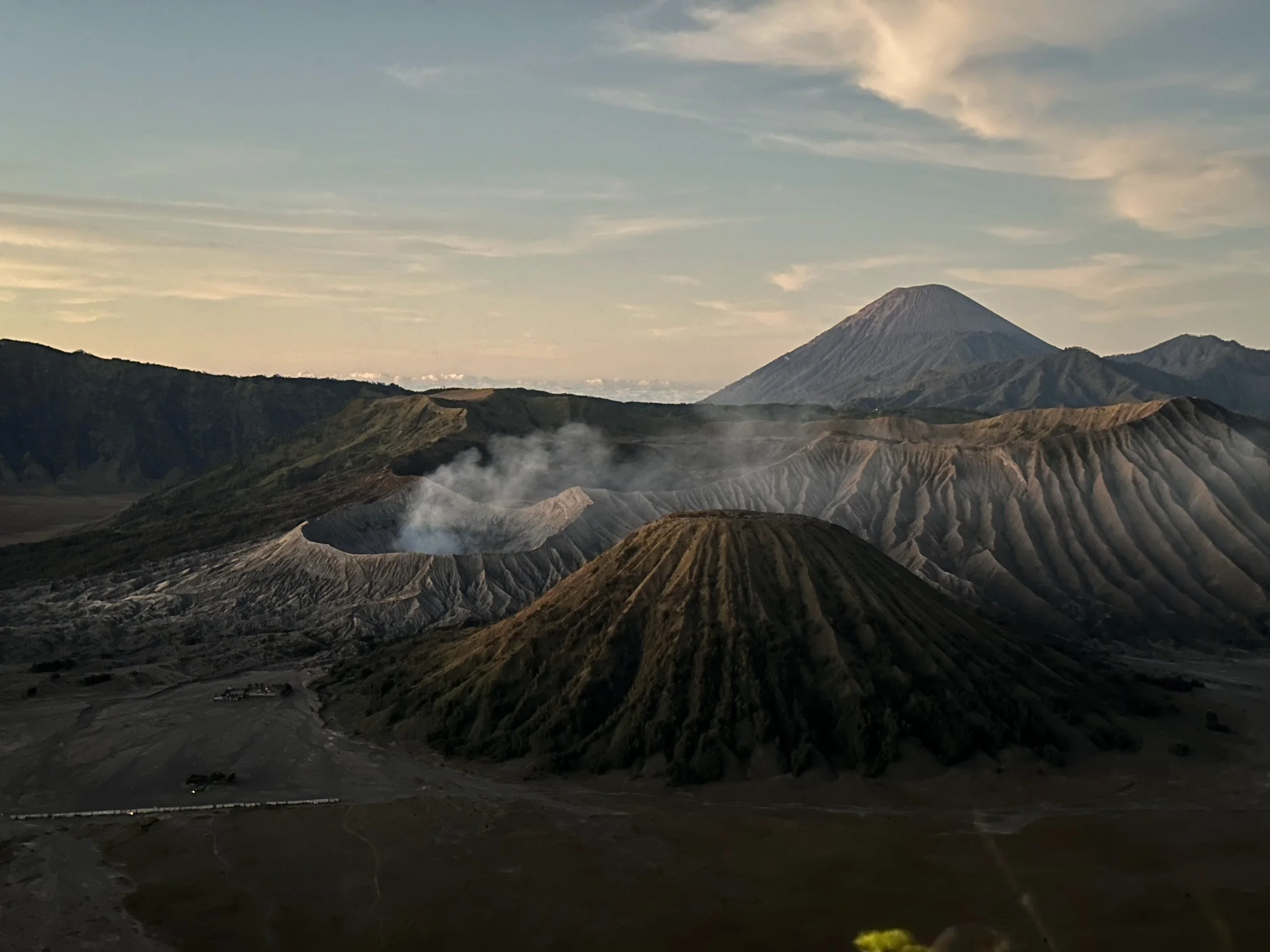
From the viewpoint ( Bromo National Park) , the first hint of daylight painted the horizon in soft lavender before fiery shades of orange spilled across the landscape. Slowly, the famous Sea of Sand emerged from the darkness, with Mount Batok's perfectly symmetrical cone standing proudly beside the smoking crater of Mount Bromo. Beyond them, the towering silhouette of Semeru—the highest mountain in Java—released a thin plume of smoke into the morning sky, reminding us that this landscape is still very much alive.
As the sunlight strengthened, layers of mist drifted across the ancient caldera, transforming the entire scene into something almost prehistoric. It felt less like looking at a mountain range and more like standing at the edge of another world.
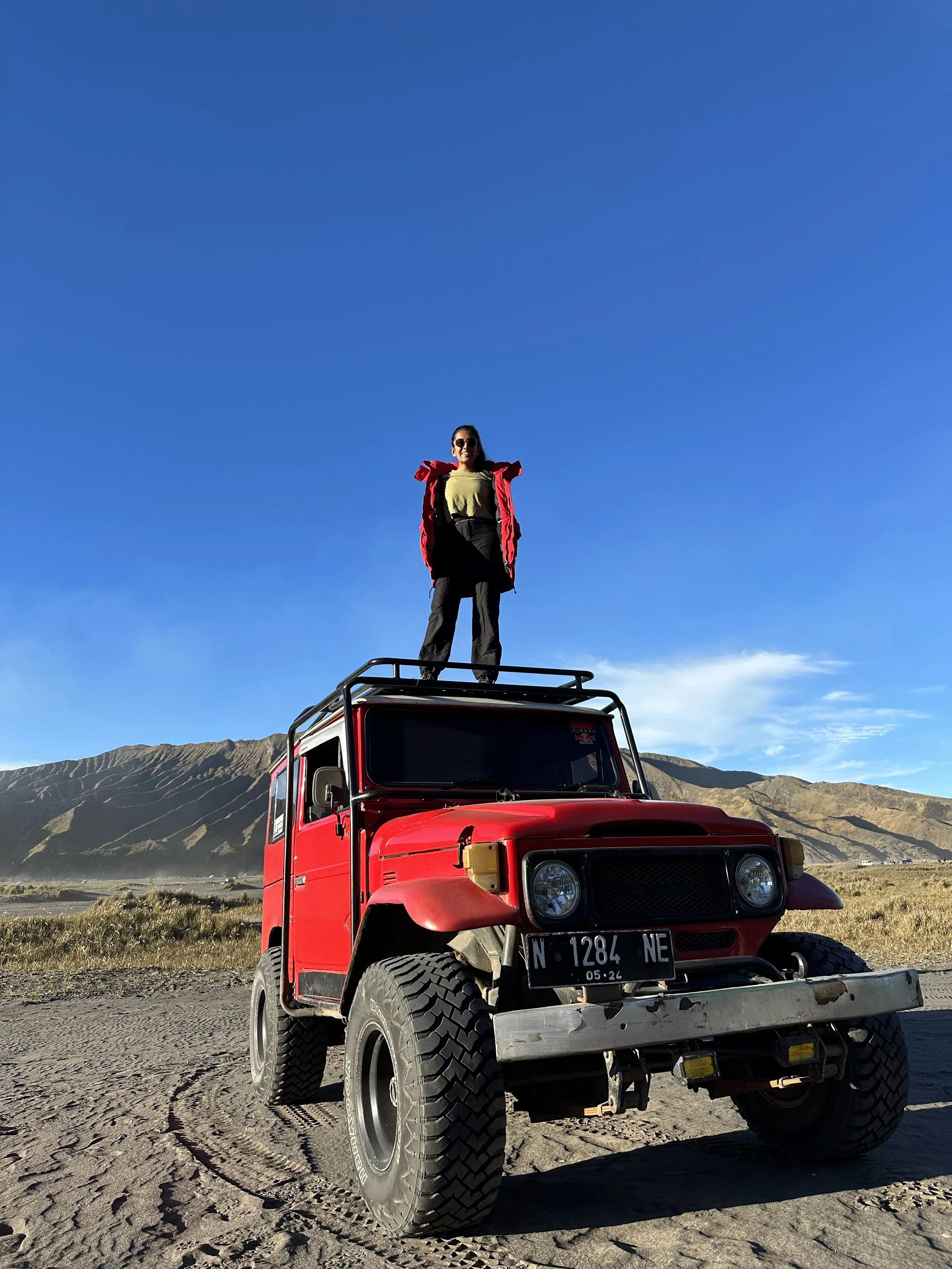
Leaving the viewpoint, we descended into the vast volcanic plain known as the Sea of Sand. Fine grey ash stretched in every direction, interrupted only by the occasional jeep, horse and clusters of visitors making their way towards the crater.
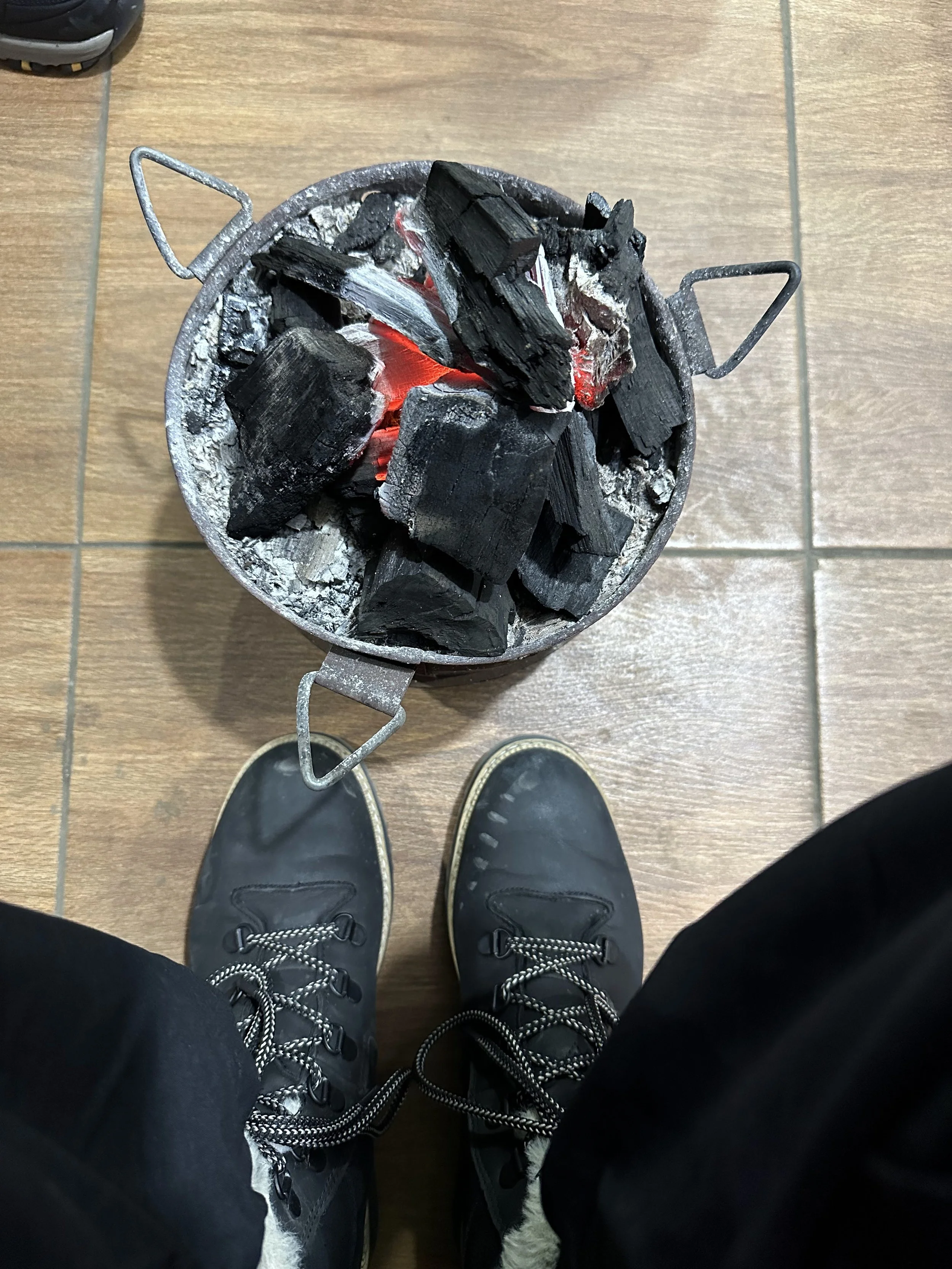
Walking across the volcanic desert was strangely peaceful. Every step sent small clouds of ash swirling around our boots while Mount Bromo grew larger with each passing minute.
The climb itself was surprisingly manageable, beginning with a long staircase leading towards the crater rim. As we reached the top, the reward was immediate.
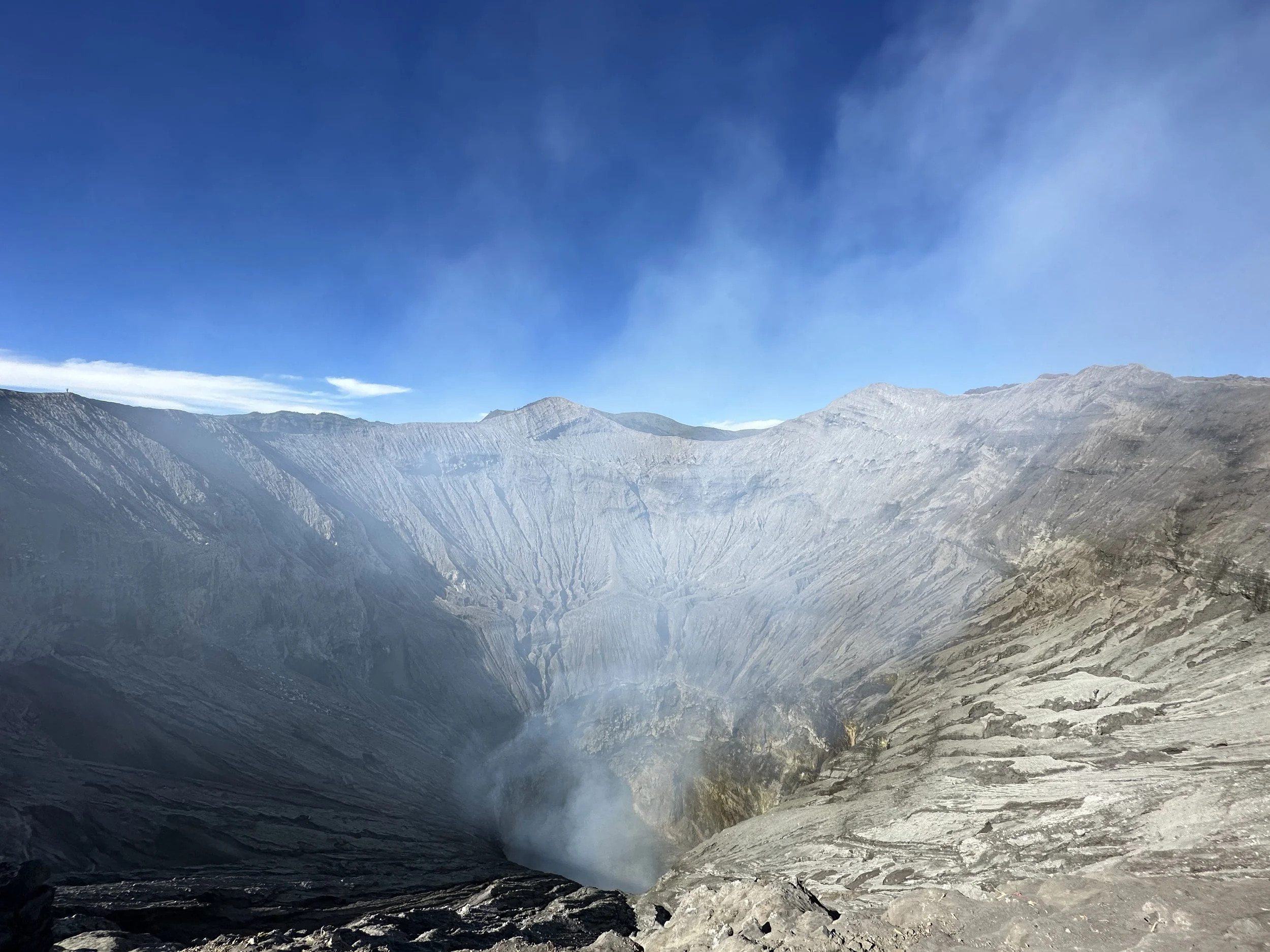
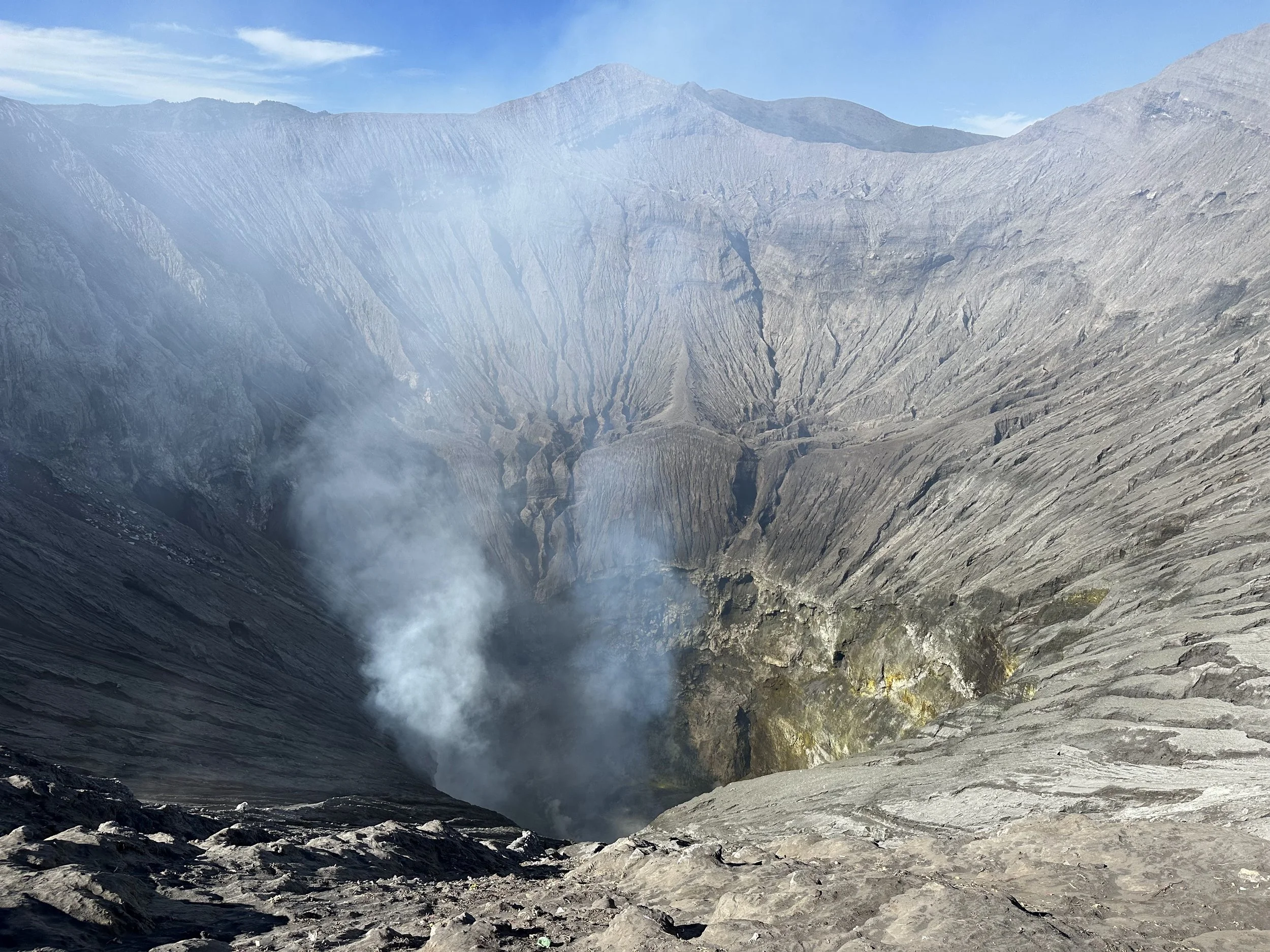
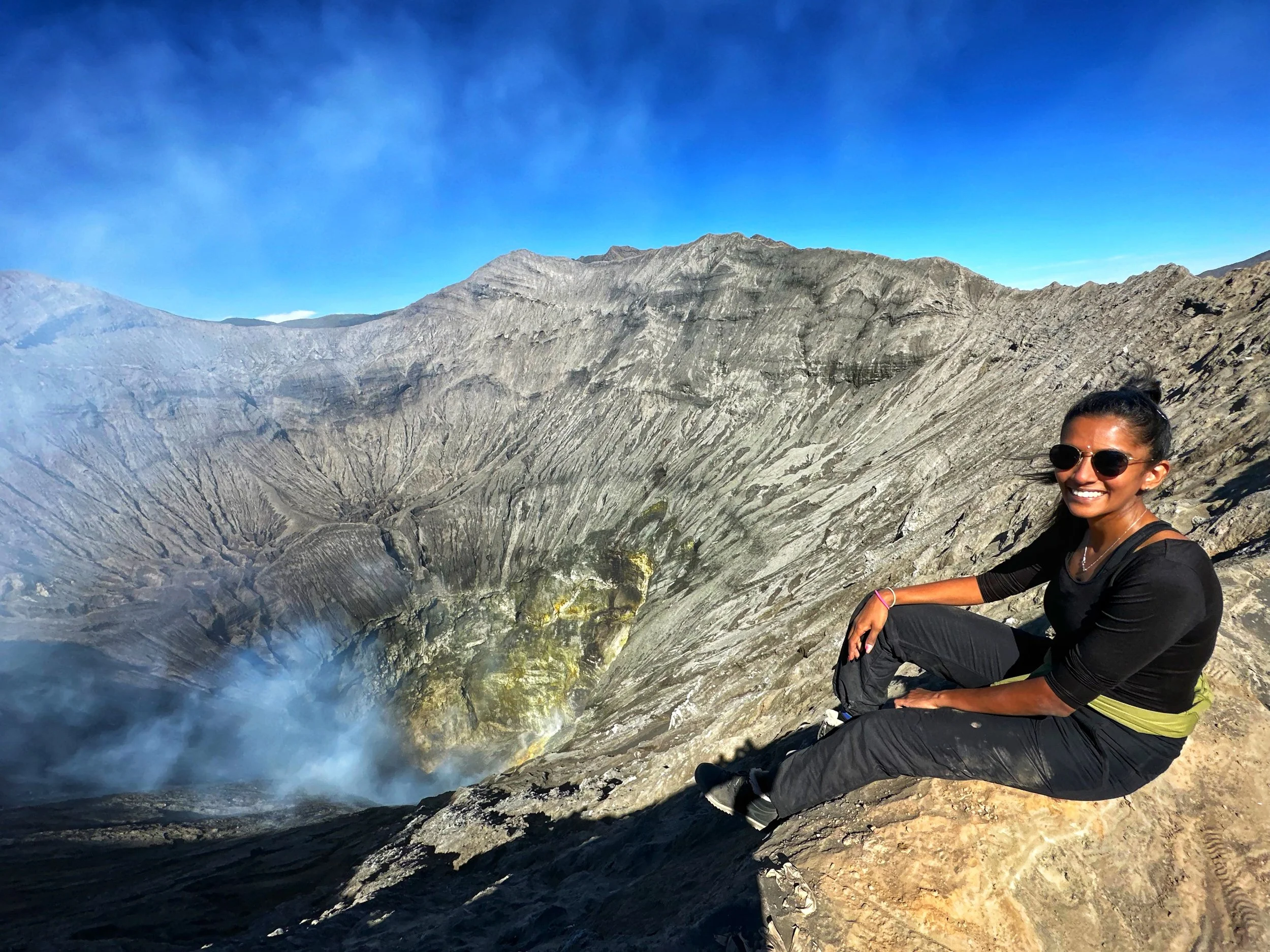
Looking directly into Bromo's enormous crater, we could hear the earth breathing. Thick white steam drifted upwards while the unmistakable smell of sulphur filled the air. Standing just metres from an active volcano was both exhilarating and humbling—a reminder of nature's immense power that continues to shape this landscape.
As we approached the crater of Mount Bromo, the atmosphere felt different. Instead of the usual stream of tourists making their way up the staircase, groups of Tenggerese families dressed in traditional clothing gathered around the crater rim carrying baskets filled with fruit, vegetables, flowers and livestock.
We had arrived during a Hindu ceremony, a privilege we hadn't expected.
The prayers echoed across the volcano as incense drifted through the cool mountain air. Families patiently waited for their turn, offering thanks and prayers for health, prosperity and protection. Then, one by one, they presented their offerings to the volcano.
Among the offerings were baskets of crops, flowers and, in some cases, live chickens, which were gently released or thrown into the crater as part of the ritual. While the sight was surprising to us, it reflected centuries of Tenggerese tradition and devotion. The ceremony is rooted in the belief that Mount Bromo is a sacred mountain, and these offerings express gratitude while seeking blessings from the spirits believed to watch over the land.
Watching the ceremony unfold against the backdrop of the smoking crater was a powerful reminder that Mount Bromo is far more than a spectacular natural attraction. For the Tenggerese people, it is a living place of worship where faith, culture and nature have remained intertwined for generations.
Standing quietly among the worshippers, we felt privileged to witness a tradition that continues to endure in one of Indonesia's most extraordinary landscapes.
Before leaving the caldera, we made a stop that many visitors overlook.
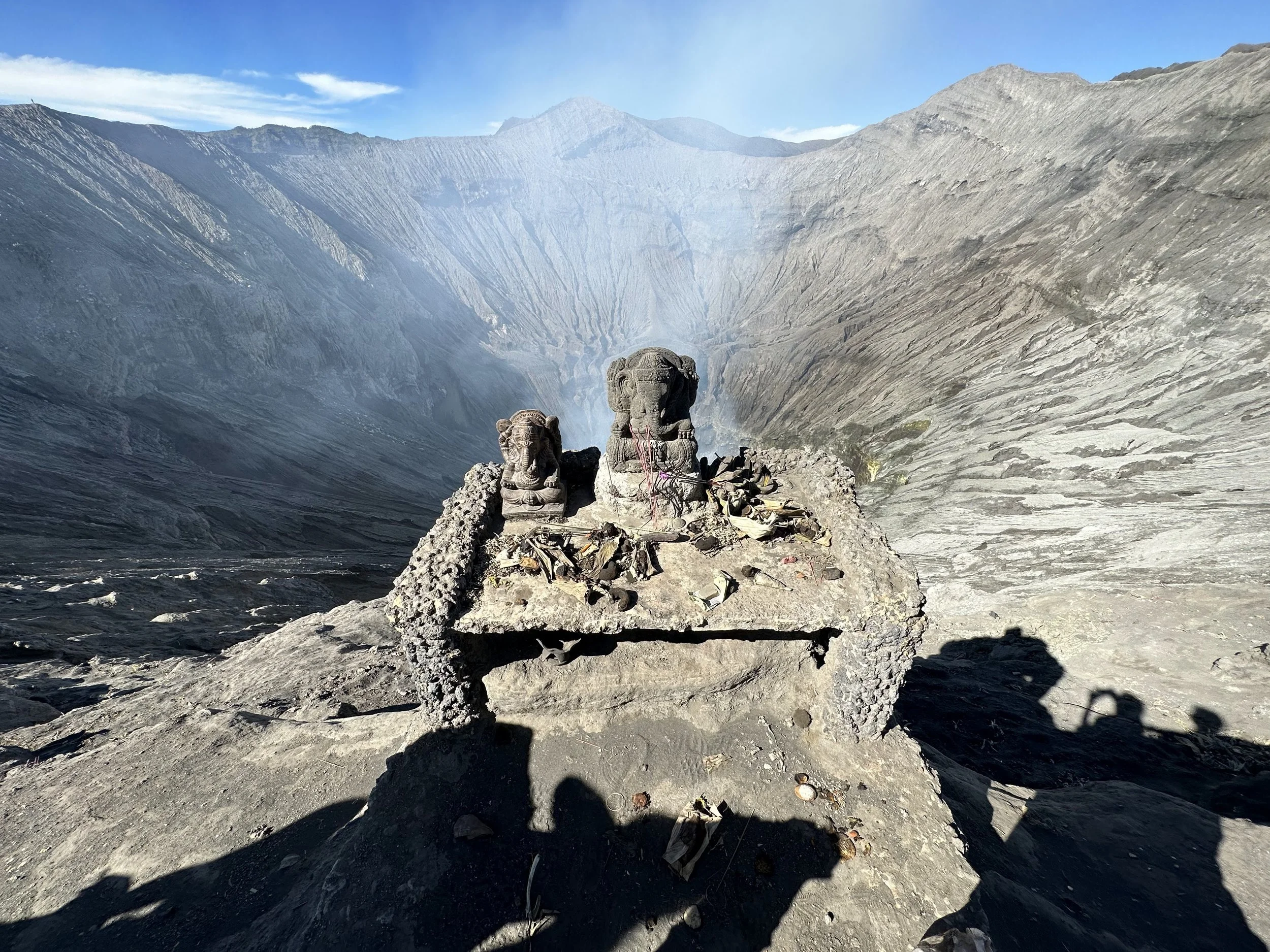
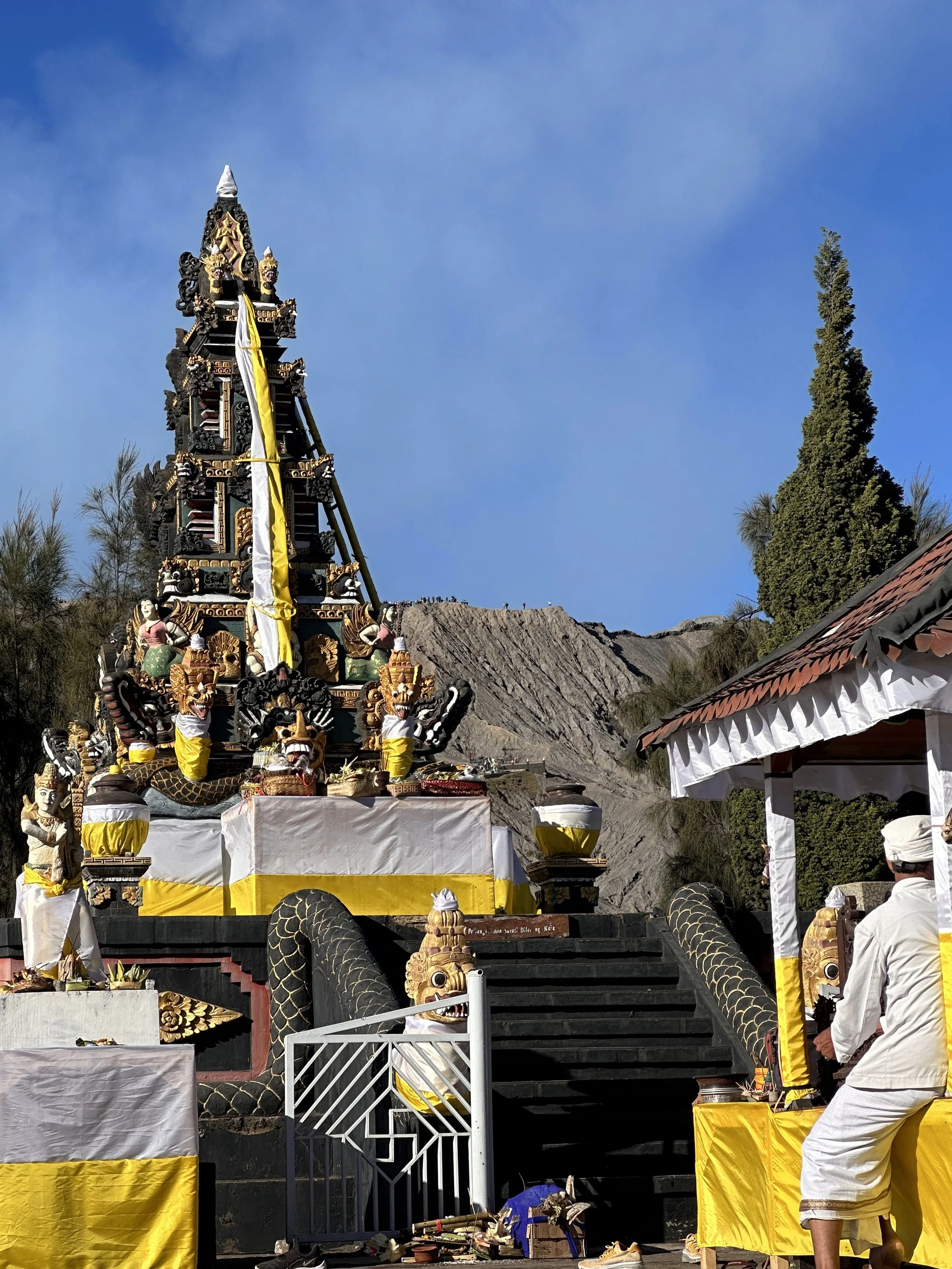
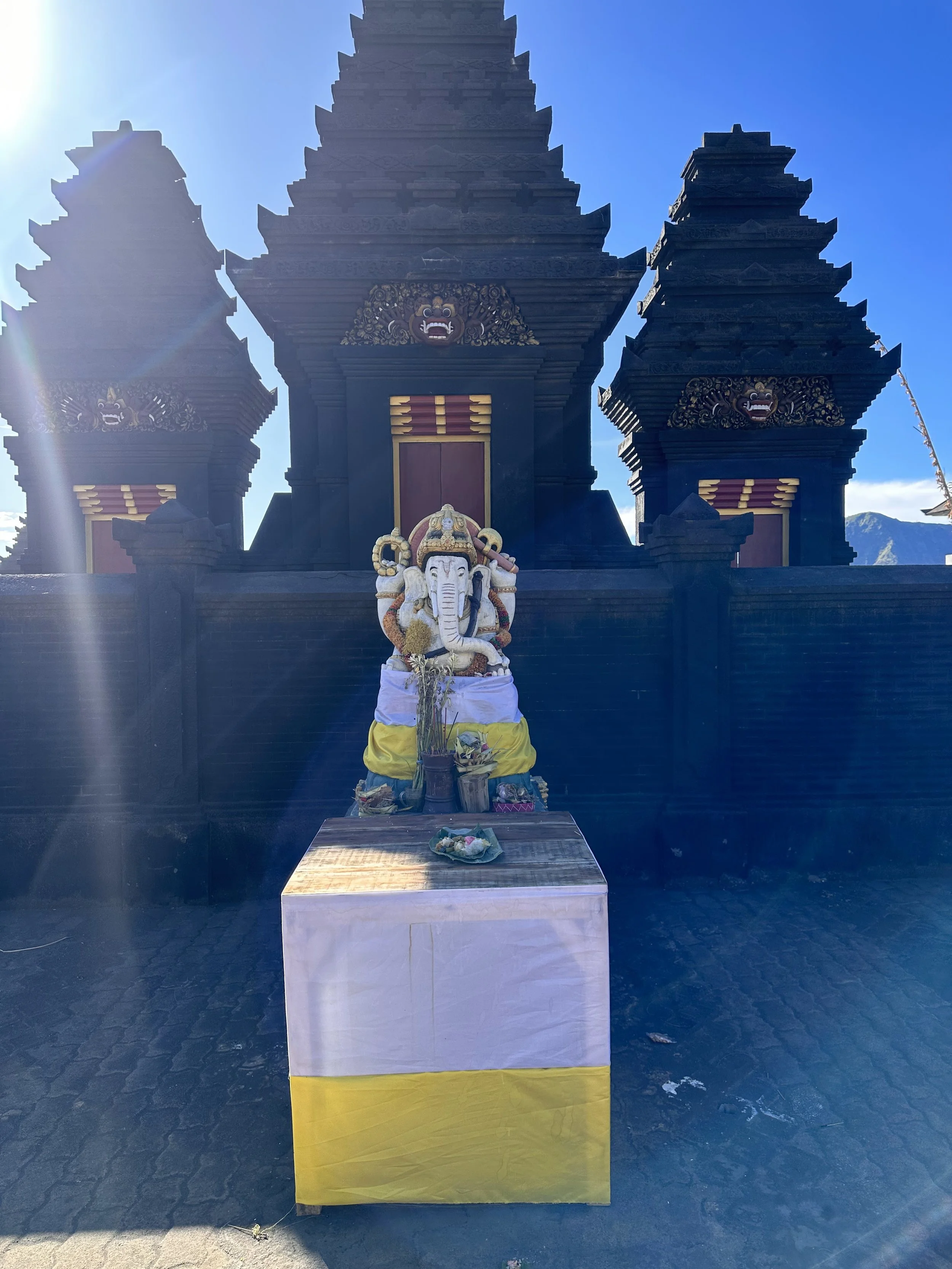
Nestled quietly at the base of Mount Bromo sits a small Hindu temple, dwarfed by the immense volcano towering behind it. The temple is simple yet deeply significant to the Tenggerese people, descendants of the ancient Majapahit kingdom who have preserved their Hindu traditions despite living in predominantly Muslim Java.
Surrounded by volcanic ash and dramatic cliffs, the temple felt wonderfully out of place, yet completely at home. It serves as a spiritual centre for ceremonies held throughout the year, especially during Yadnya Kasada, when offerings are presented to the volcano in gratitude and prayer.
Its quiet presence added another layer to Bromo—this was not simply a geological wonder, but a sacred landscape that continues to shape the lives and beliefs of the communities who call it home.
By pure chance, our visit coincided with a Hindu ceremony taking place near the temple.
Families dressed in vibrant traditional attire gathered carrying woven baskets filled with fruit, flowers and offerings. Incense drifted gently through the crisp mountain air as prayers echoed across the caldera. The atmosphere was peaceful, reverent and deeply moving.
Field Notes
Accommodation : Bromo Terrace Hotel
Pick up from hotel : 0230-0300
1 hour 4WD jeep to Mount Bromo National Park
You can choose to ride a horse or walk through the Sea of Sand to reach the base of Mt Bromo ( but i would recommen walking, the horses looked overworked)
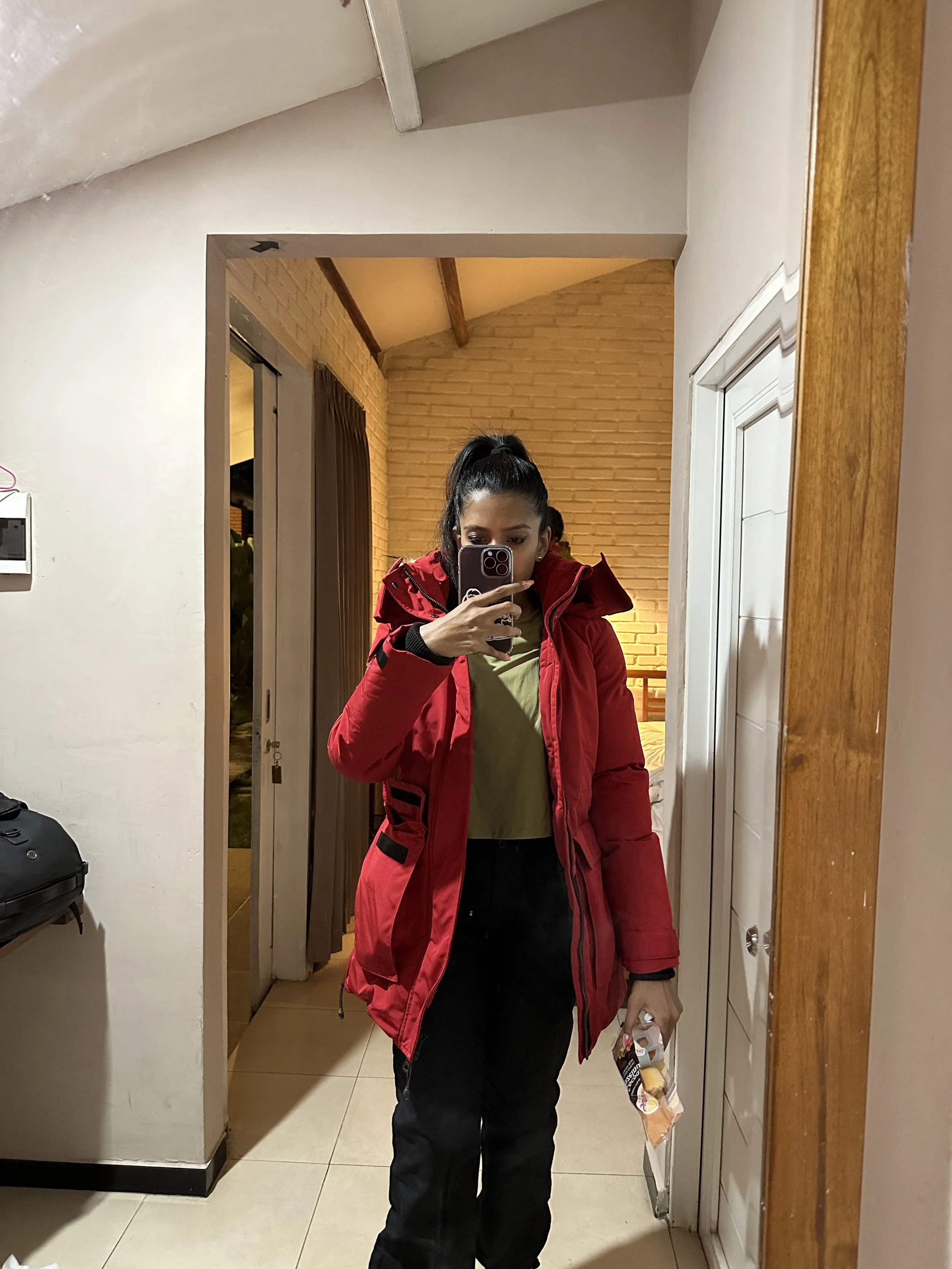
Dress for warmth ( layer) , it is cold before the sun comes up
Tumpak Sewu
Reaching Tumpak Sewu isn't a stroll; it is an adventure that demands your full attention from the very first step.
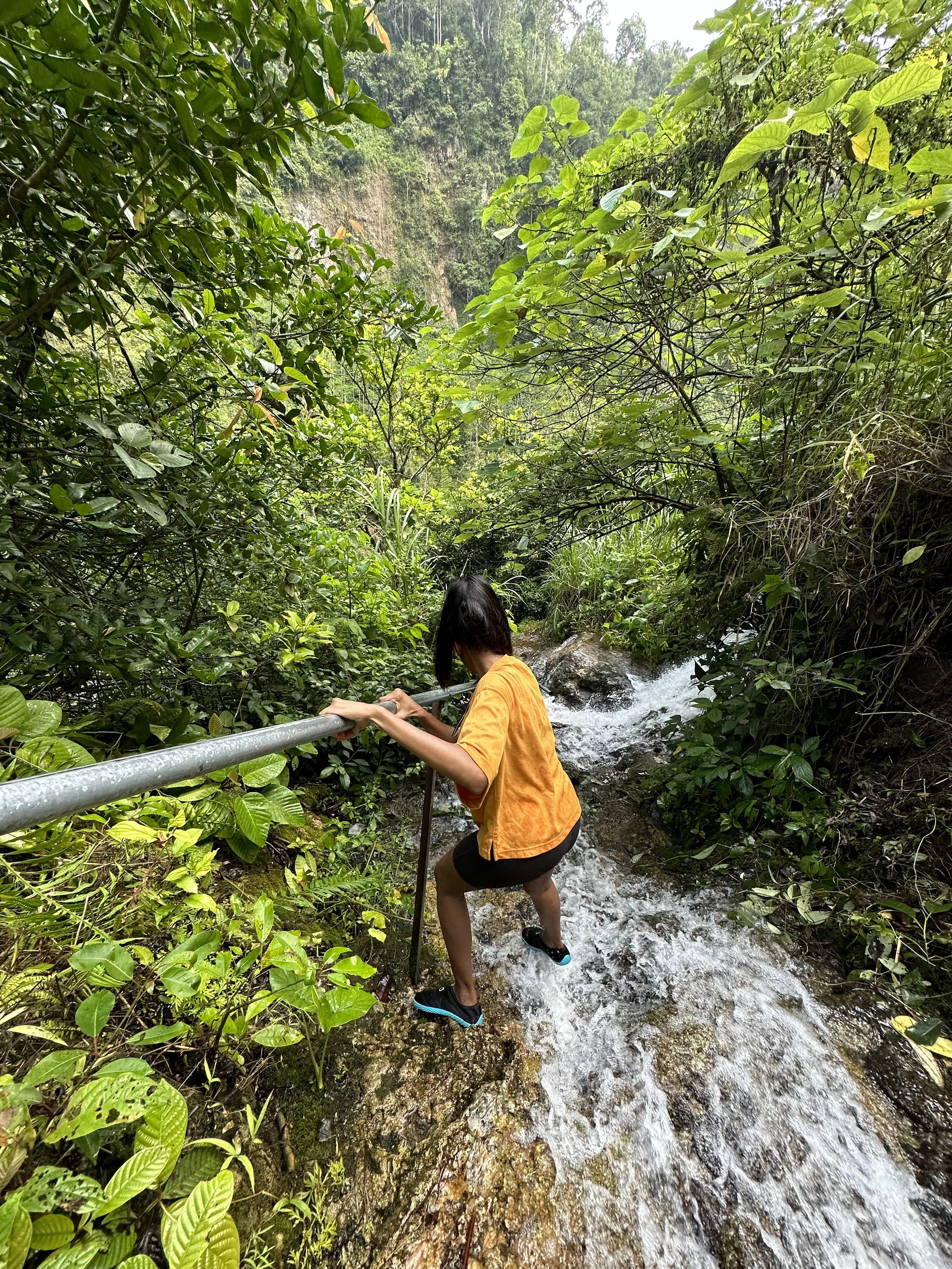
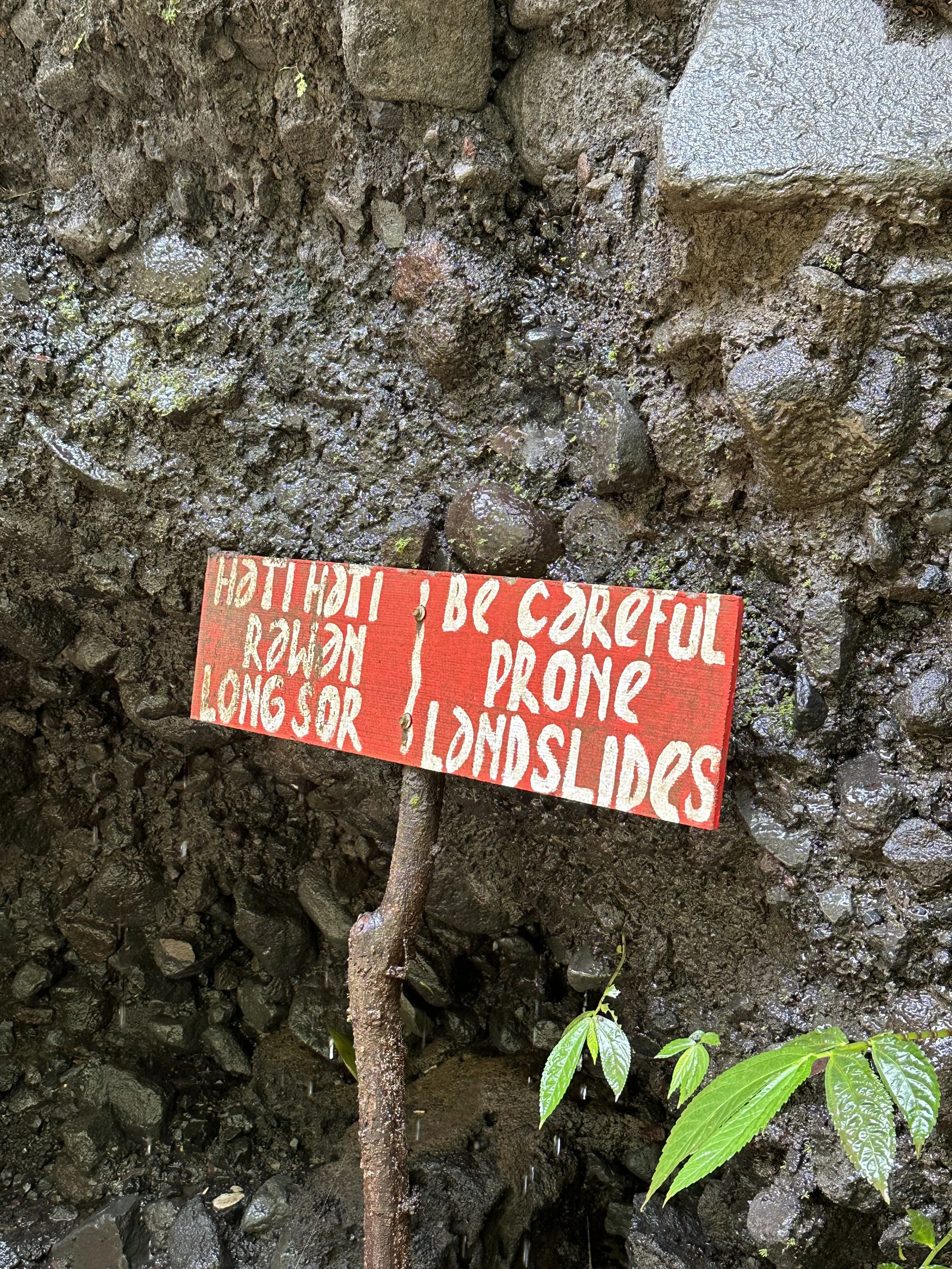
The trail begins with a steep descent into the gorge, where narrow staircases cling to the cliffside and bamboo railings offer reassurance on the muddy, uneven path. Recent rain had made the ground slick, and each step required careful footing as we slowly made our way deeper into the valley.
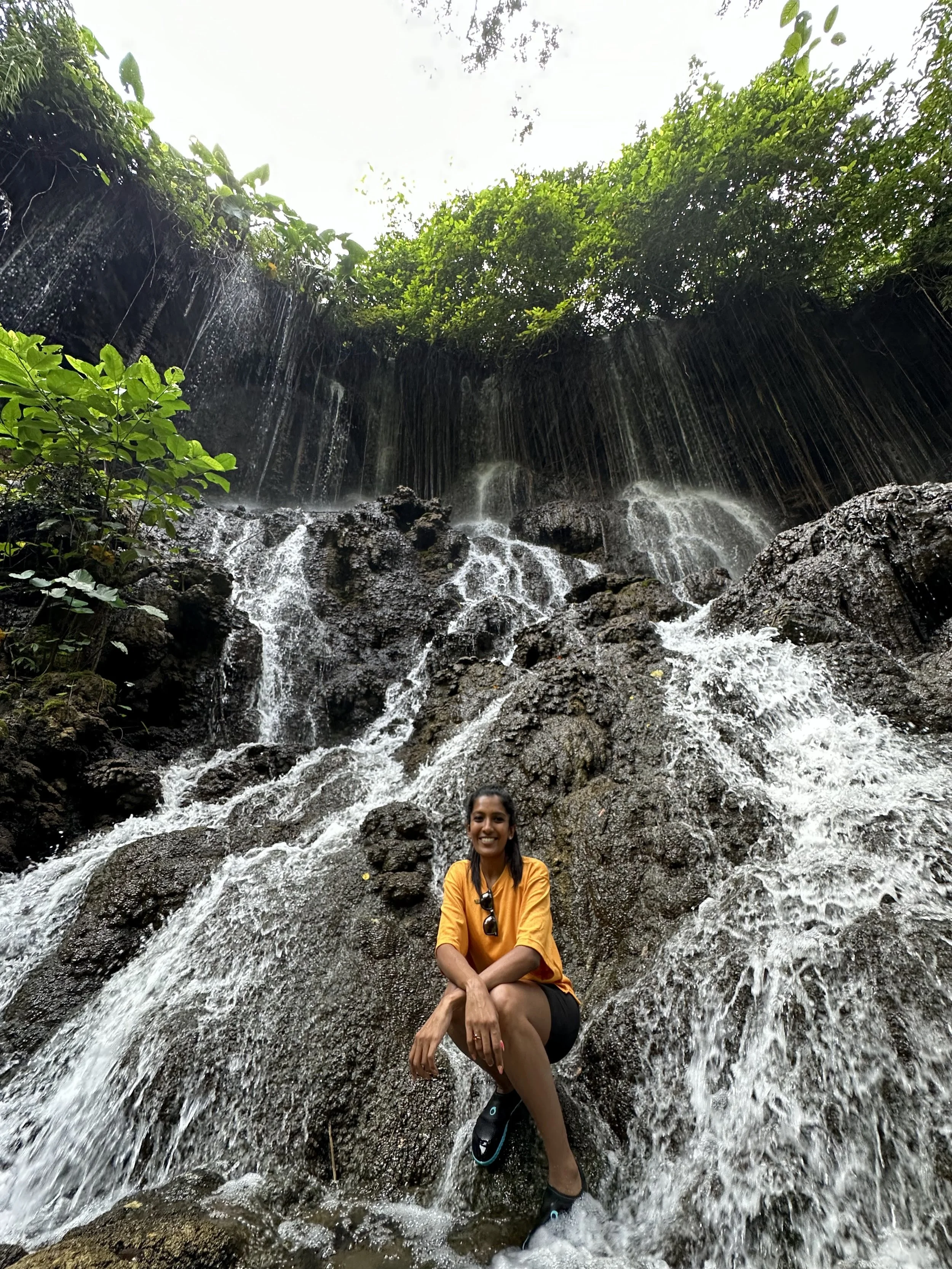
The sounds of civilisation quickly faded, replaced by rushing water and birdsong echoing through the dense tropical forest. As we descended further, the air became noticeably cooler and more humid. Small streams crisscrossed the trail, forcing us to hop from rock to rock before wading through ankle-deep water where the current was gentle but refreshing.
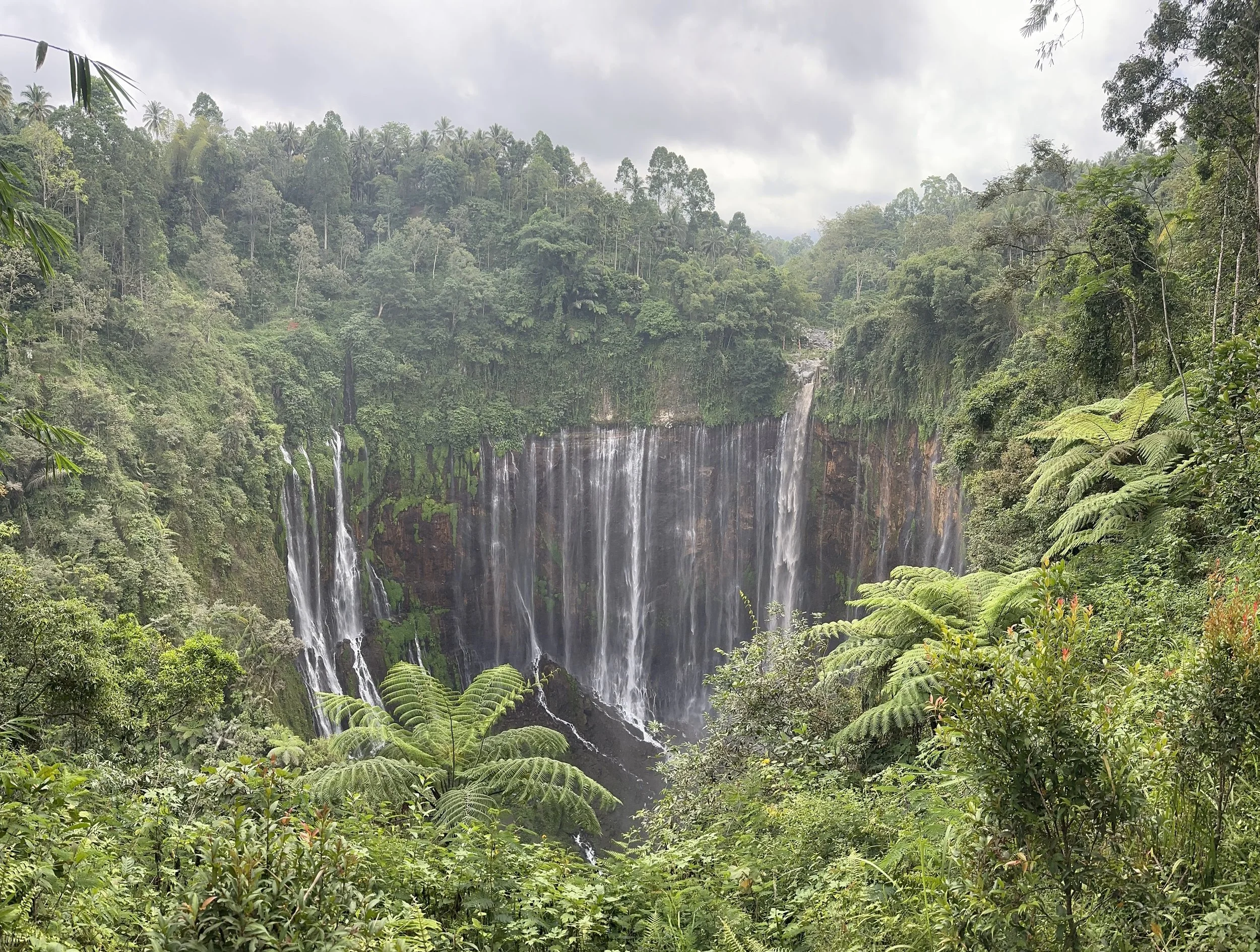
Every few minutes, the trees would part just enough to reveal another glimpse of Tumpak Sewu. Each view was more spectacular than the last, building anticipation with every bend in the trail.
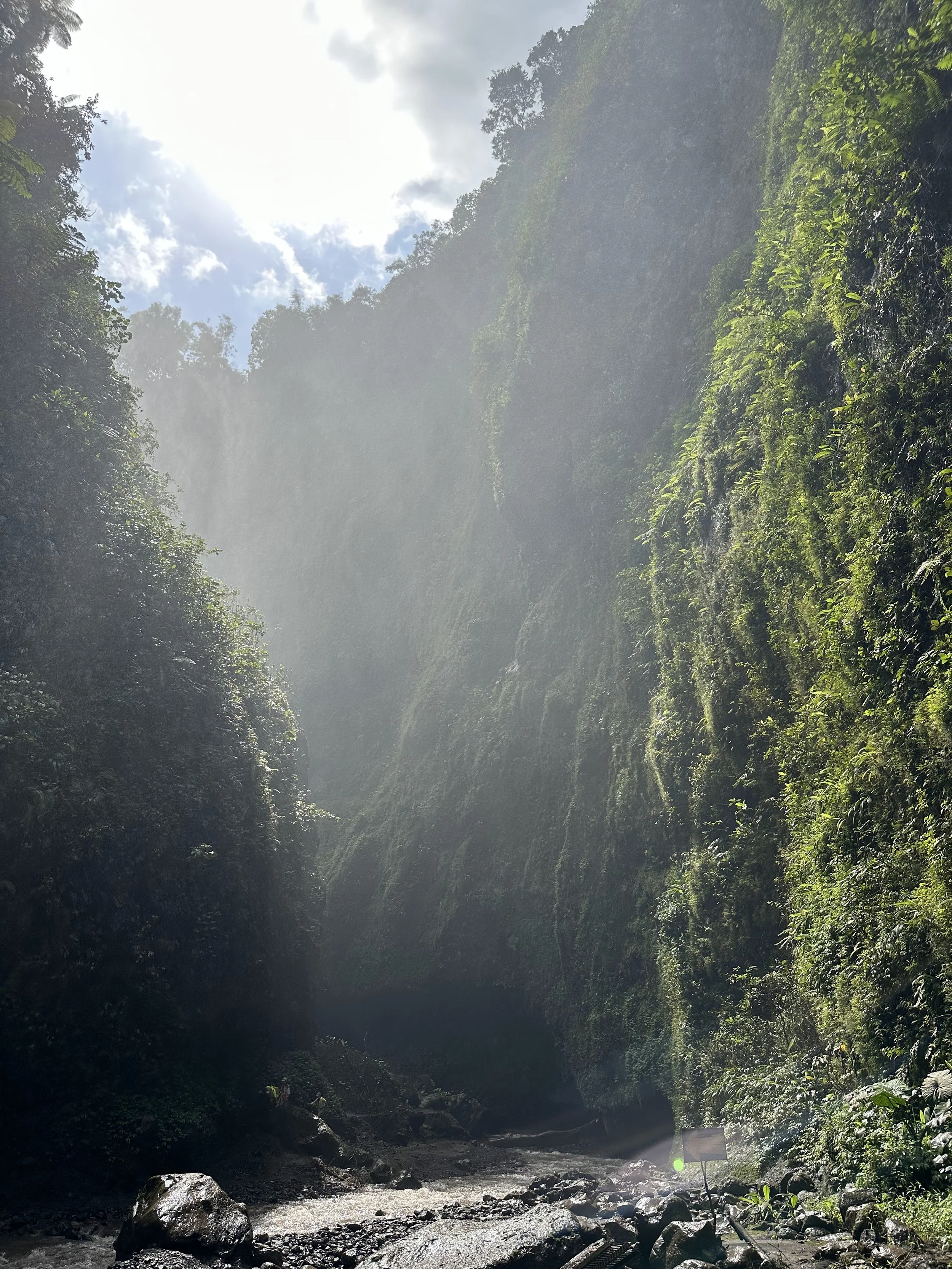
The final stretch felt almost otherworldly. Mist drifted through the gorge, moss-covered cliffs rose on either side, and water seemed to flow from every direction. It was easy to understand why this hidden canyon is often compared to a lost world.
Then, almost suddenly, the forest opened.
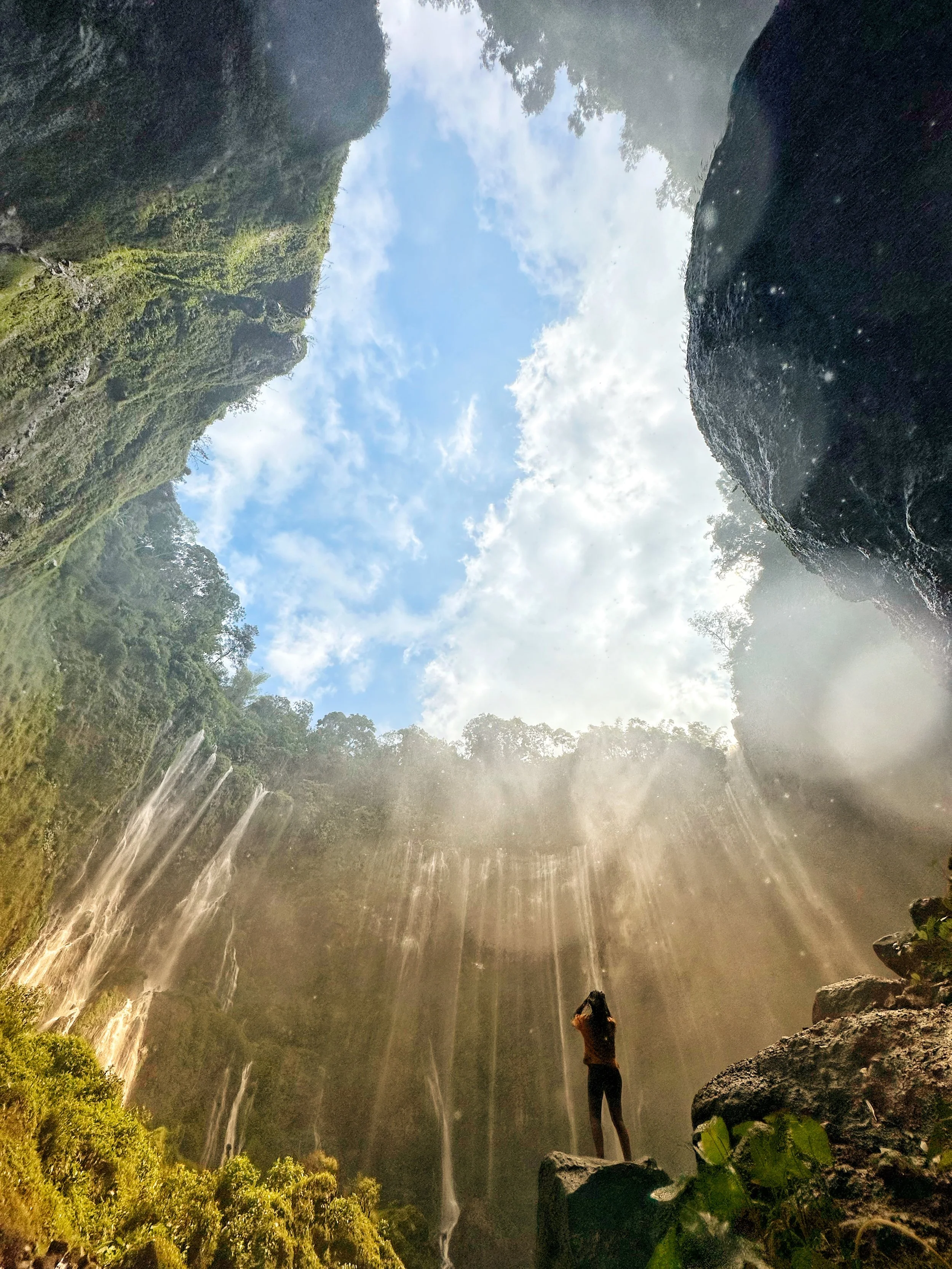
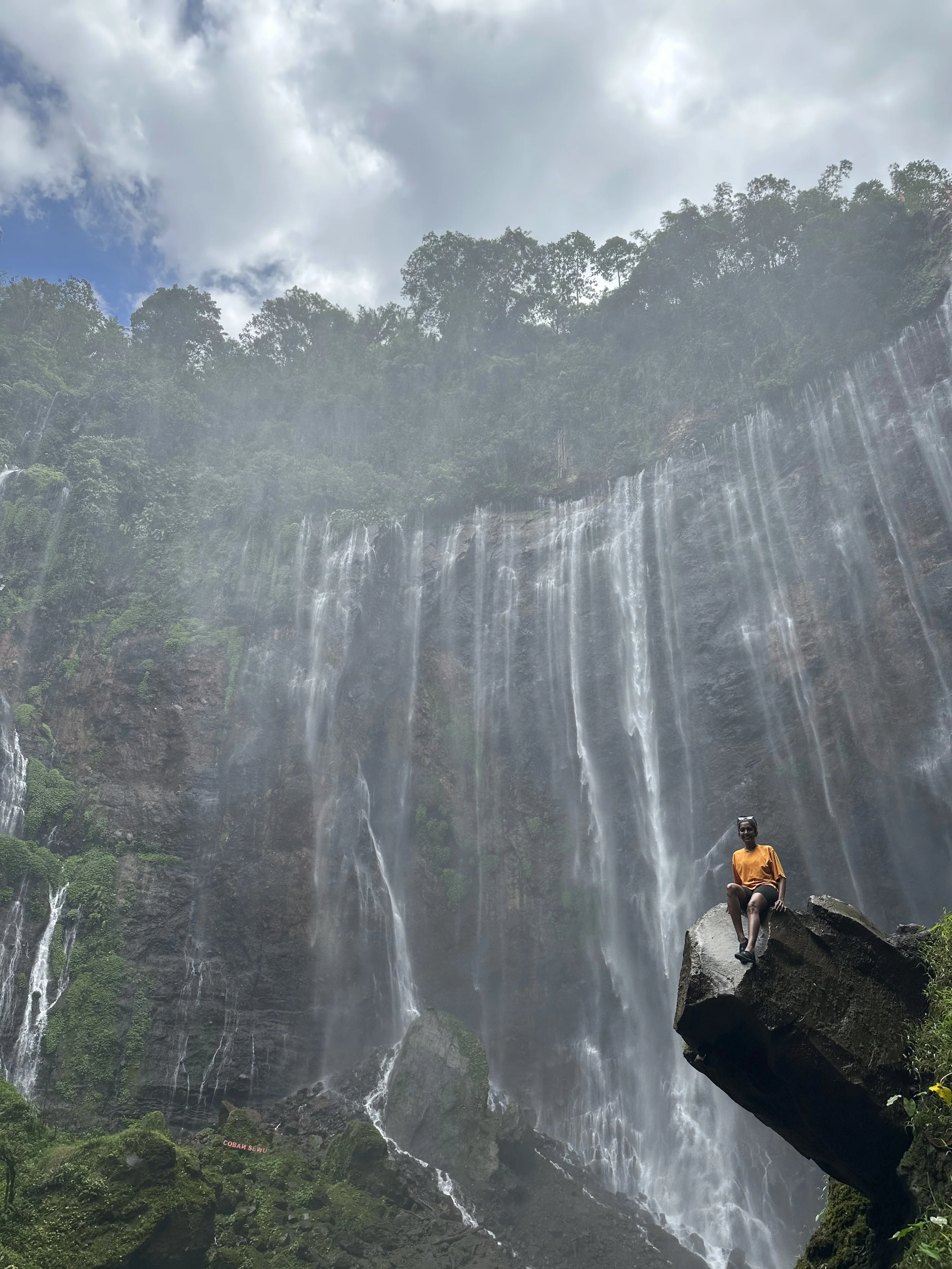
Standing at the base of Tumpak Sewu was both exhilarating and humbling. Water cascaded down the towering horseshoe-shaped cliffs in countless streams, creating a natural amphitheatre unlike anything we had seen before. The constant spray cooled the air, while the roar of the falls drowned out every other sound.
The trek back up was undoubtedly the harder challenge. The steep climb tested our legs and lungs, with frequent stops to catch our breath and admire the scenery we had hurried past on the way down. Yet every drop of sweat felt worthwhile.
Field Notes:
Wear water shoes with grips
Guides are based at the waterfall to help you with photo taking and ensure general safety
Difficulty: Medium
Miscellaneous Notes:
Booked this 4D3N trip with Tour Mount Bromo https://tourmountbromo.com/> Link up with them for different packages
