Namibia: Kalahari, Fish River Canyon &Ghost Town
Kalahari
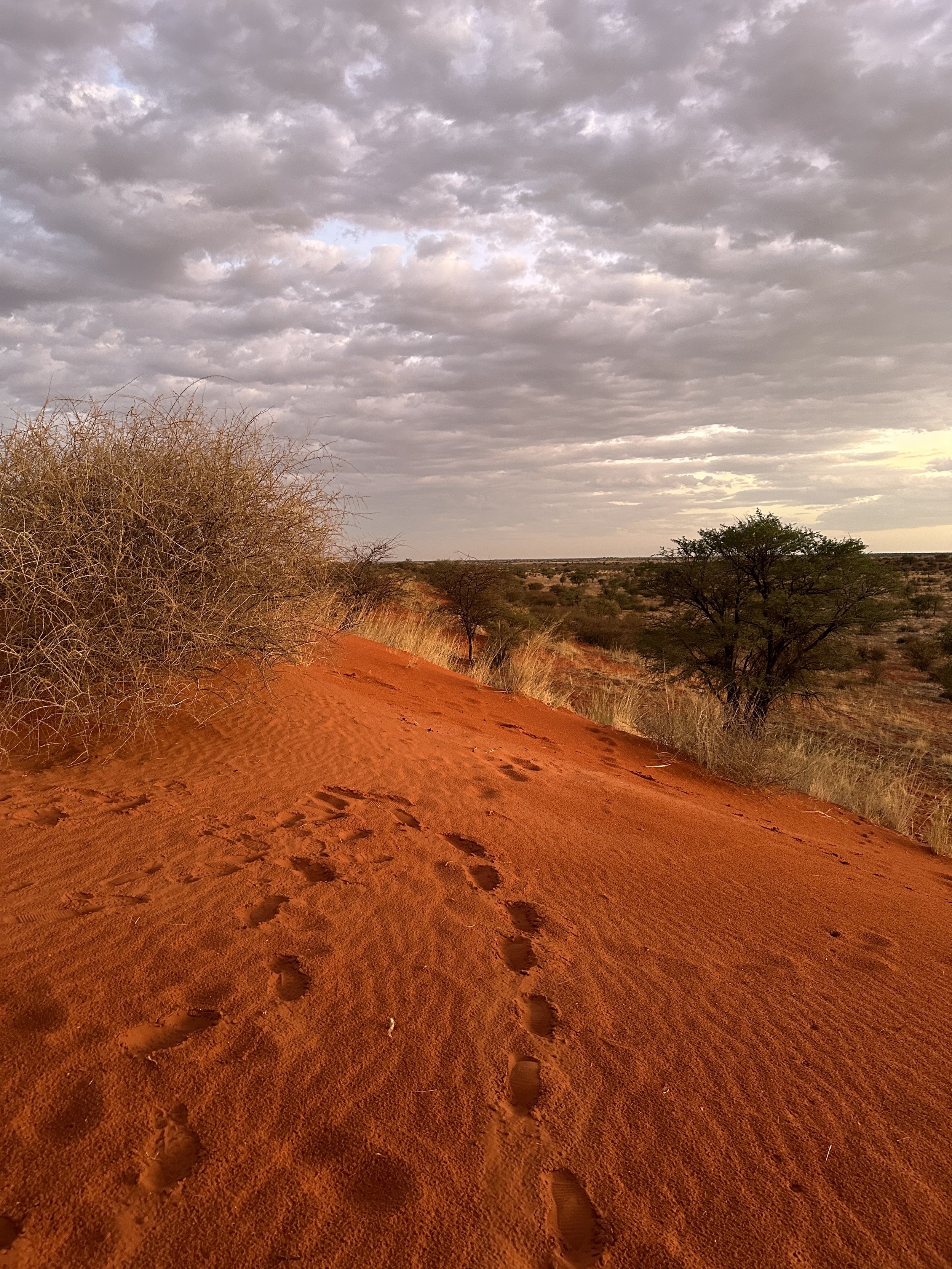
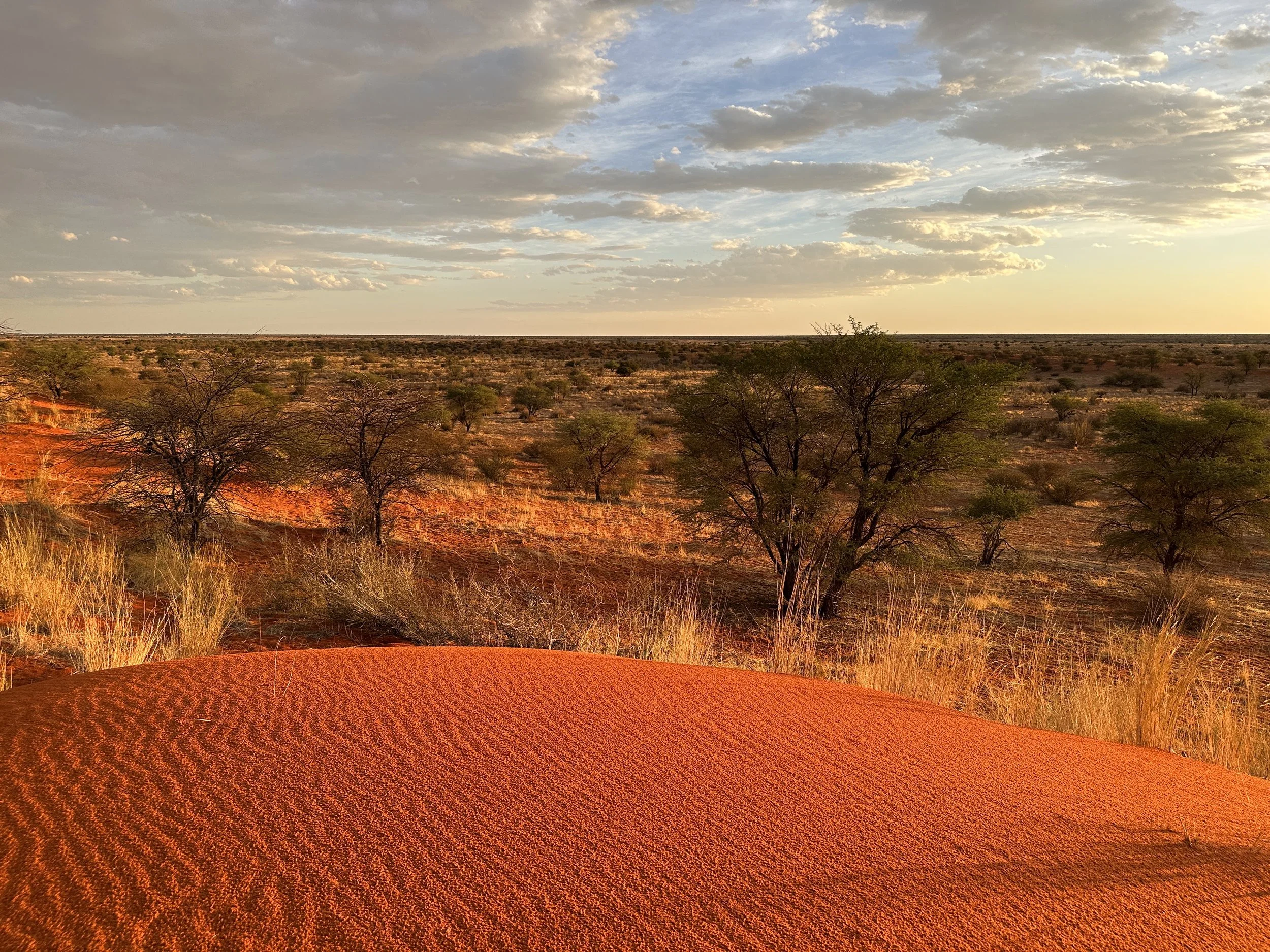
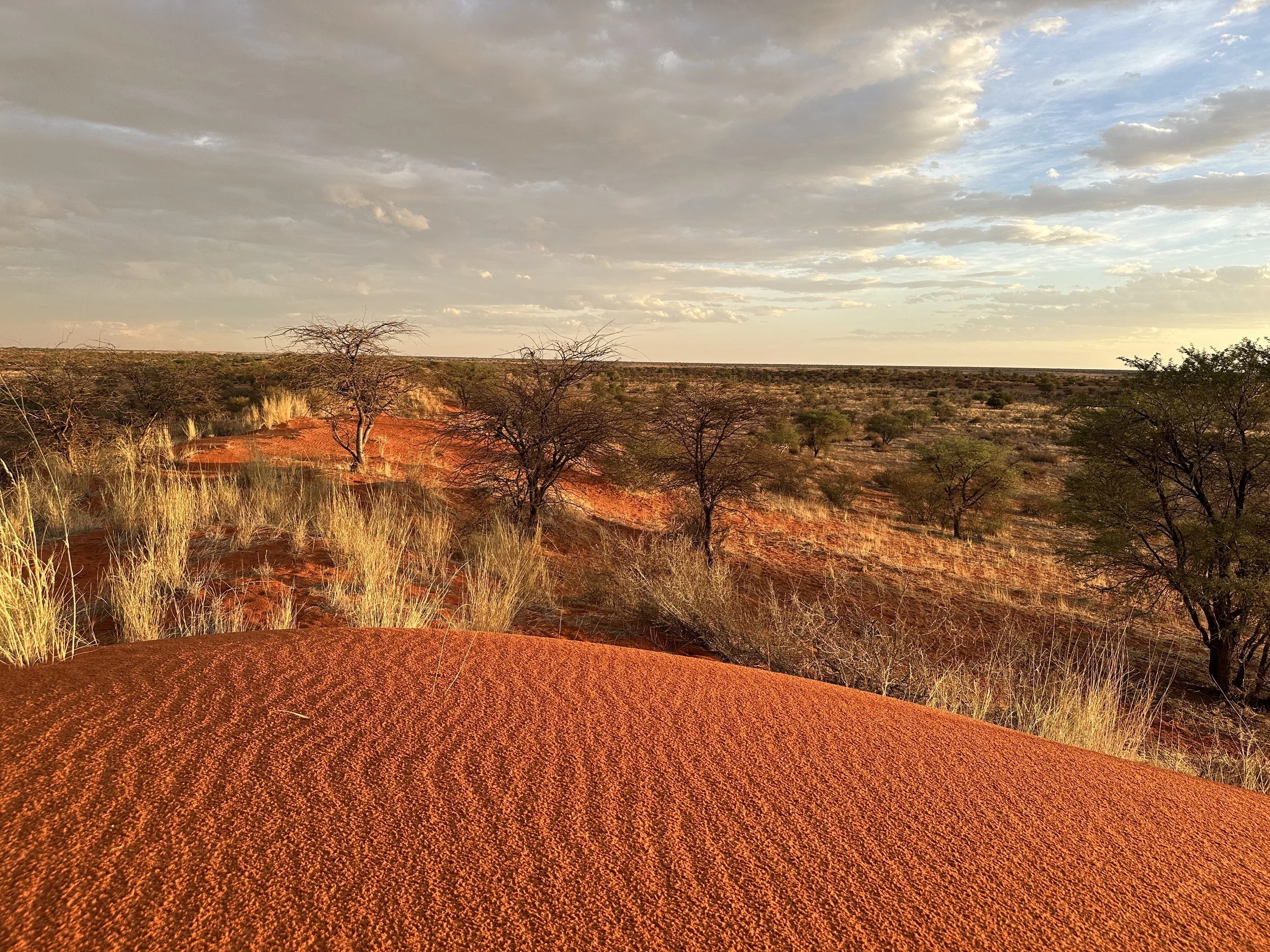
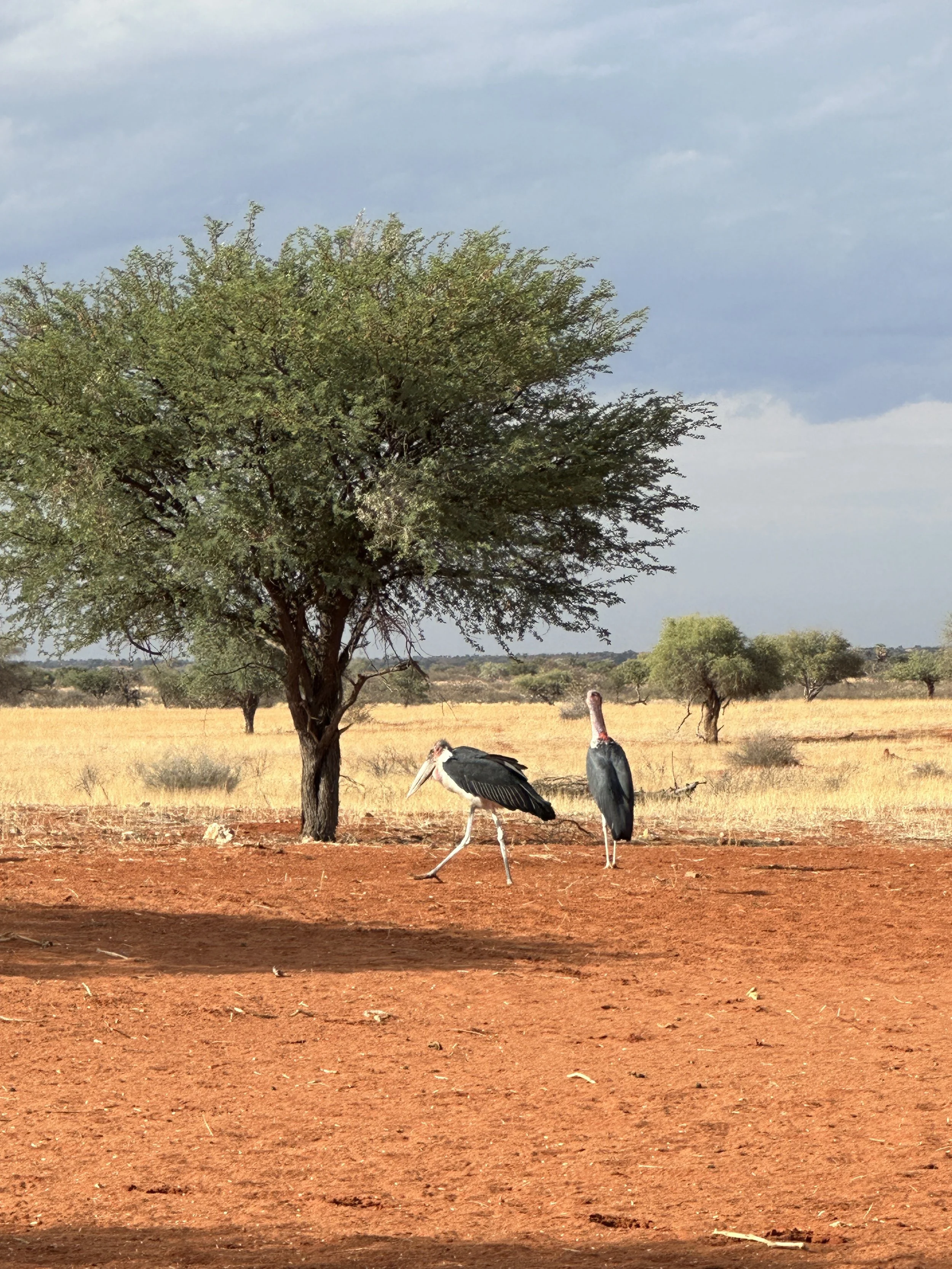
Straight after leaving Windhoek, we arrived at the Kalahari Desert. The sand here is an intense, deep brick-red, covered in golden tufts of desert grass and scattered green acacia trees. It feels less like a barren wasteland and more like a vibrant, ancient savanna.
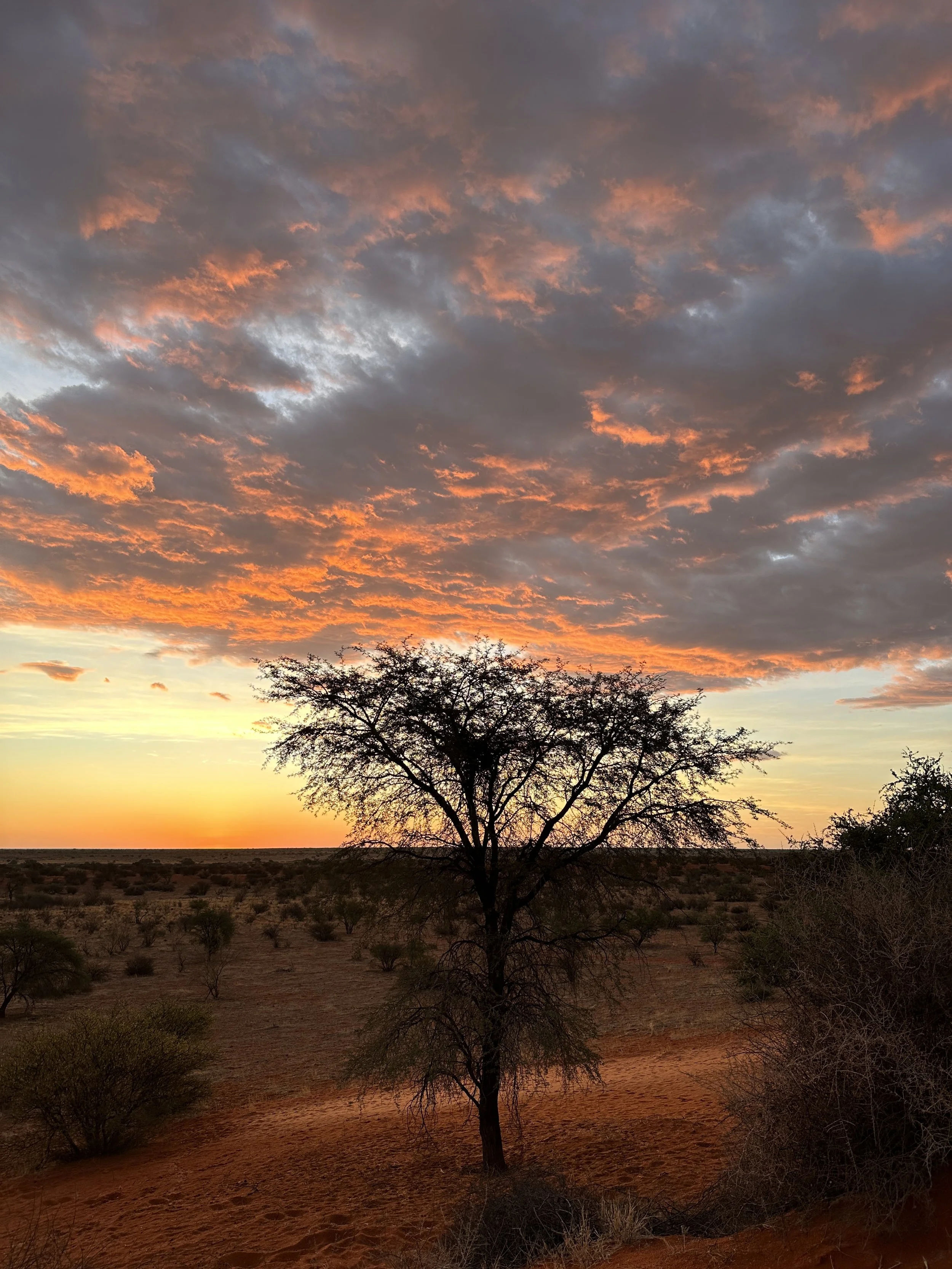
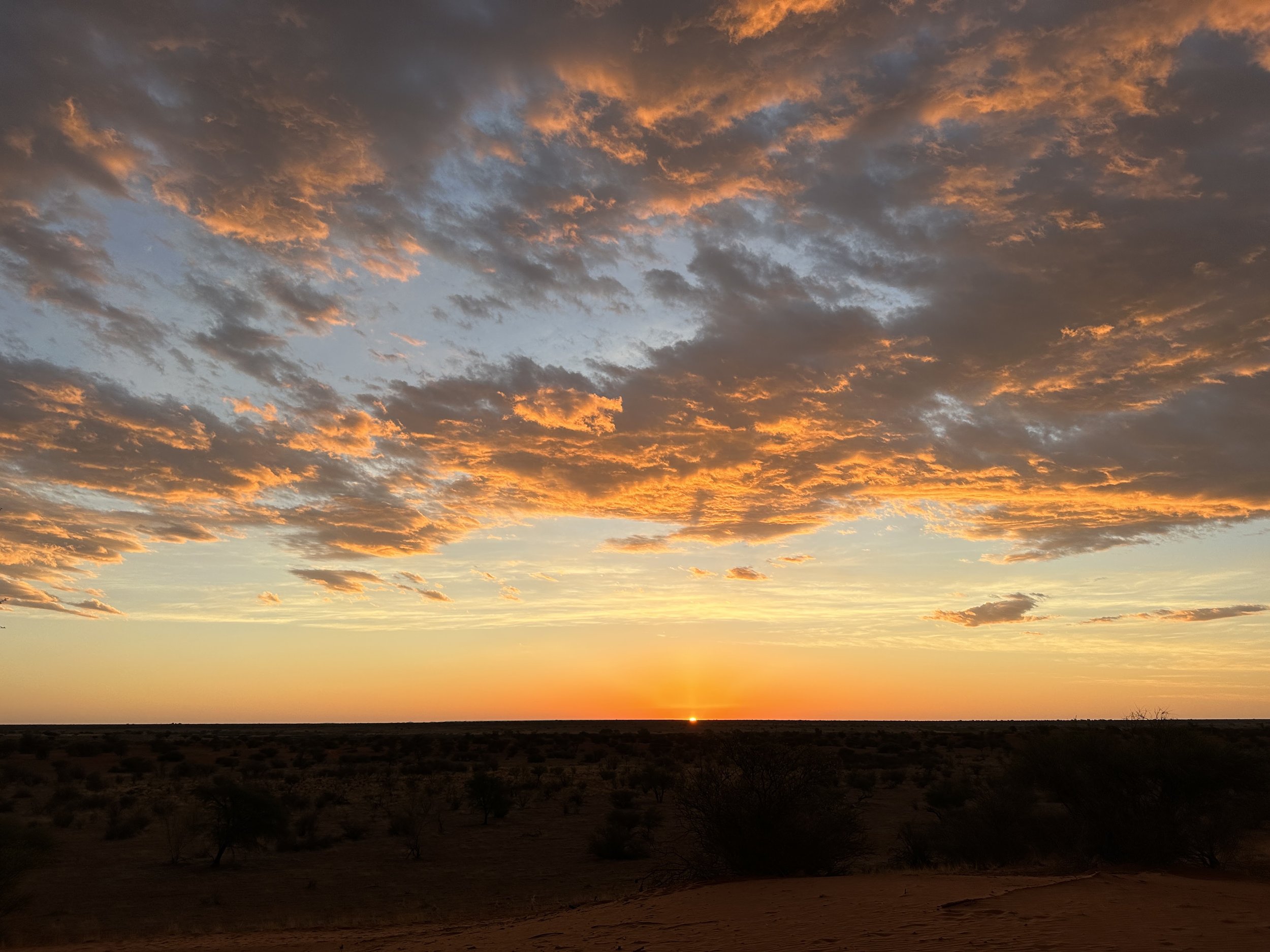
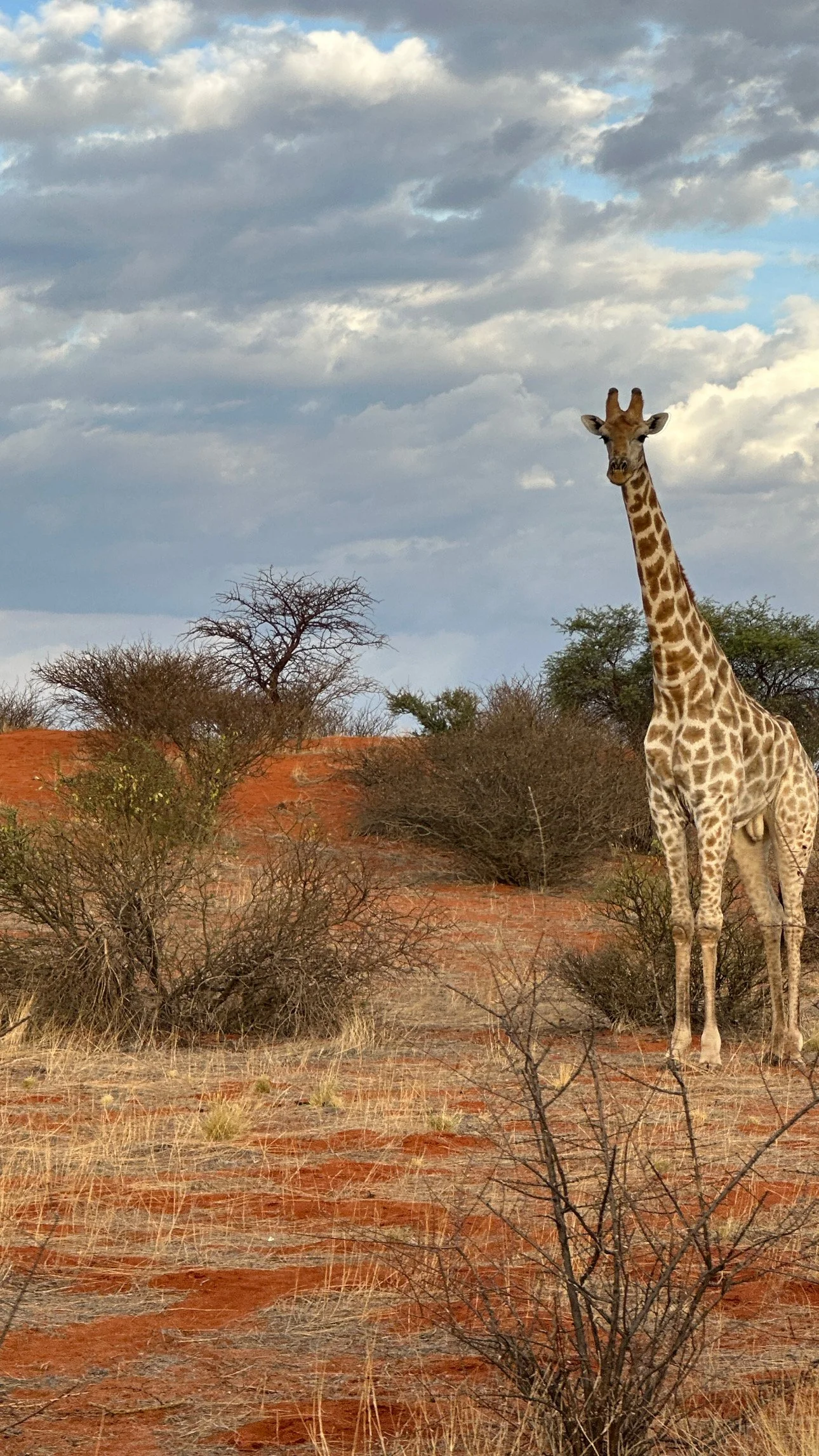
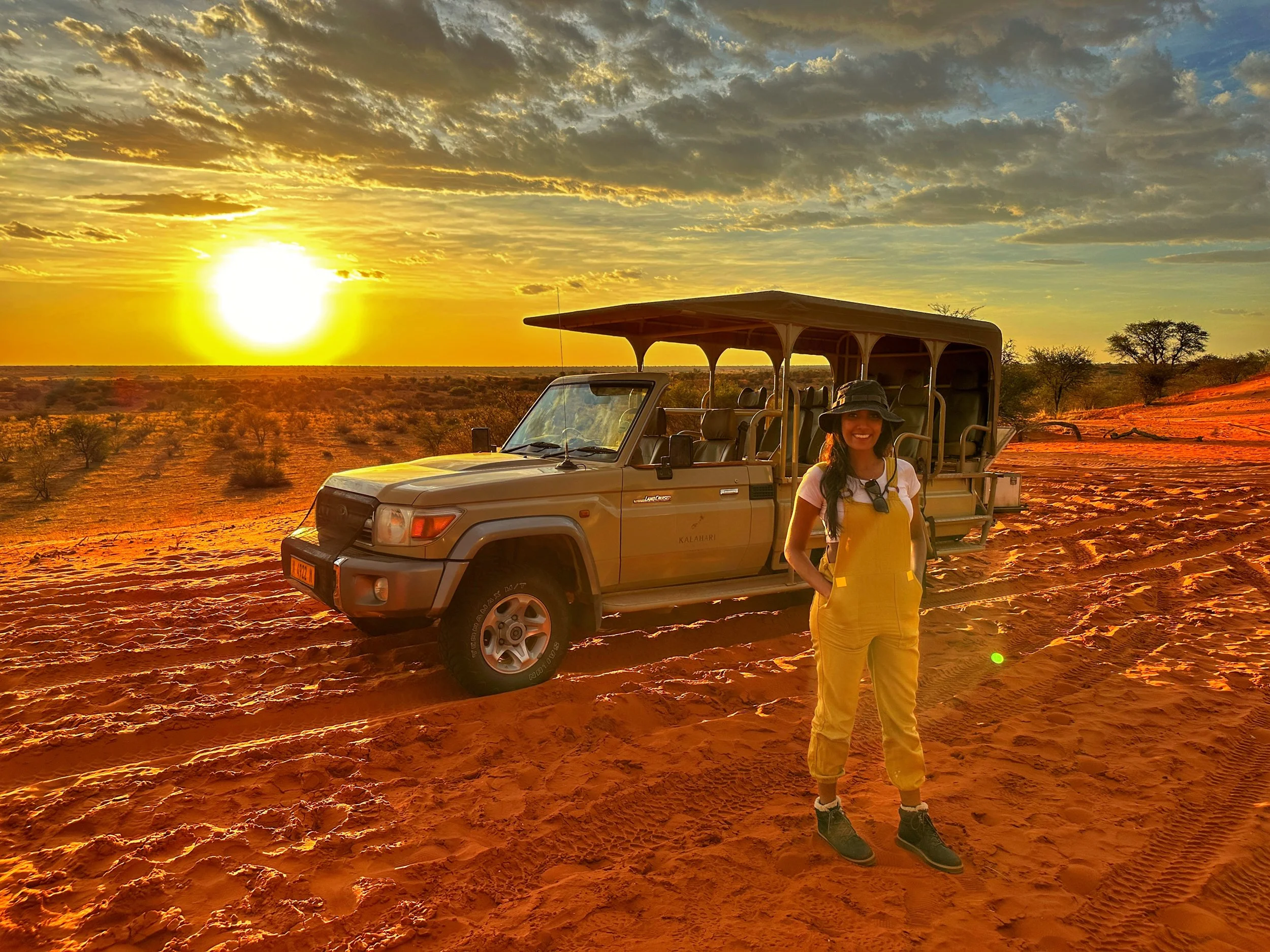
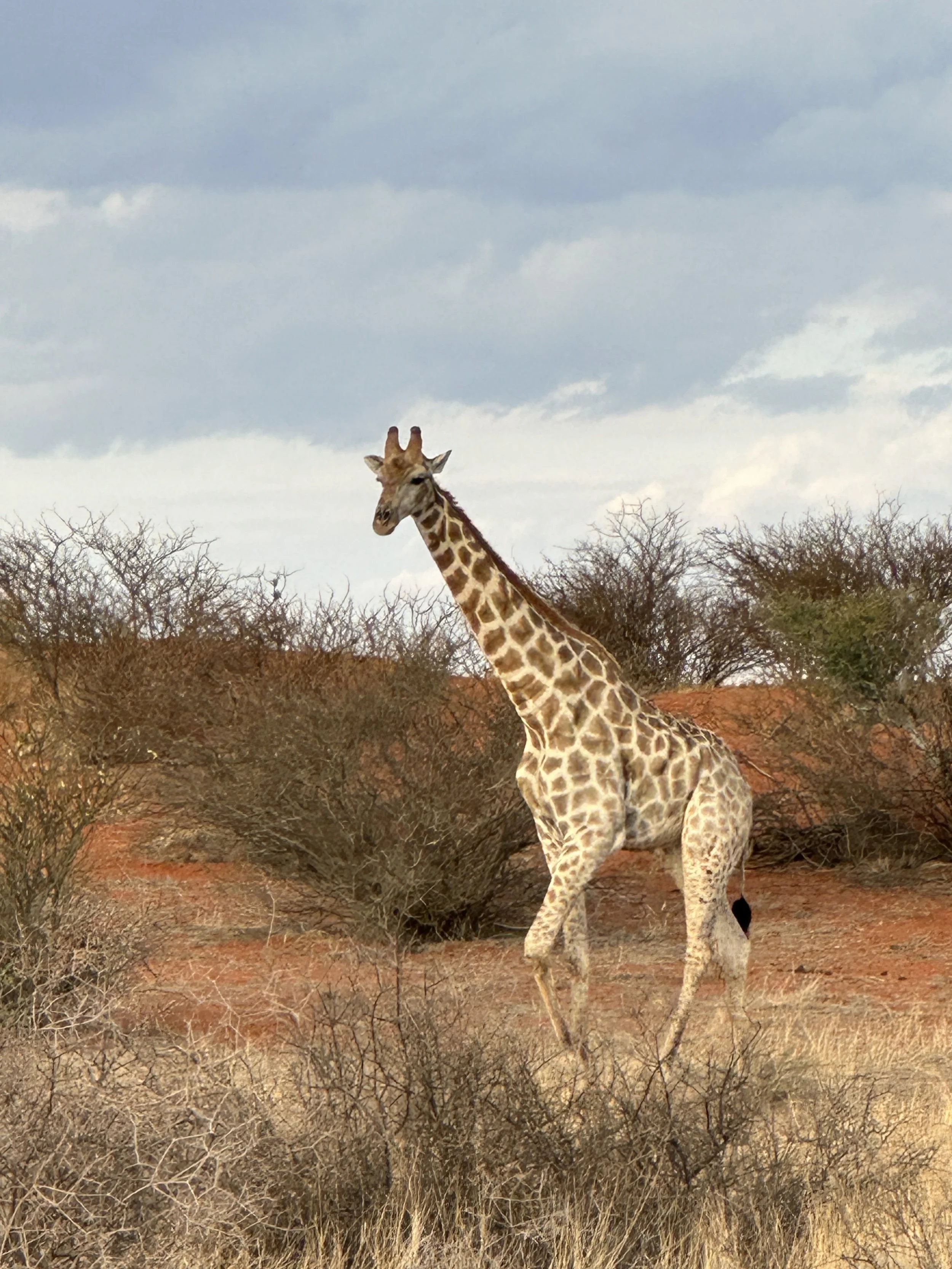
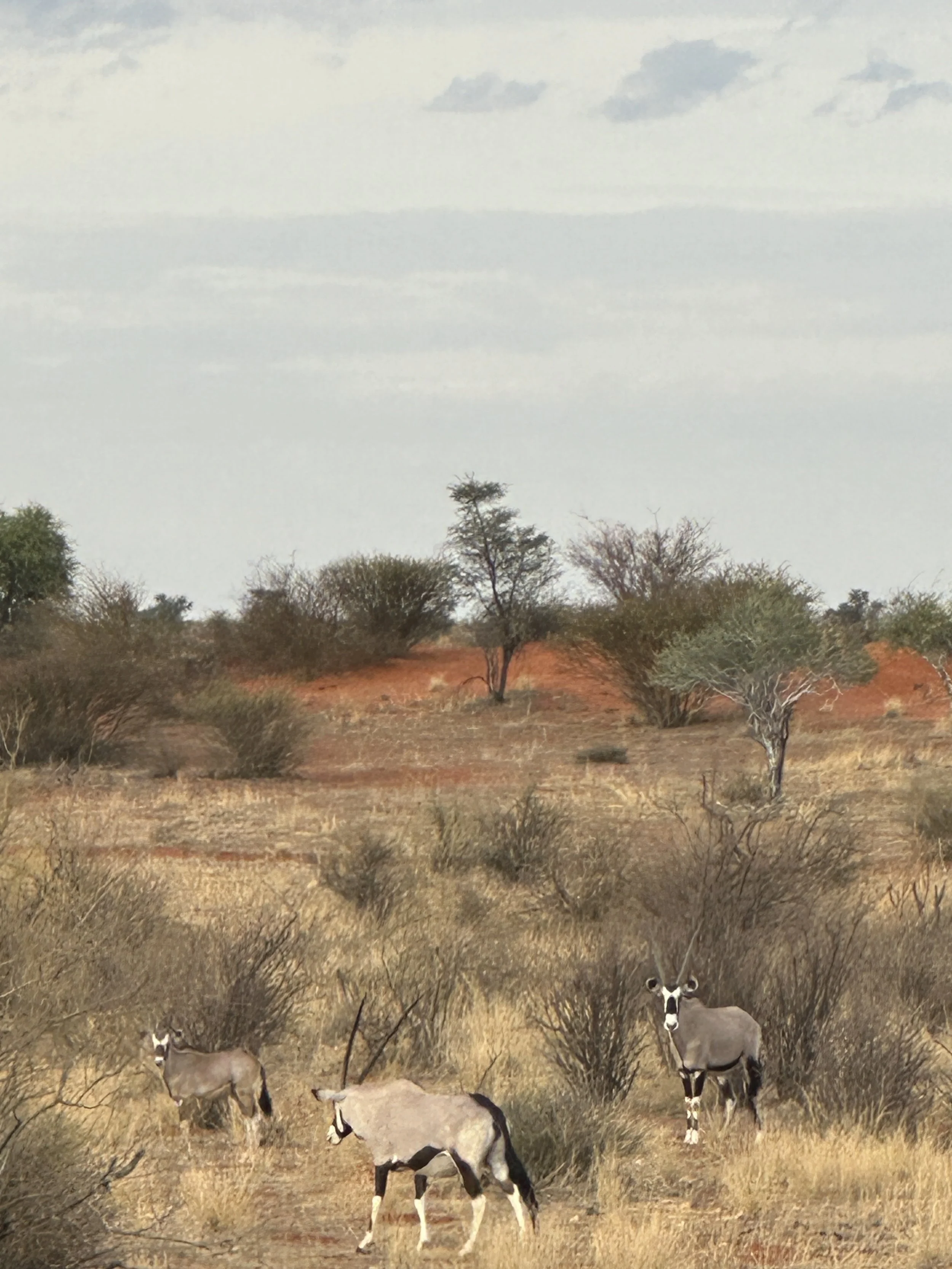
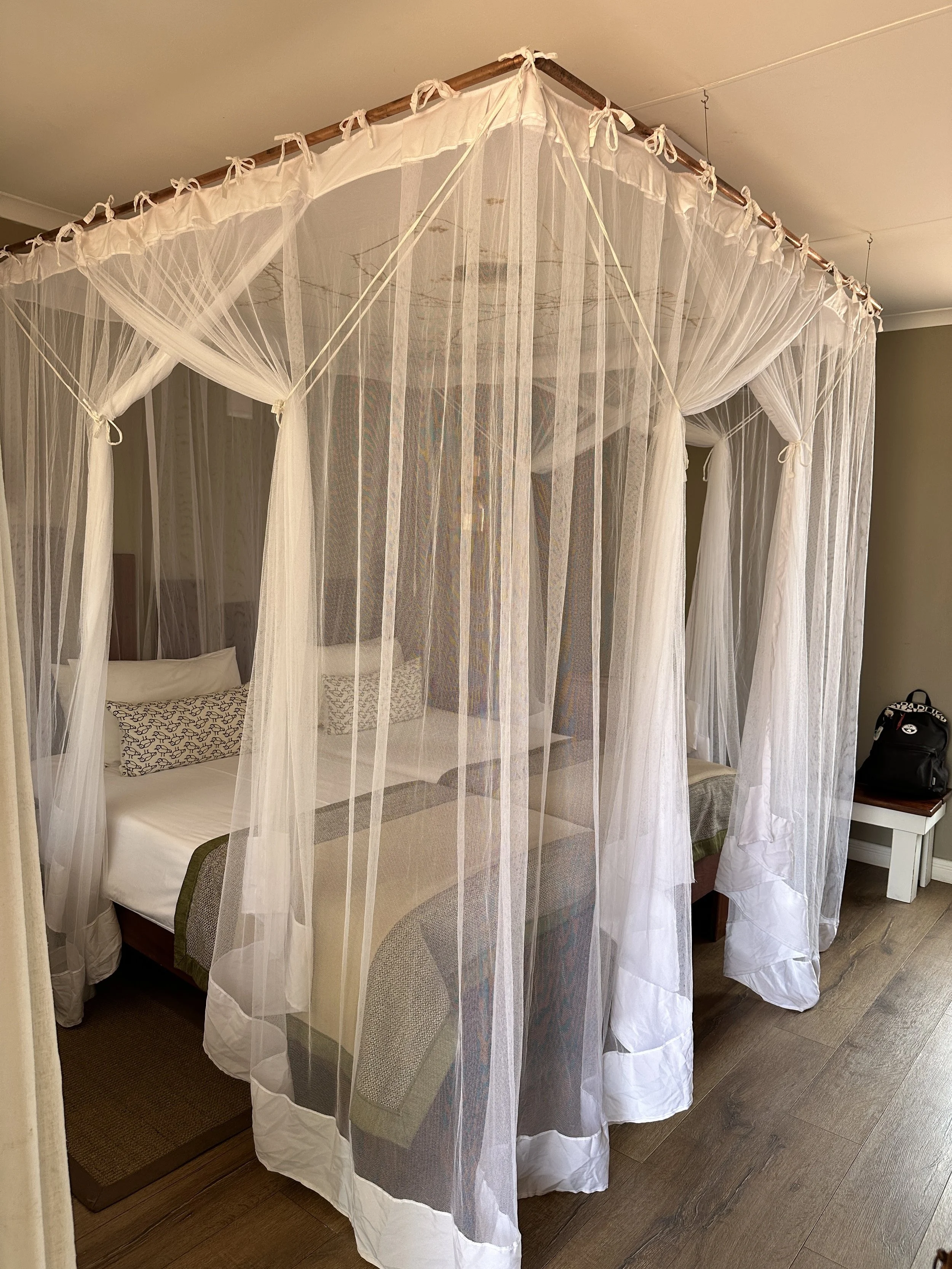
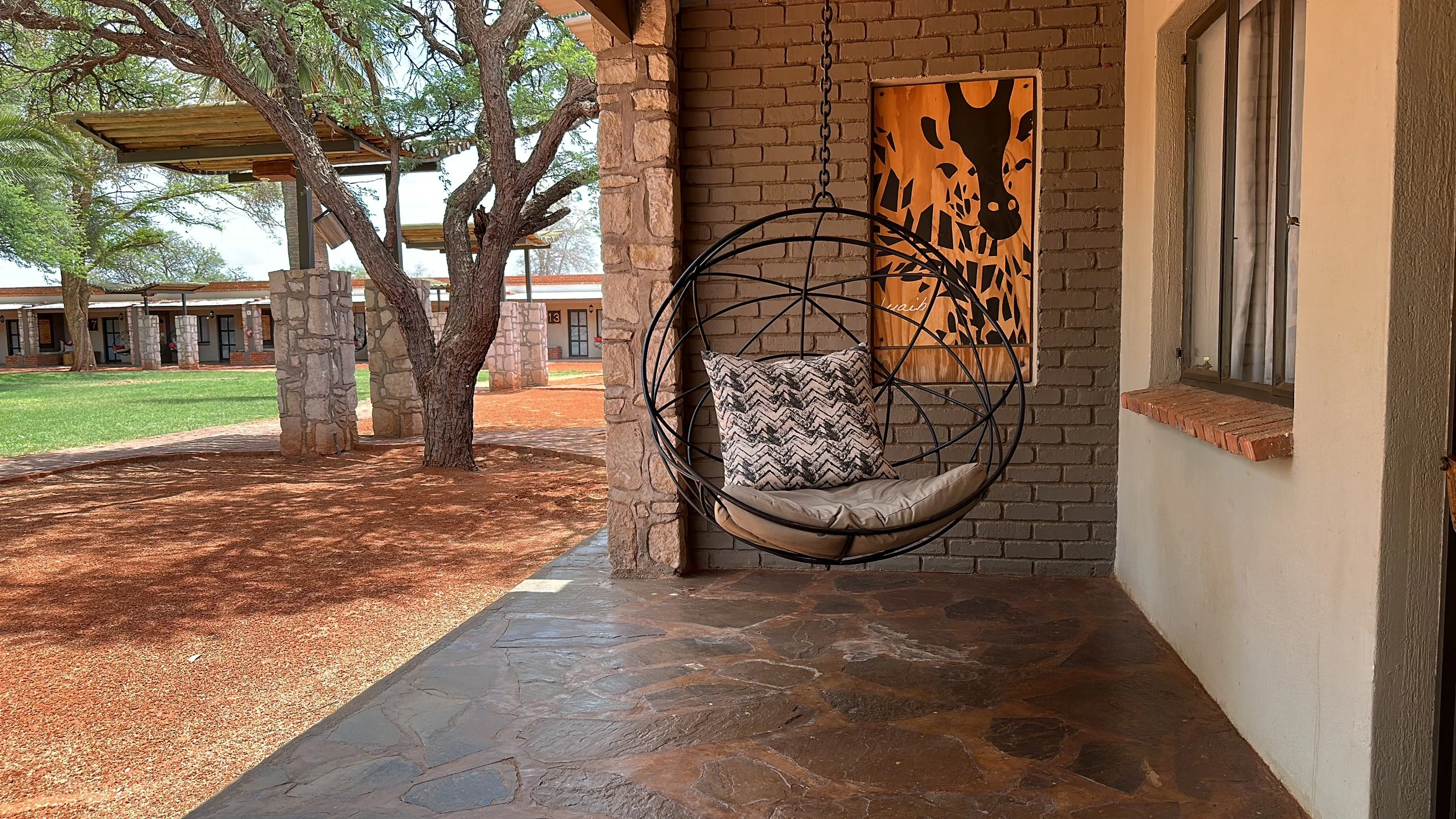
We checked into Gondwana’s Kalahari Anib Lodge, which feels like a literal oasis. It has these beautiful courtyard gardens and pools right in the middle of the desert. But the real event of the day is the late afternoon dune drive. Around 04:30 PM, we piled into an open-top safari vehicle to head out into the private reserve. As the sun began to drop, the red sand didn't just catch the light—it seemed to glow from within, turning an incredibly deep, almost neon shade of terracotta. Along the way, we spotted a small herd of springbok, giraffes, and a majestic Oryx with its spear-like horns standing on a ridge, silhouetted perfectly against the burning sky.
Just before the sun dipped below the horizon, our guide parked right on the crest of a massive red dune and set up the ultimate Namibian tradition: the sundowner. He dropped the tailgate, pulled out a cooler, and poured us ice-cold gin and tonics along with bowls of local snacks. Standing barefoot on the crest of a dune, feeling the warm red sand between my toes, and sipping a G&T while the sky cycled through shades of bruised purple, pink, and gold was pure magic.
Fish River Canyon
We spent the next morning driving south through a landscape that can only be described as a completely endless, rocky moonscape. The road just stretches out straight to the horizon, the gravel rattling against the undercarriage, and you start to think the whole world is flat and dusty.
Then, seemingly out of nowhere, the earth just cracks wide open.
Fish River Canyon is supposed to be the second largest canyon on earth, but numbers don't really do it justice when you’re standing on the edge. Walk up to the main viewpoint, look down into a giant, jagged chasm dropping over 500 meters straight down, and your stomach instantly does a minor flip. I actually had to take a step back and grip the railing. The canyon walls look like a twisted maze of crumpled, ancient rock that goes on for 160 kilometers. It makes you feel incredibly, wonderfully insignificant.
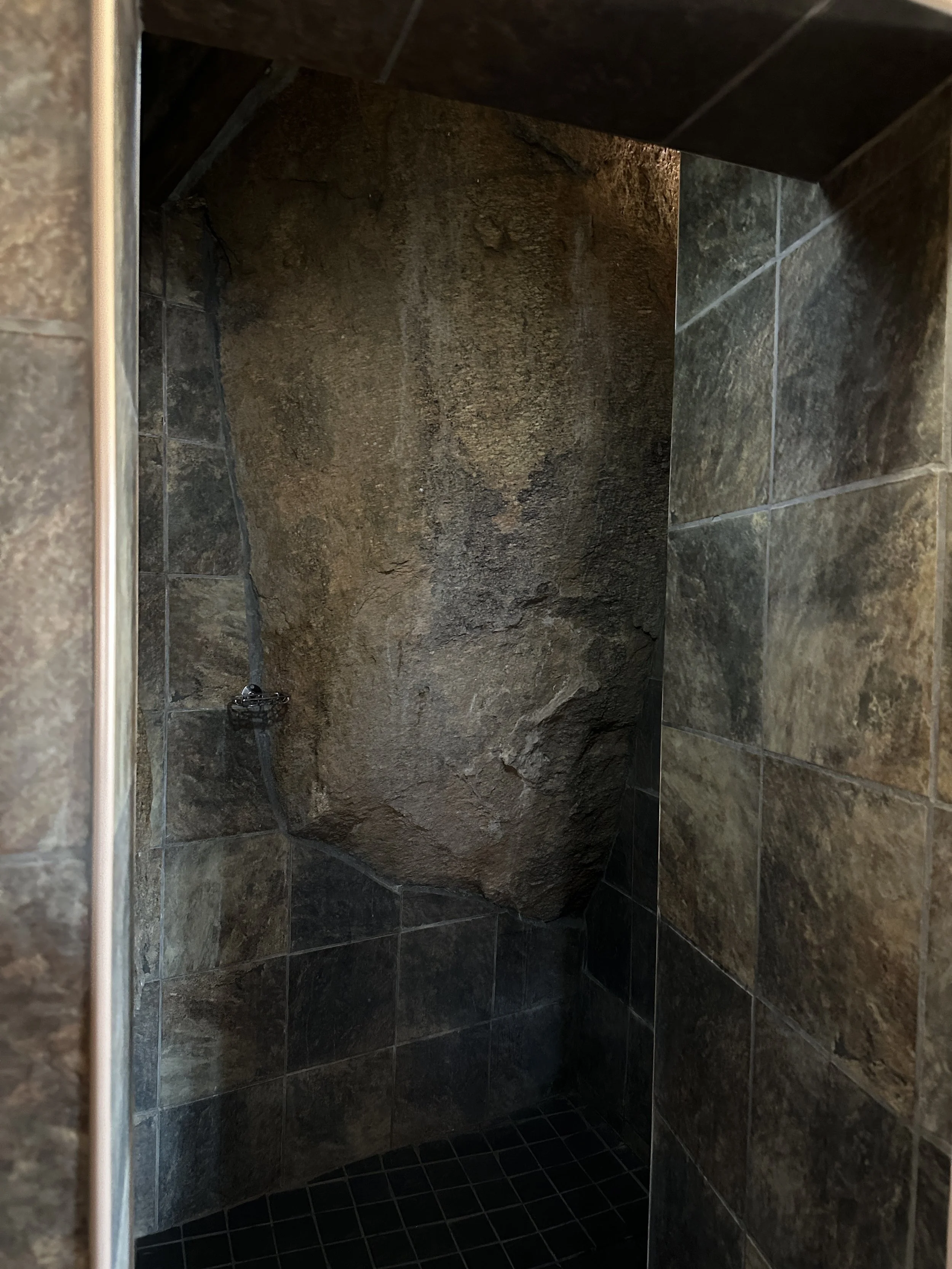
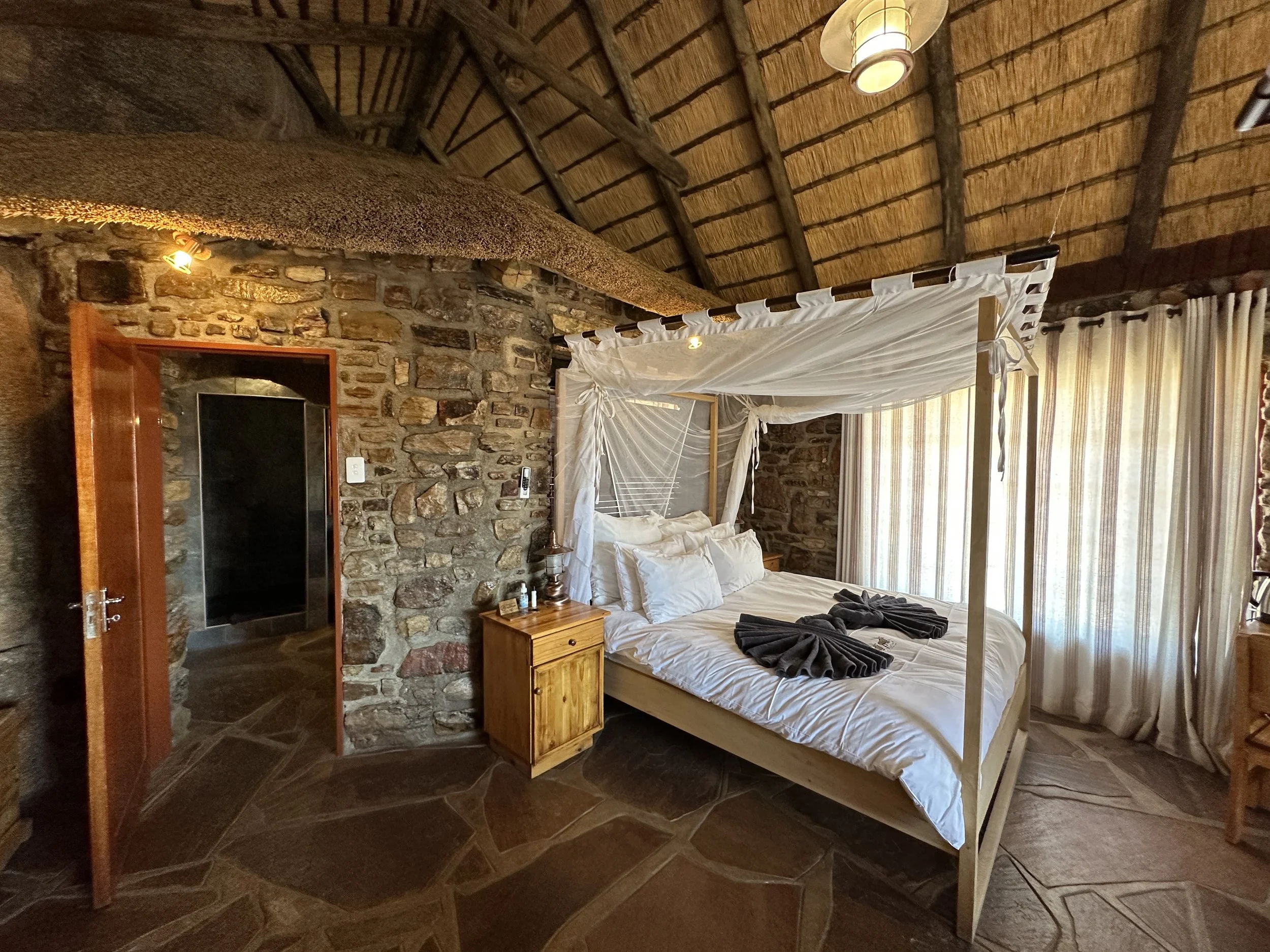
We checked into Gondwana’s Canyon Lodge, and the design here is pure genius. Instead of clearing the land, they built the stone-and-thatch chalets directly into a massive cluster of giant, rounded granite boulders. When I walked into our room, I burst out laughing—there is a literal, massive ancient boulder sticking halfway out of the bathroom wall. It feels like you’re sleeping inside a luxury cave or deep inside the earth itself.
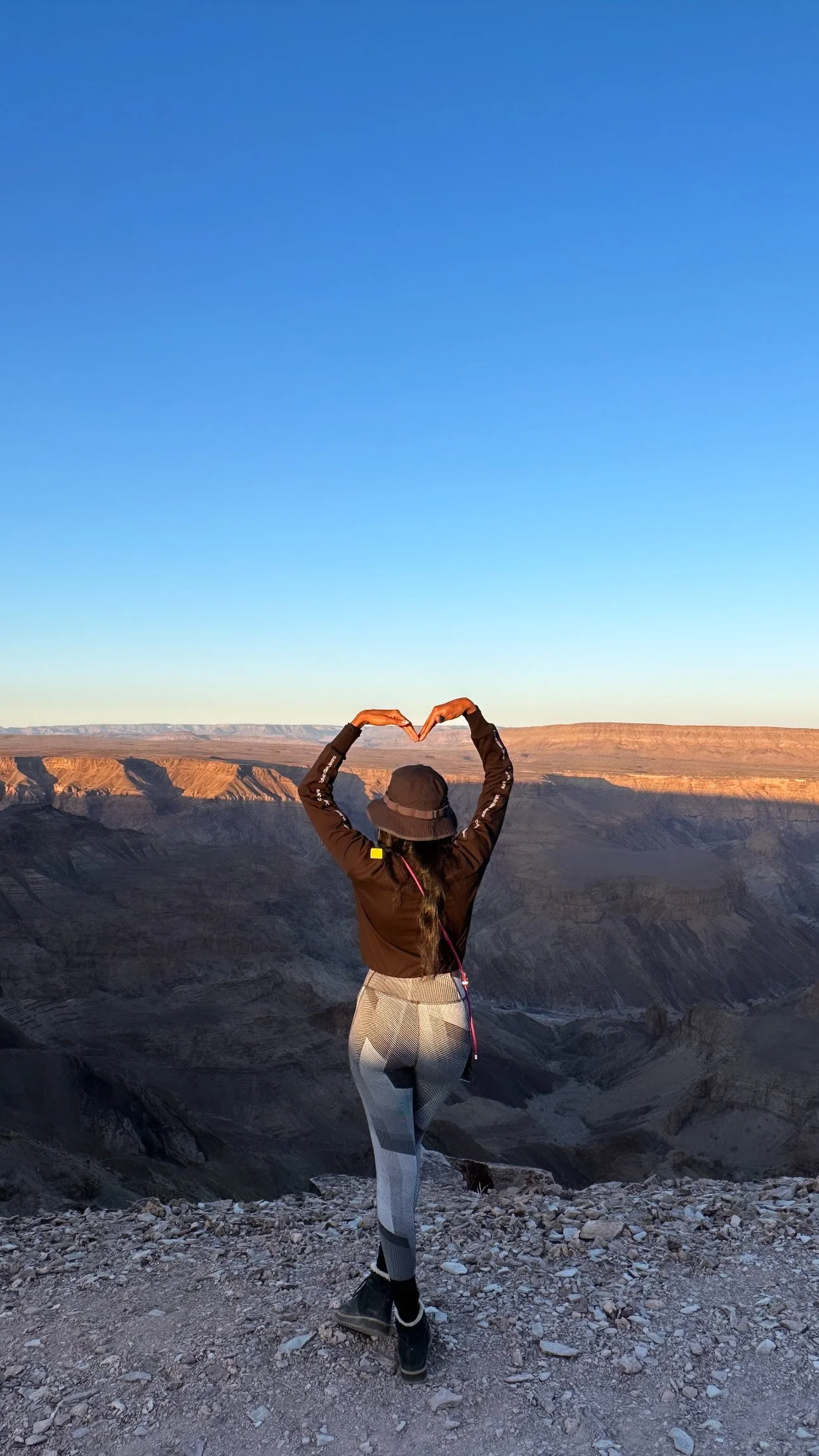
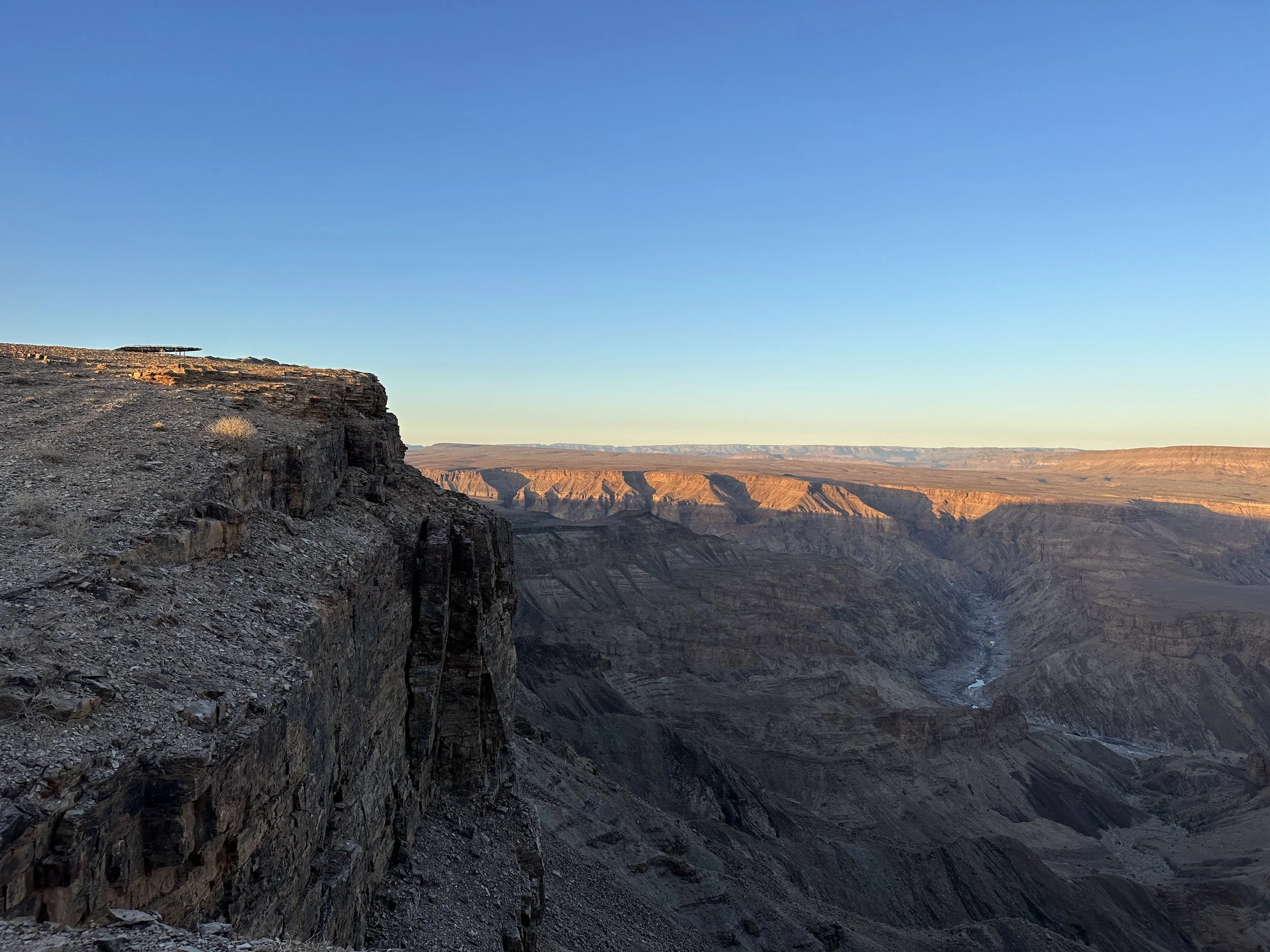
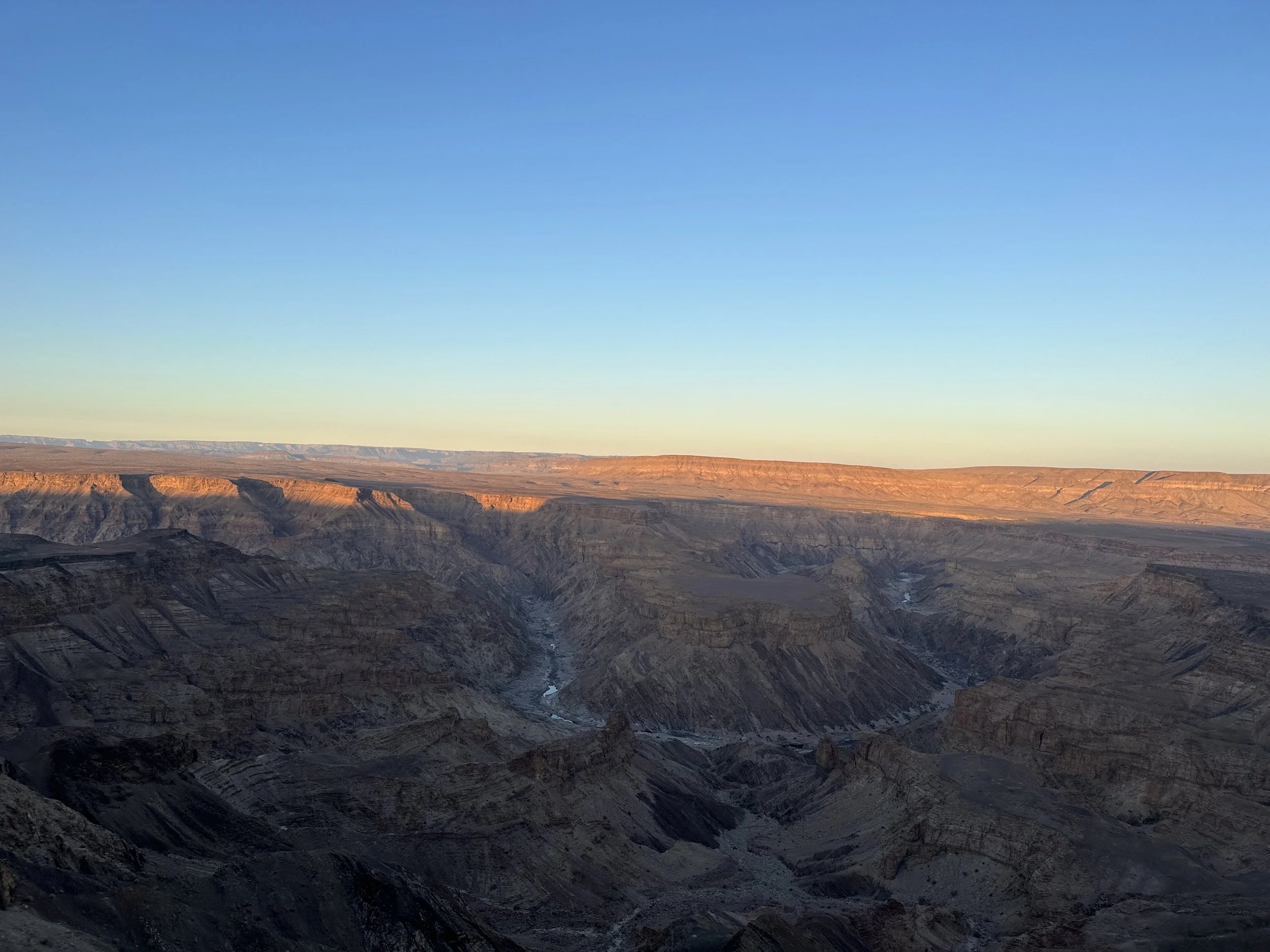
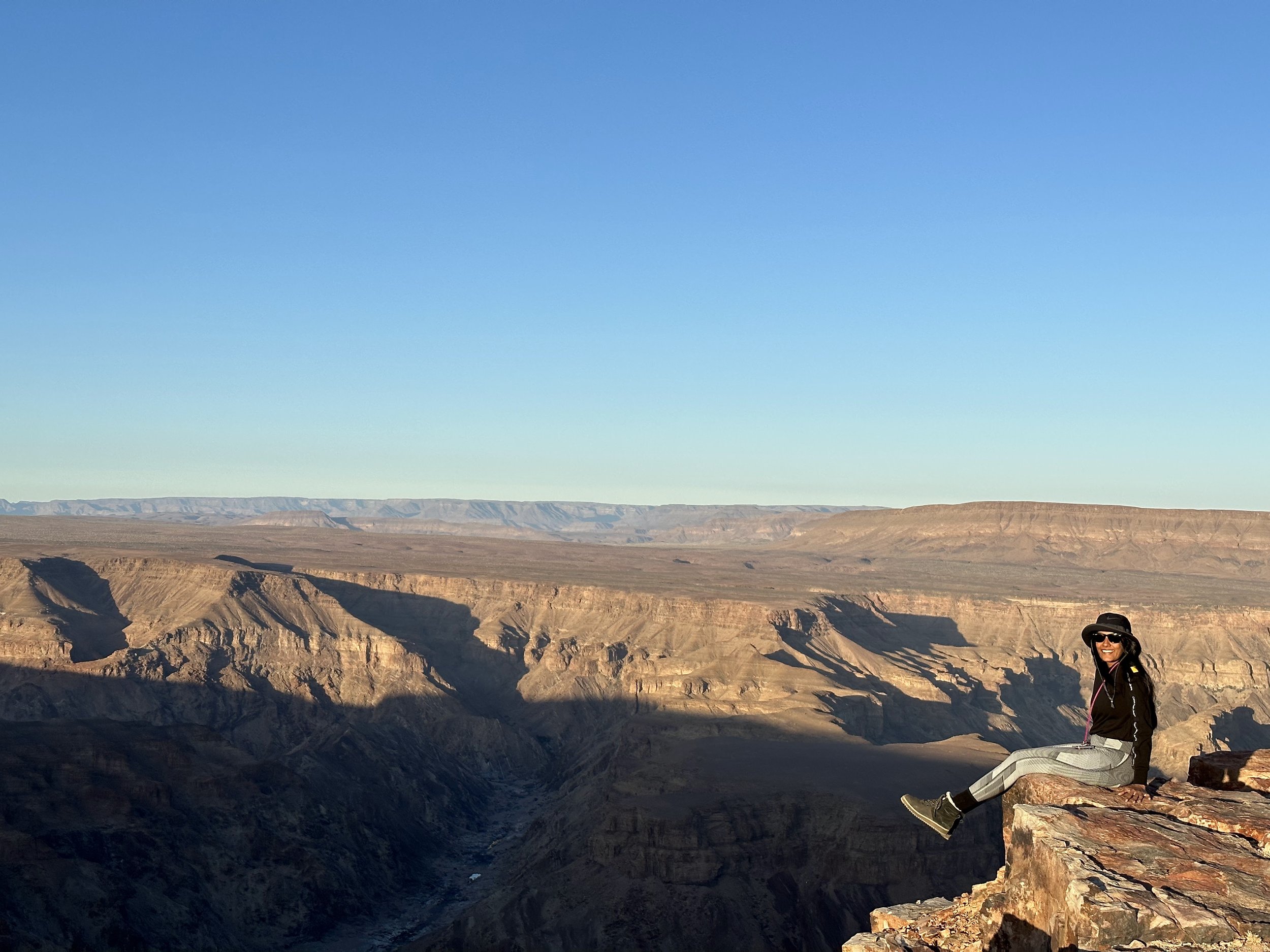
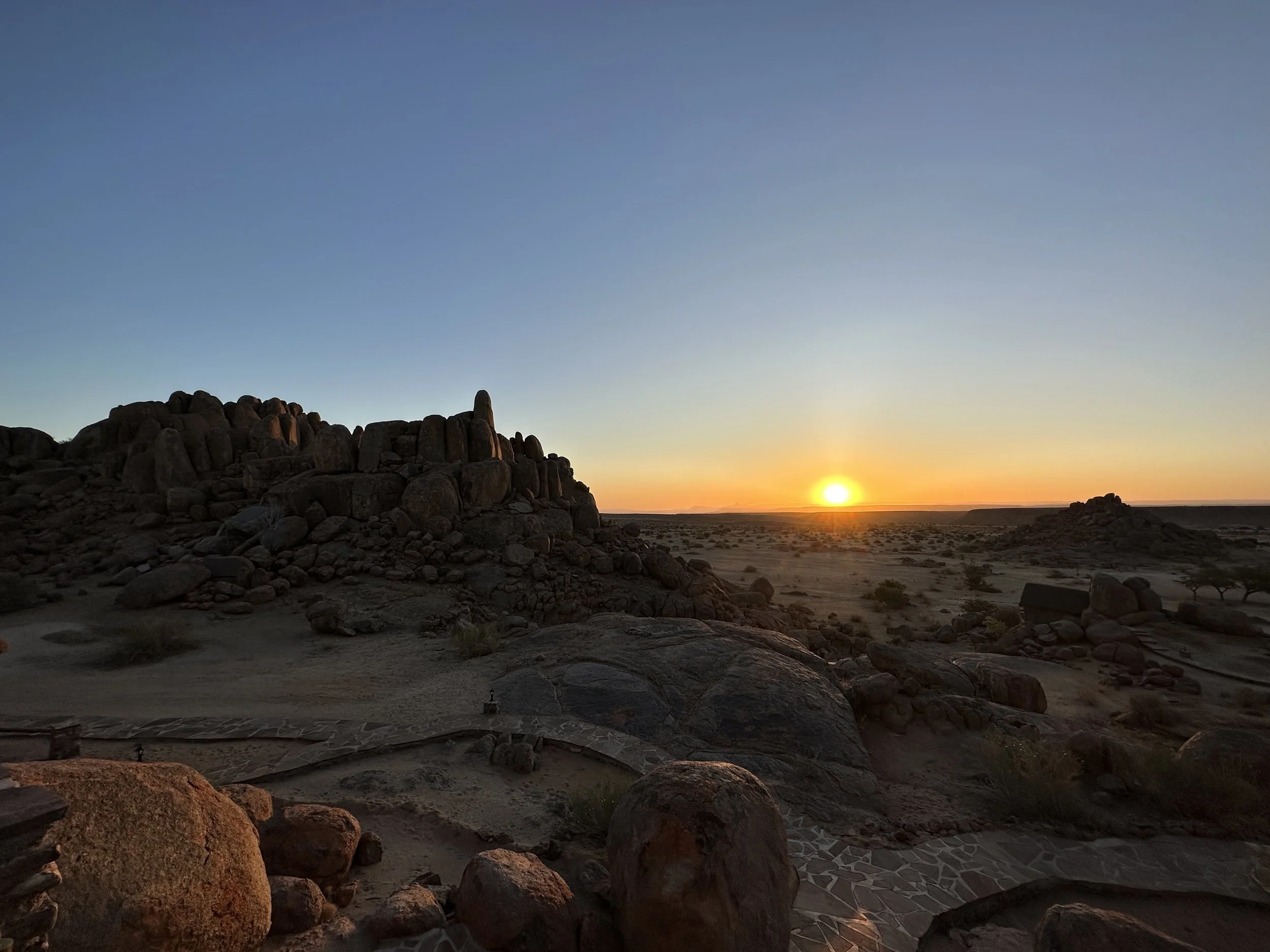
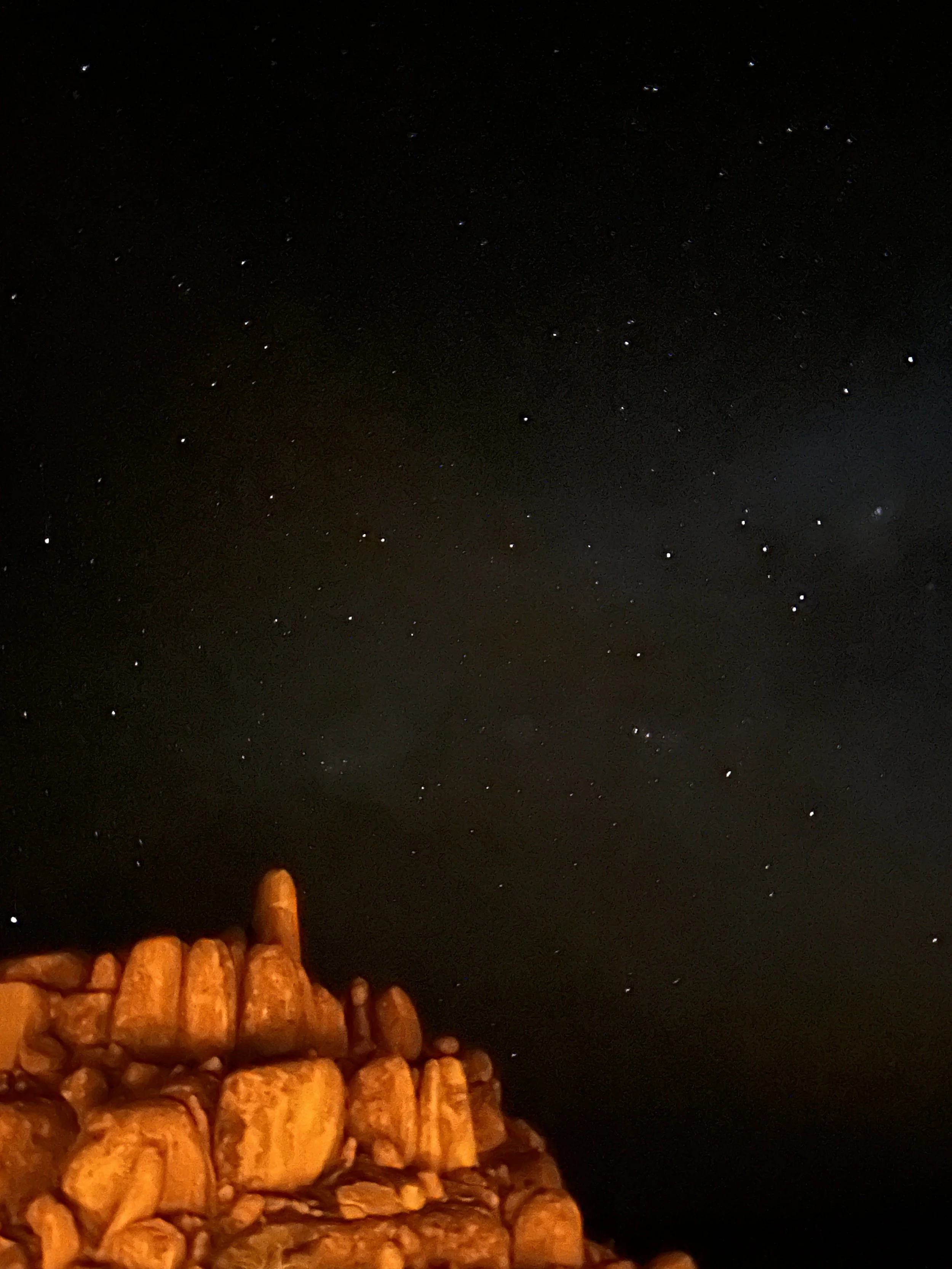
View from our Patio
Trying very hard to learn the local language
Ghost Town Kolmanskop
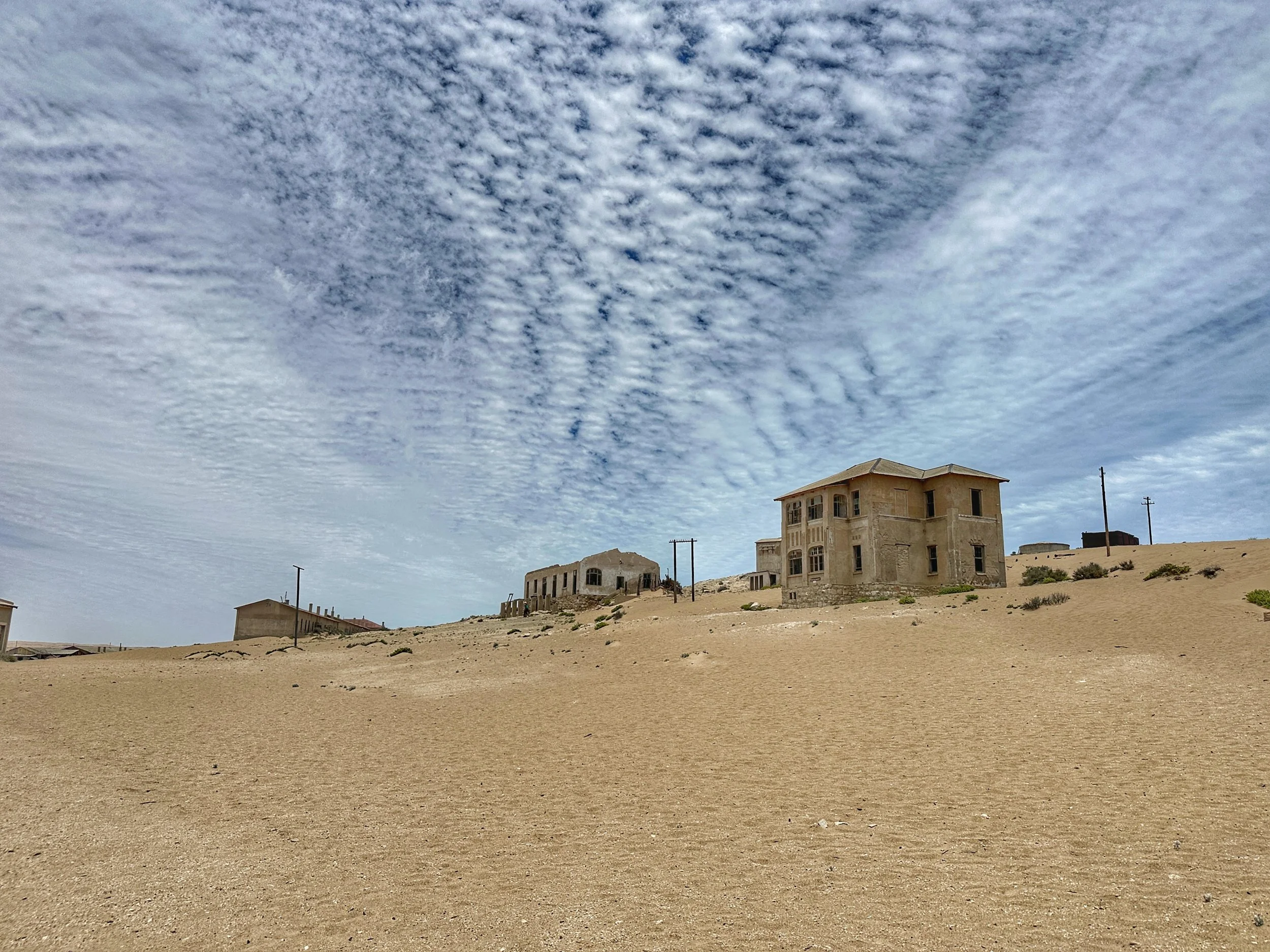
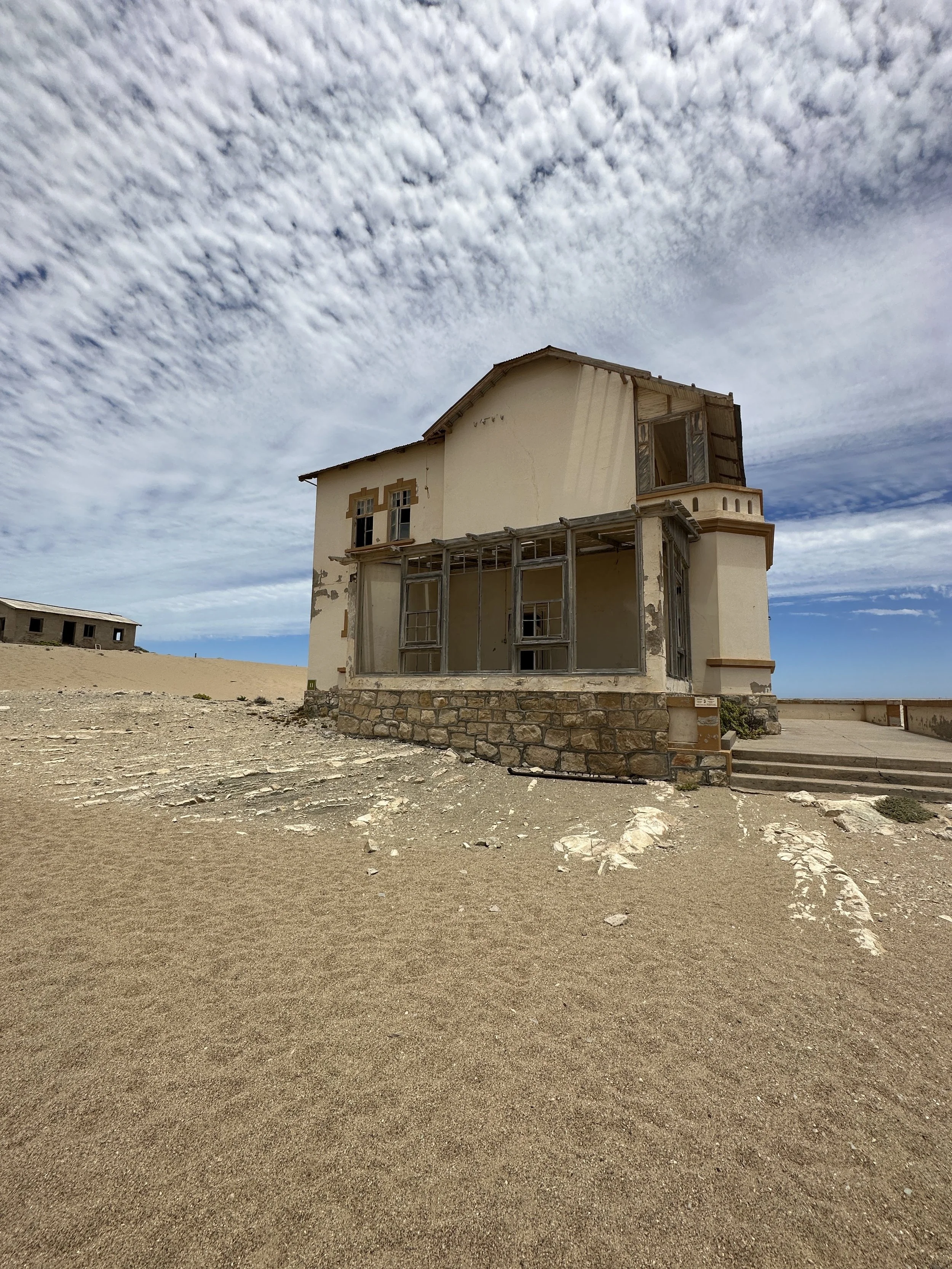
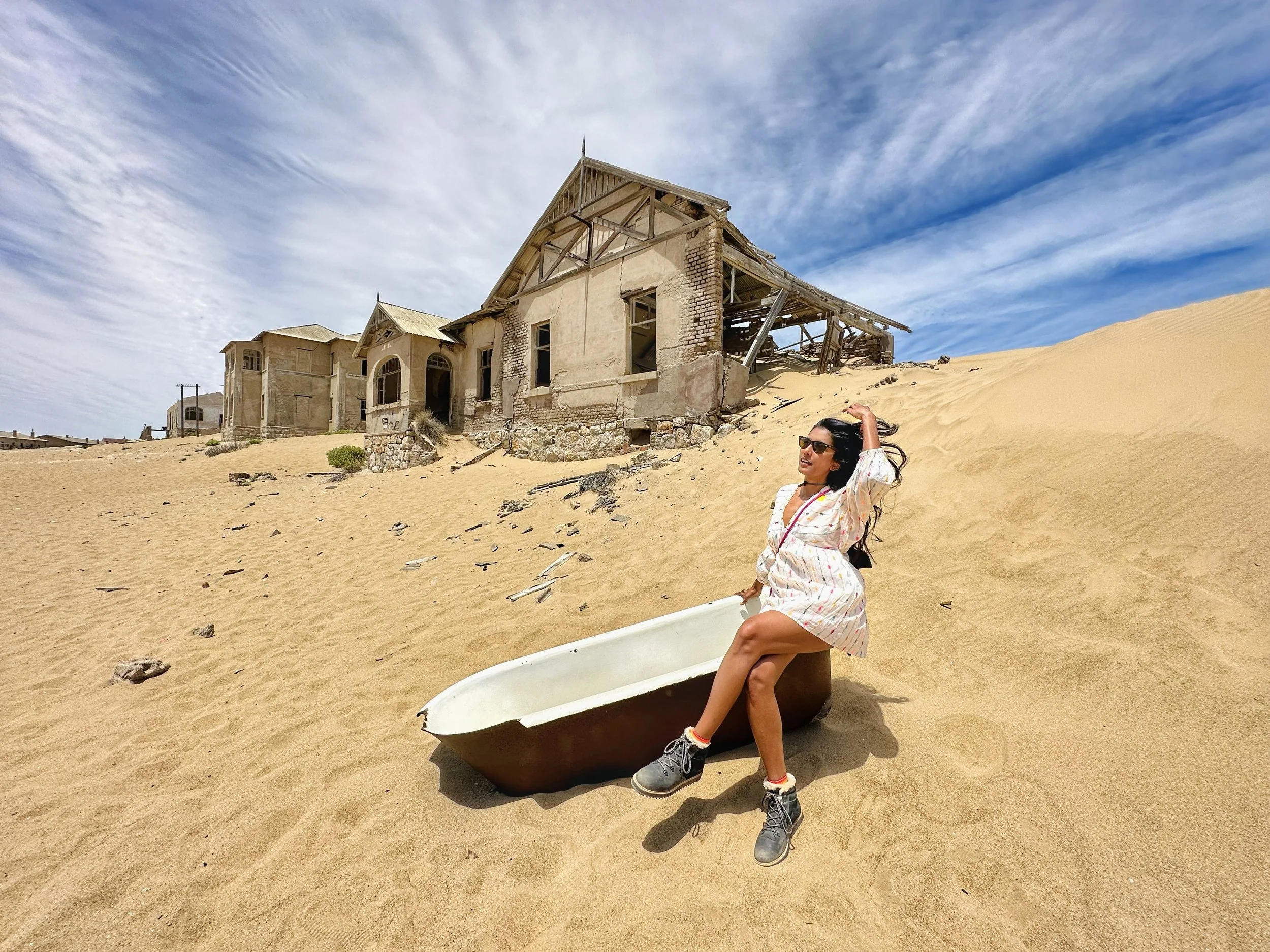
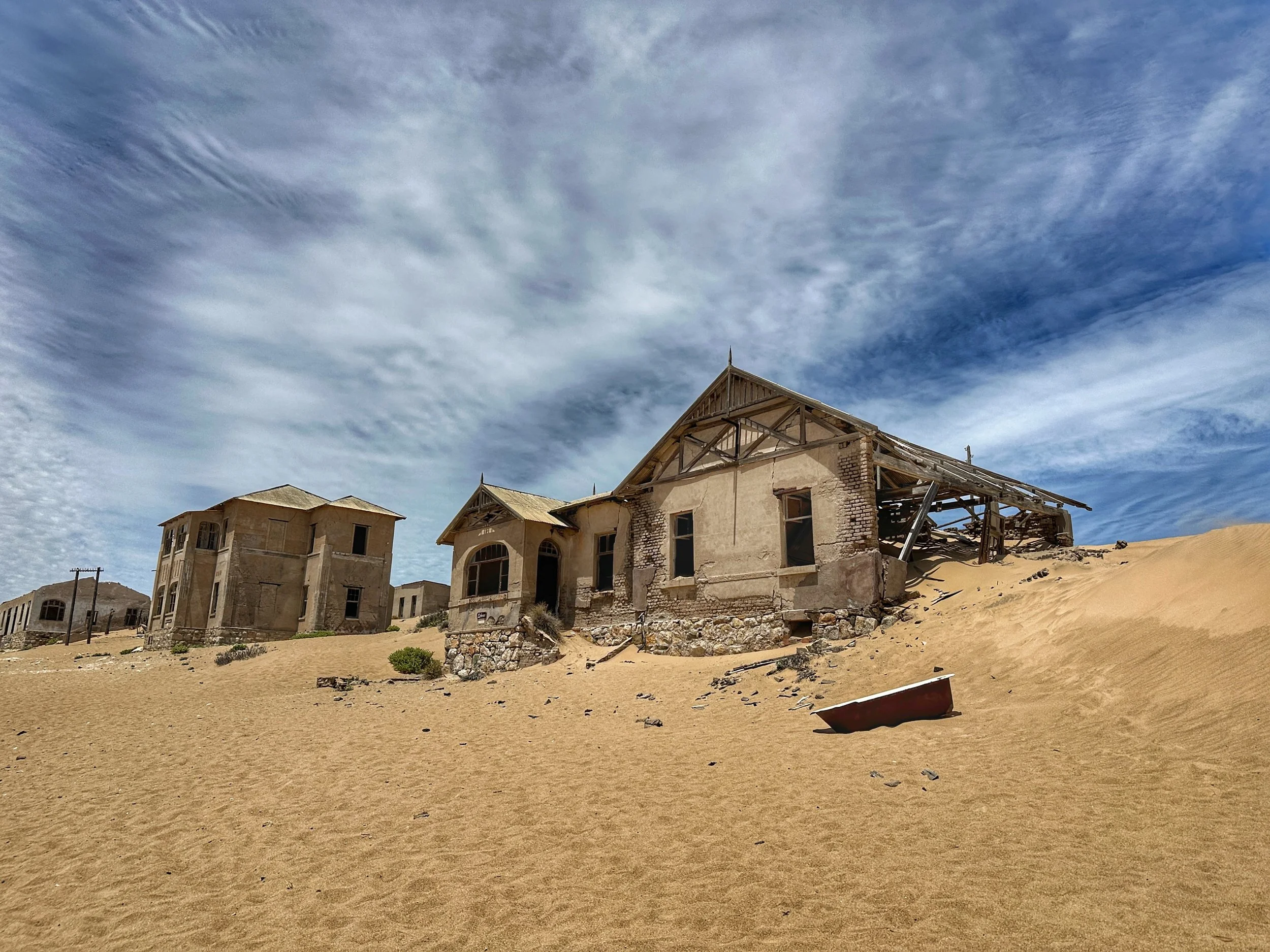
Our final stop in the deep south took us out toward the coast to Kolmanskop, an abandoned diamond mining town that is being slowly, systematically eaten by the Namib Desert.
In the early 1900s, this was supposedly the richest town on the planet, built by German miners who found diamonds literally sitting on top of the sand. They built an entire European village out here in the middle of nowhere—complete with a grand ballroom, a casino, an ice factory, a bowling alley, and even the southern hemisphere's first X-ray machine. But by the 1950s, the diamonds ran out, everyone packed up and vanished, and the desert moved right in.
The catch here is that you can't just run wild immediately; you have to do a compulsory guided tour first. Honestly, I’m glad we did. Hearing stories about the families who used to live here while staring at the decay made the whole place feel incredibly heavy with history.
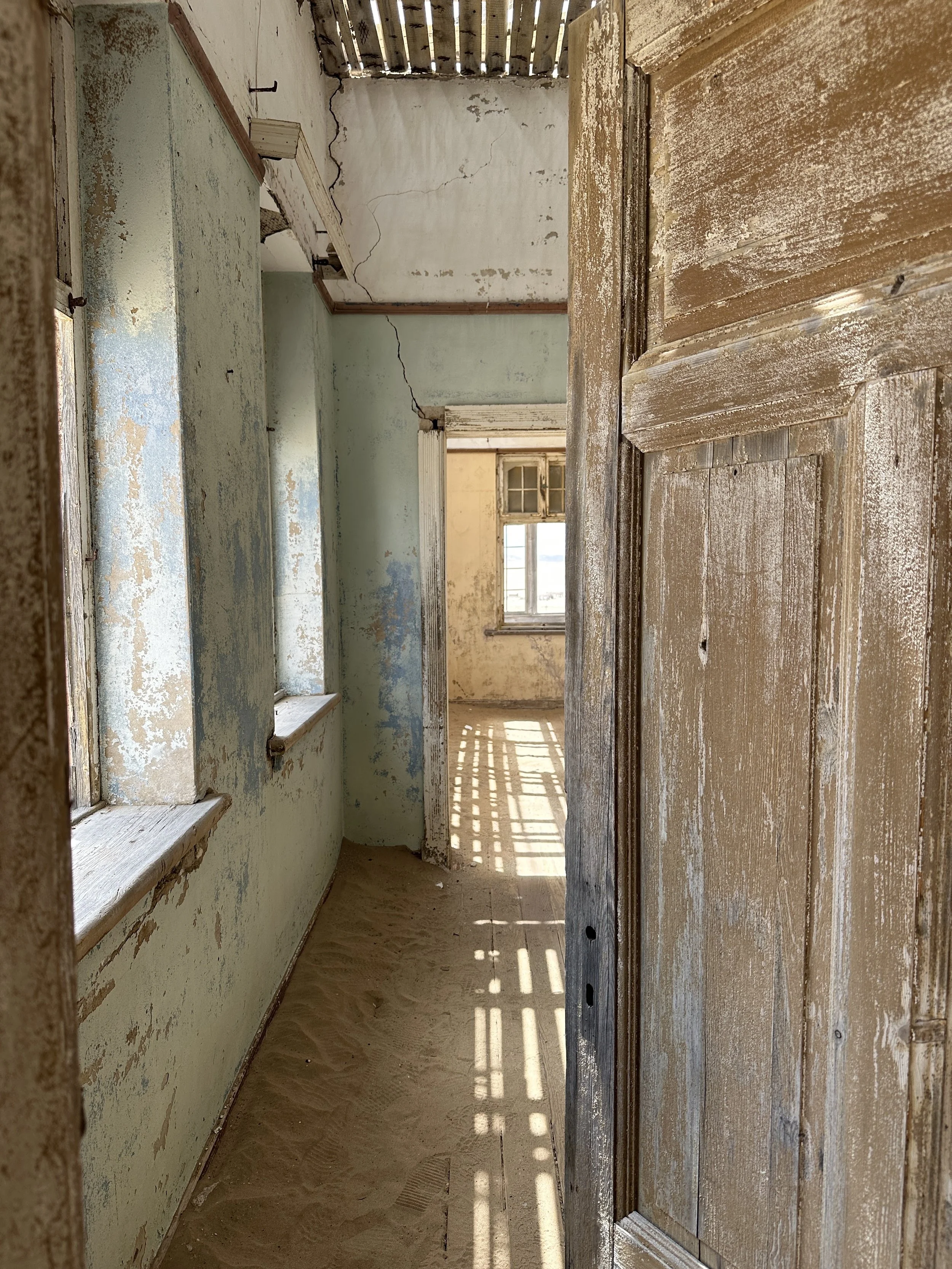
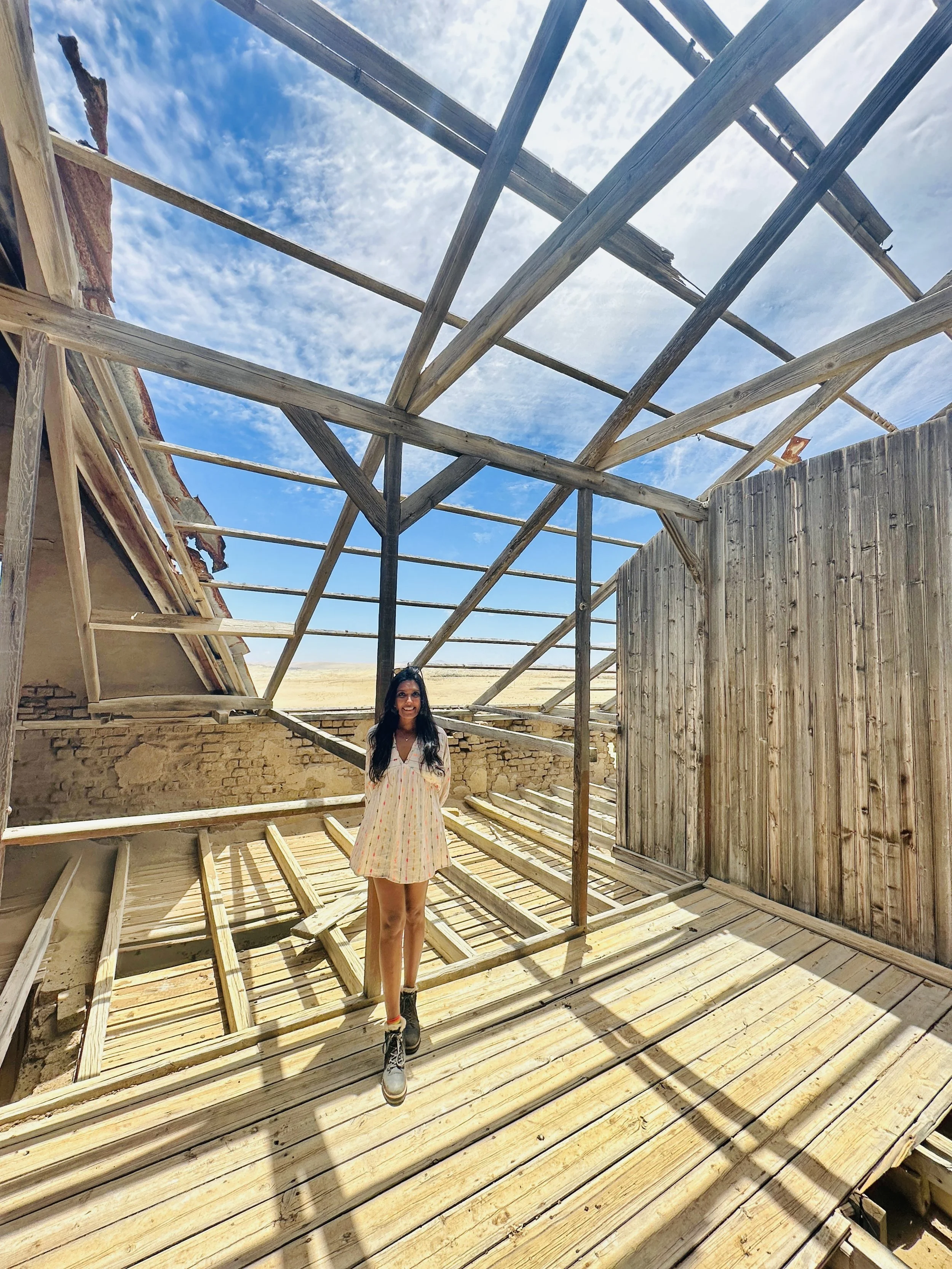
Once the tour wrapped up, they let us loose to explore on our own. You have to be seriously careful walking through these old houses. The floorboards are completely rotted out in places, the ceilings look ready to cave in, and rusty nails are everywhere. It’s an absolute playground for exploration, but you definitely have to watch your step.
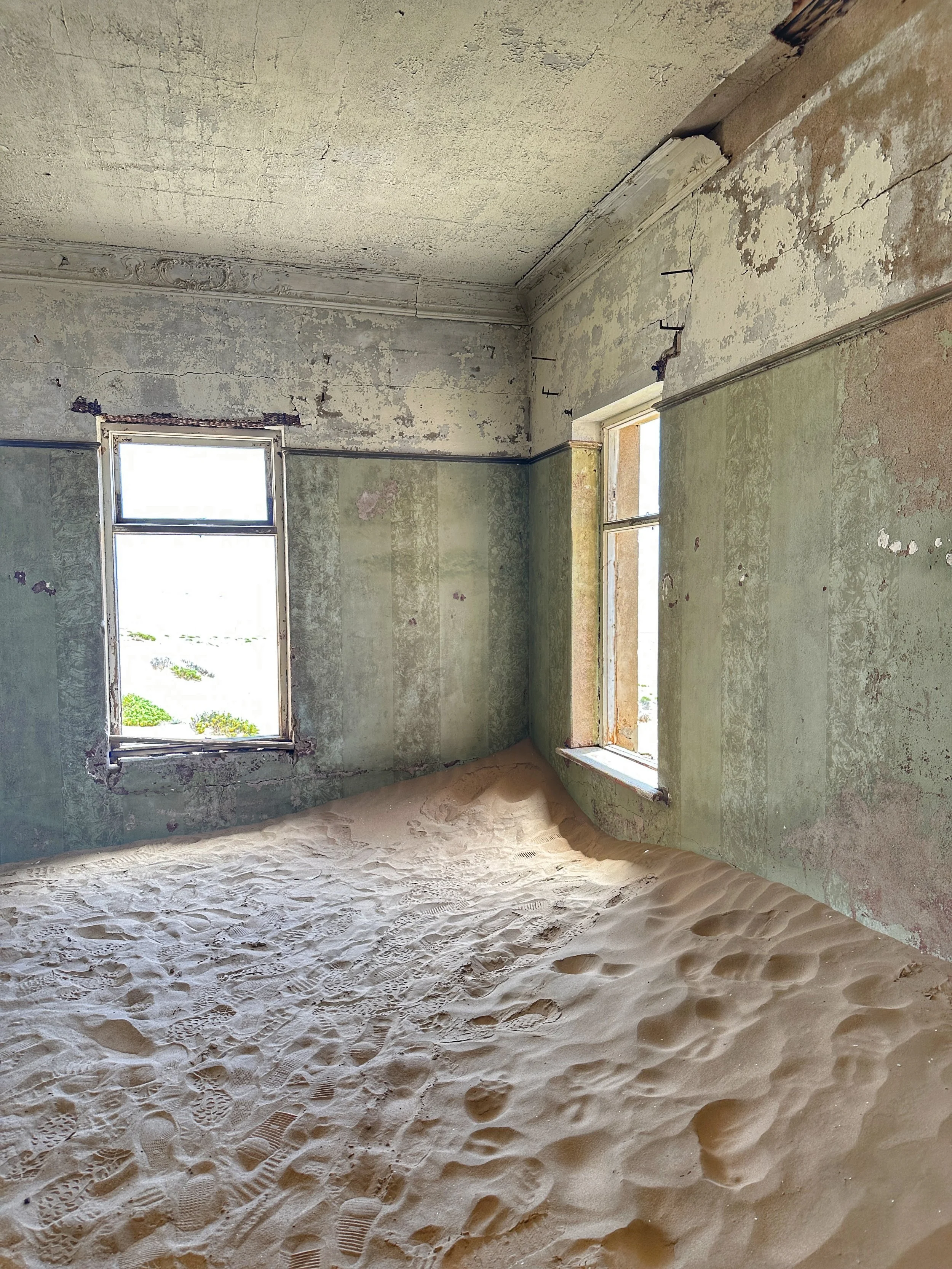
Walking into the buildings is a total mind-trip. Doors hang crooked on rusty hinges, vintage floral wallpaper is peeling from the walls in giant sheets, and massive, wind-swept sand dunes pour directly through the windows and doors. I spent an hour literally wading knee-deep through hills of fine sand inside someone's former kitchen.
Field Notes
The desert gets really cold at night, some nights we even experienced strong winds carrying sand . Be sure to dress warm for dinner
Gondwana Ainb was overrun by cicadas or locust at night. Though it was interesting to witness this, it was a challenge to get into our rooms without them flying in
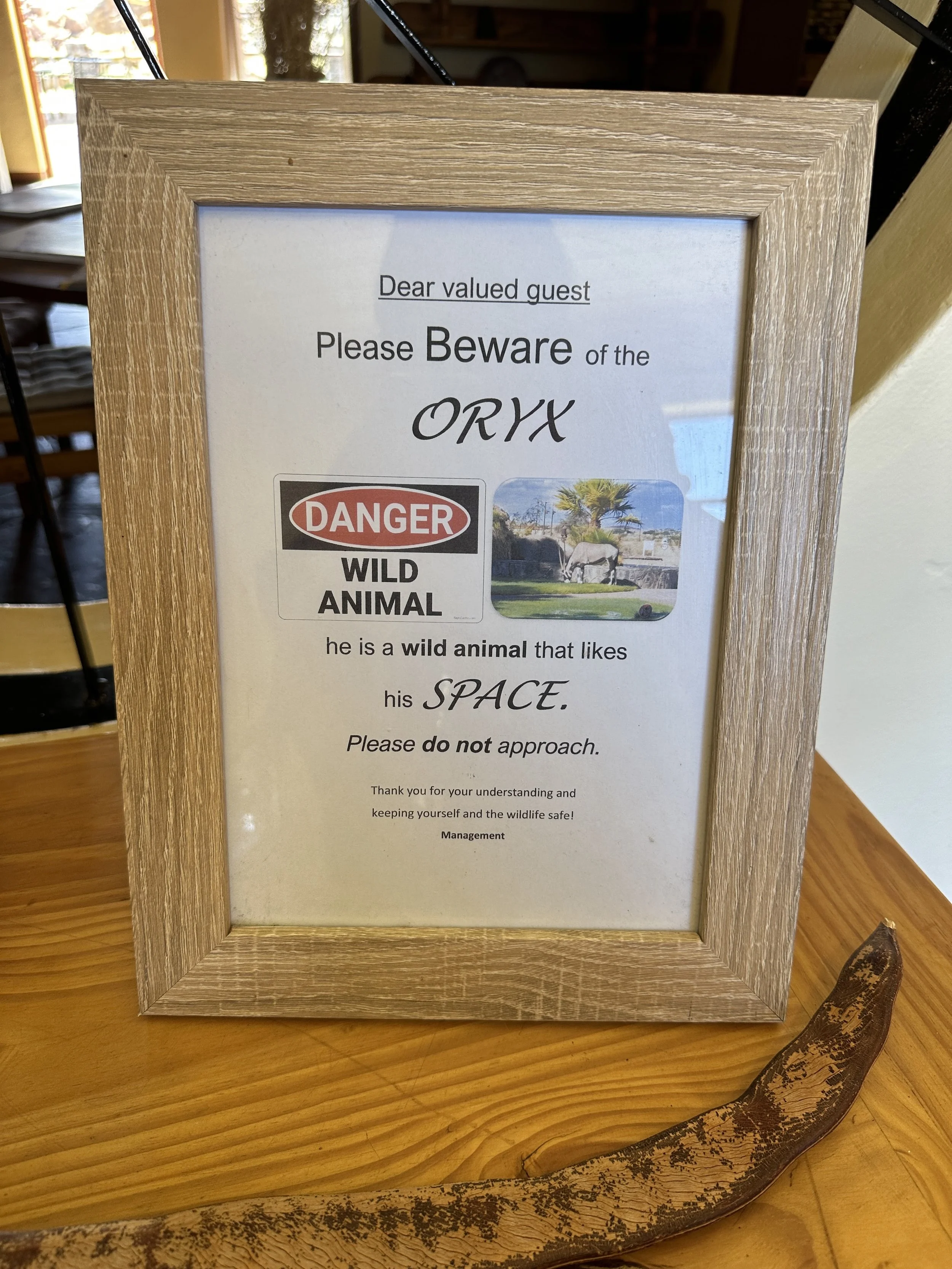
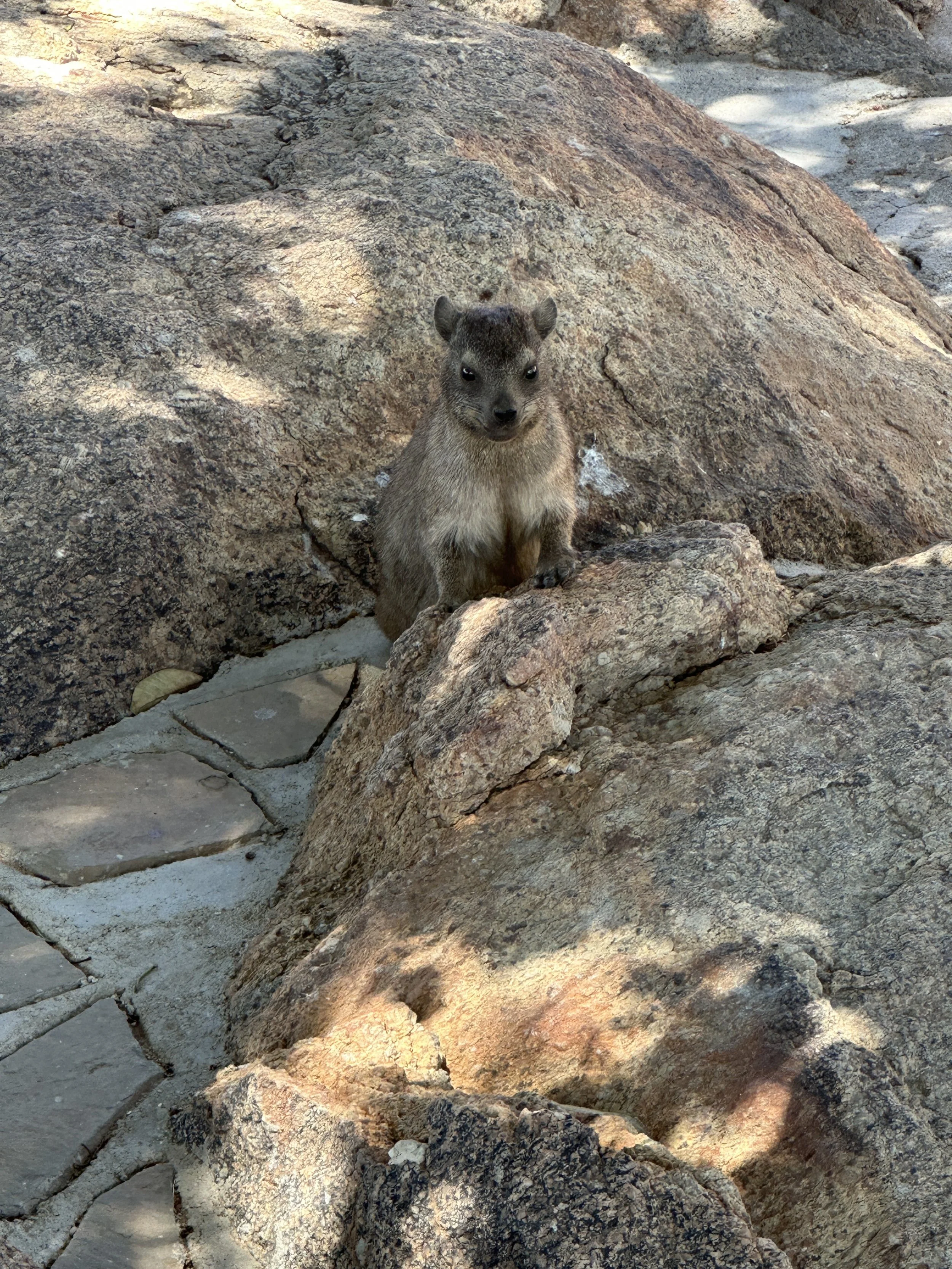
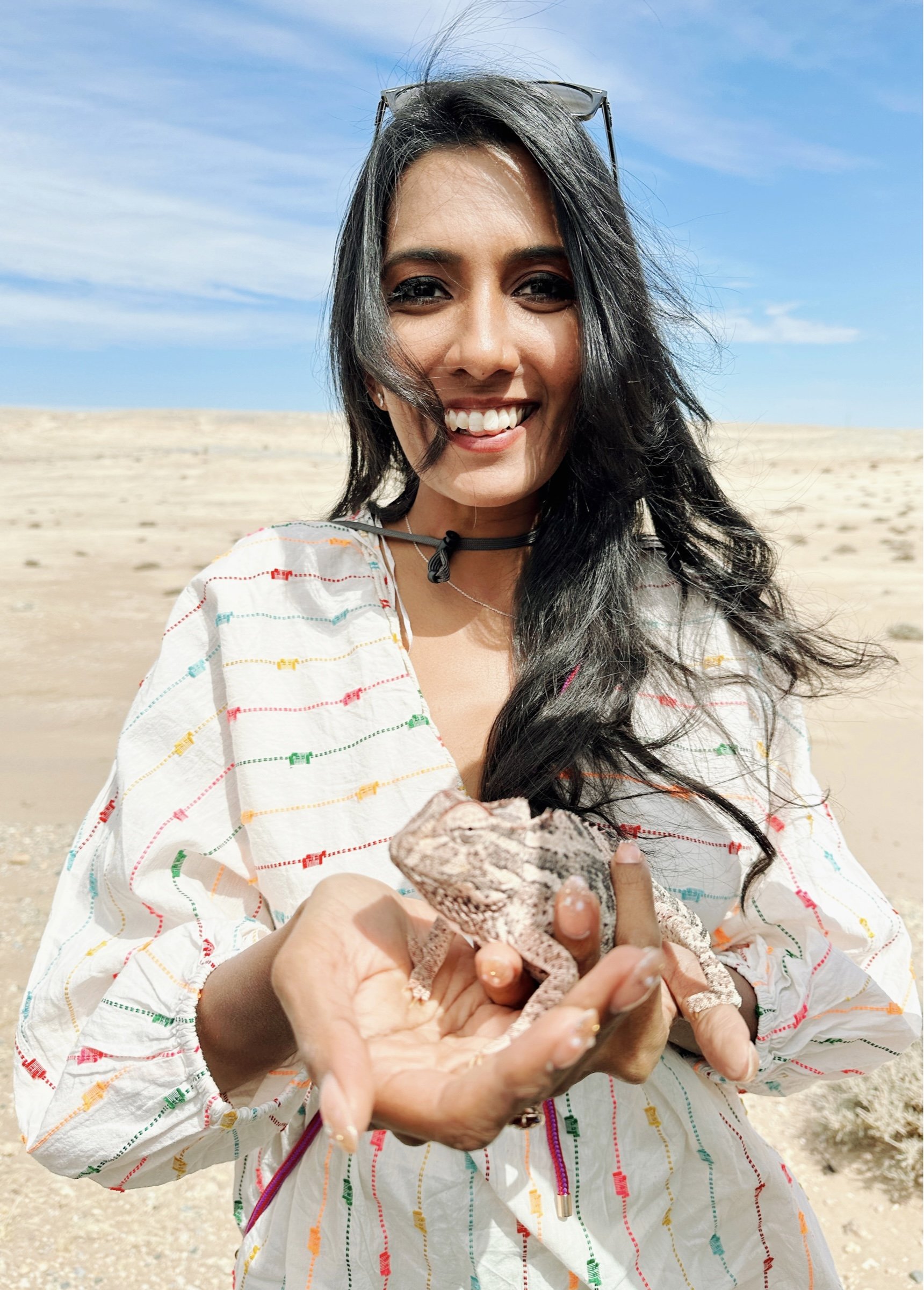
There are free range wild animals , do not go close
Game meat such as kudu, oryx and impala is offered during dinner service ( it was actually delish) together with vegetables and other ingredients from their in house garden
