Namibia: San people & Himba tribe
Nov 2023
A Morning with the San People: Lessons from the First People of the Kalahari
Some of the most meaningful travel experiences aren't found in dramatic landscapes or extraordinary wildlife encounters—they're found in the people whose stories have shaped those places for thousands of years.
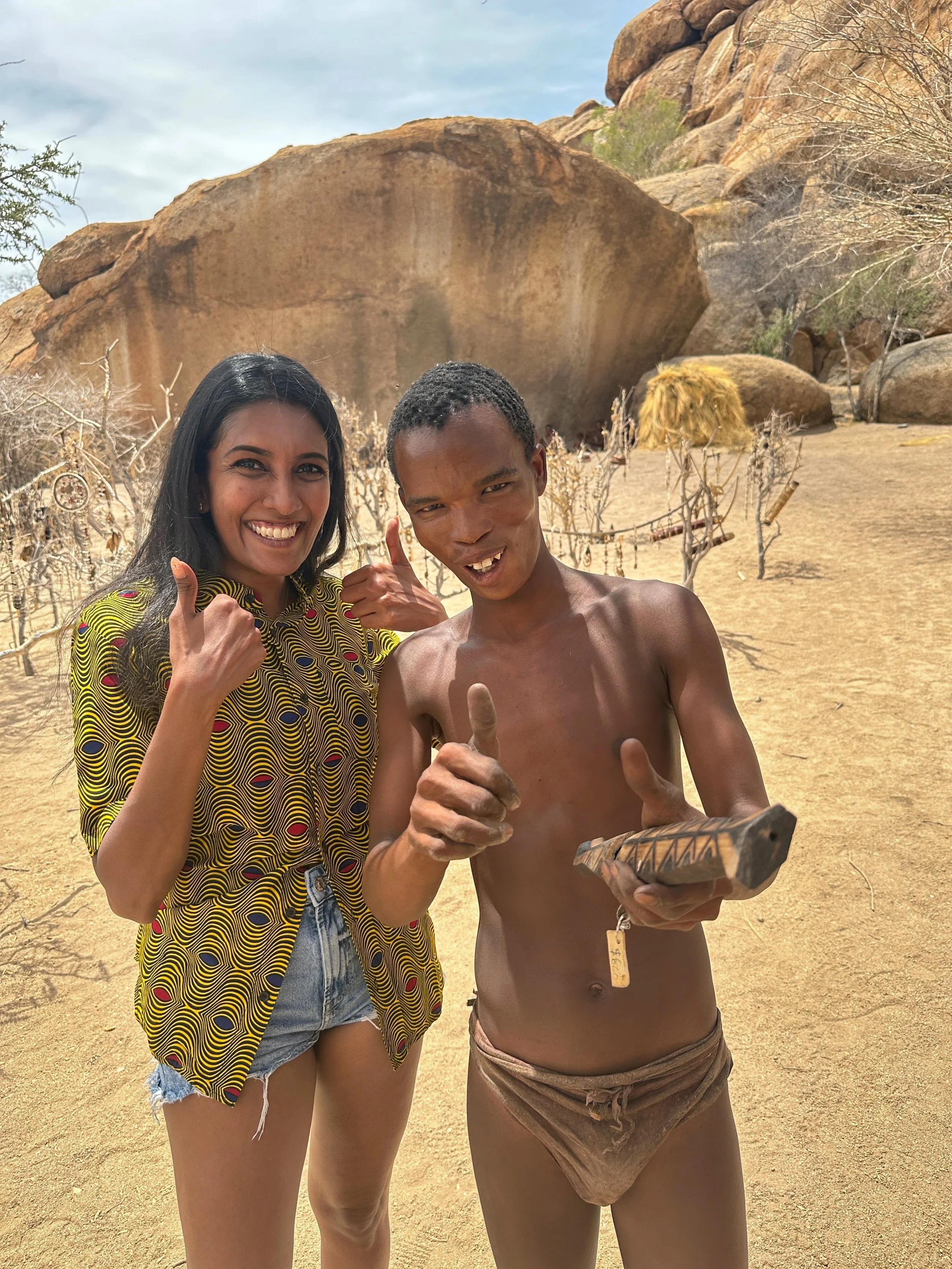
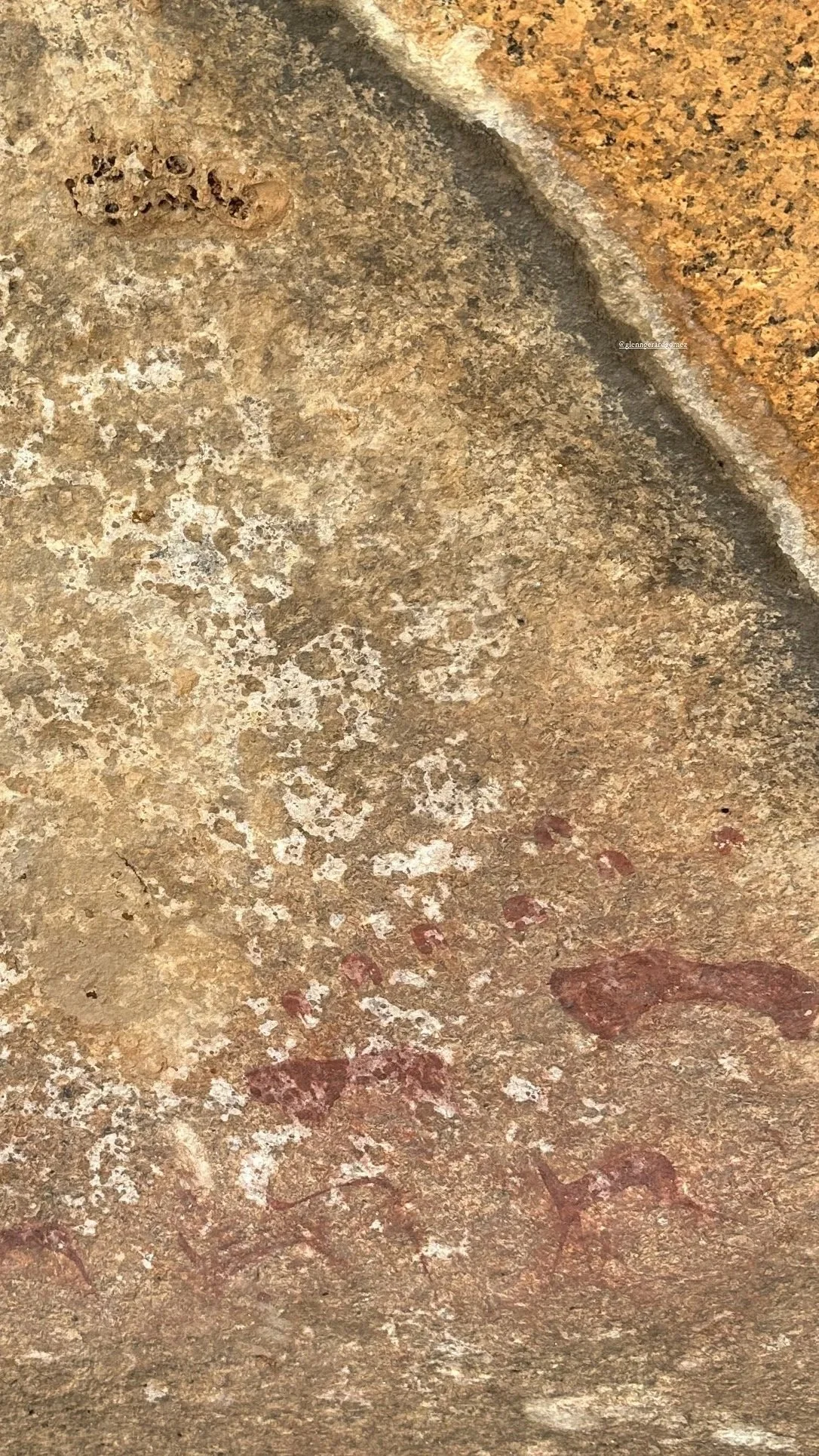
In the remote landscapes of northeastern Namibia, we had the privilege of spending a morning with the San people, one of the oldest Indigenous cultures in the world. Often referred to as the Bushmen, the San have lived in southern Africa for tens of thousands of years, surviving in some of the continent's harshest environments through an extraordinary knowledge of nature passed down from generation to generation.
Rather than simply observing from a distance, we were invited to walk alongside members of the community as they shared a glimpse into their traditional way of life. There was no stage or scripted performance—just open conversations, laughter and an opportunity to learn directly from the people who call this land home.
As we ventured into the bush, our guides demonstrated how they identify edible plants, medicinal roots and natural sources of water hidden beneath the dry earth. What appeared to us as an empty landscape was, in reality, a living pharmacy and pantry. Every tree, shrub and animal track held meaning, revealing a deep understanding of the environment that has allowed the San to thrive here for millennia.
One of the most fascinating demonstrations was learning how they make fire using nothing more than friction between two pieces of wood. With remarkable patience and skill, a tiny wisp of smoke soon transformed into glowing embers before bursting into flame—a reminder that survival often depends not on modern technology, but on knowledge and perseverance.
We also learned about the traditional hunting techniques that once sustained entire families. Using handcrafted bows and arrows, our guides explained how natural plant poisons were carefully applied to arrow tips, allowing hunters to track animals over long distances with remarkable patience and respect for nature. Rather than taking more than they needed, every hunt was guided by necessity and an intimate understanding of the delicate balance between people and wildlife.
Throughout the morning, we discovered that tracking is far more than simply following footprints. Our San guides effortlessly read the landscape, interpreting subtle signs that would have gone completely unnoticed to us. A broken blade of grass, a disturbed patch of sand or the faintest animal print revealed not only which species had passed through, but often how long ago and in which direction it had travelled. Communication in the bush was just as fascinating as the tracking itself. Rather than speaking loudly and risking alerting nearby animals, our San guides demonstrated the traditional hand gestures they use to silently communicate during a hunt. With a few simple movements, they could identify different animals from a distance—a hand stretched high above the head represented a giraffe's long neck, while two fingers held upright mimicked the elegant, straight horns of an oryx. Each gesture was instantly understood by the group, allowing hunters to coordinate quietly and efficiently.
As the experience drew to a close, members of the community performed traditional songs and dances that have been passed down through countless generations. Their rhythmic clapping, melodic chanting and storytelling reflected a culture where history is preserved not in books, but through shared memories and oral tradition. Soon, we found ourselves invited to join in, laughing together as we attempted to follow the rhythms and steps.
What stayed with us long after we left was not simply the demonstrations, but the San people's extraordinary relationship with the natural world. They see the landscape not as something to conquer, but as something to understand, respect and live alongside. In an age of constant technological and convenience-driven change, their knowledge offers a powerful reminder that true wisdom is often found in simplicity.
A Visit to a Himba Village: Preserving Tradition in Northern Namibia
Travelling through northern Namibia offered more than dramatic desert landscapes and unforgettable wildlife—it also provided the opportunity to step into one of Africa's most enduring cultures. Visiting a Himba village was a chance to learn about a way of life that has remained remarkably unchanged for generations, where traditions continue to shape daily life in an increasingly modern world.
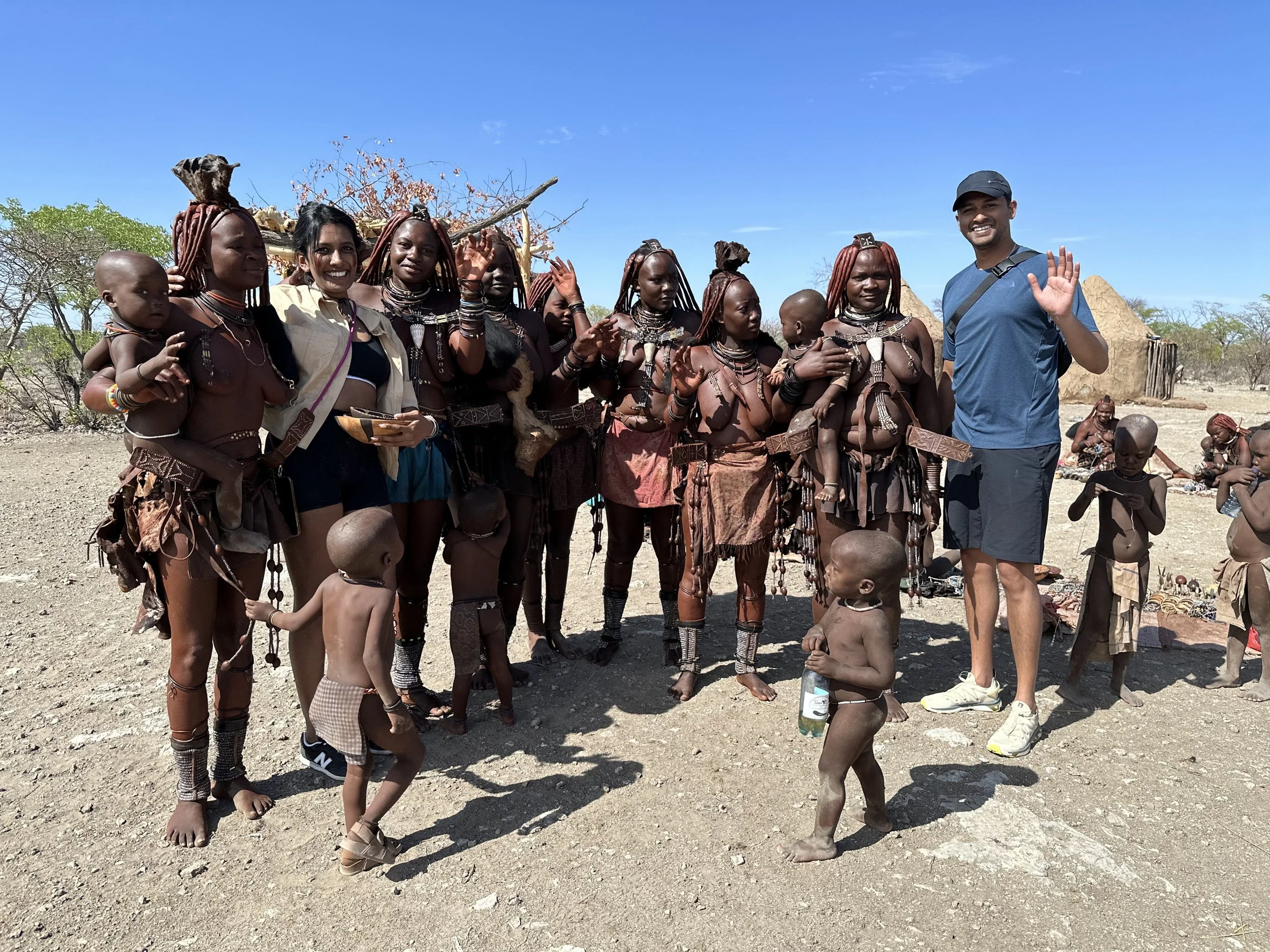
Our visit began with a warm welcome from members of the community, who generously opened their village and shared aspects of their culture with us. Rather than simply observing from afar, we were invited to ask questions, listen to their stories, and gain a deeper understanding of their customs and beliefs.
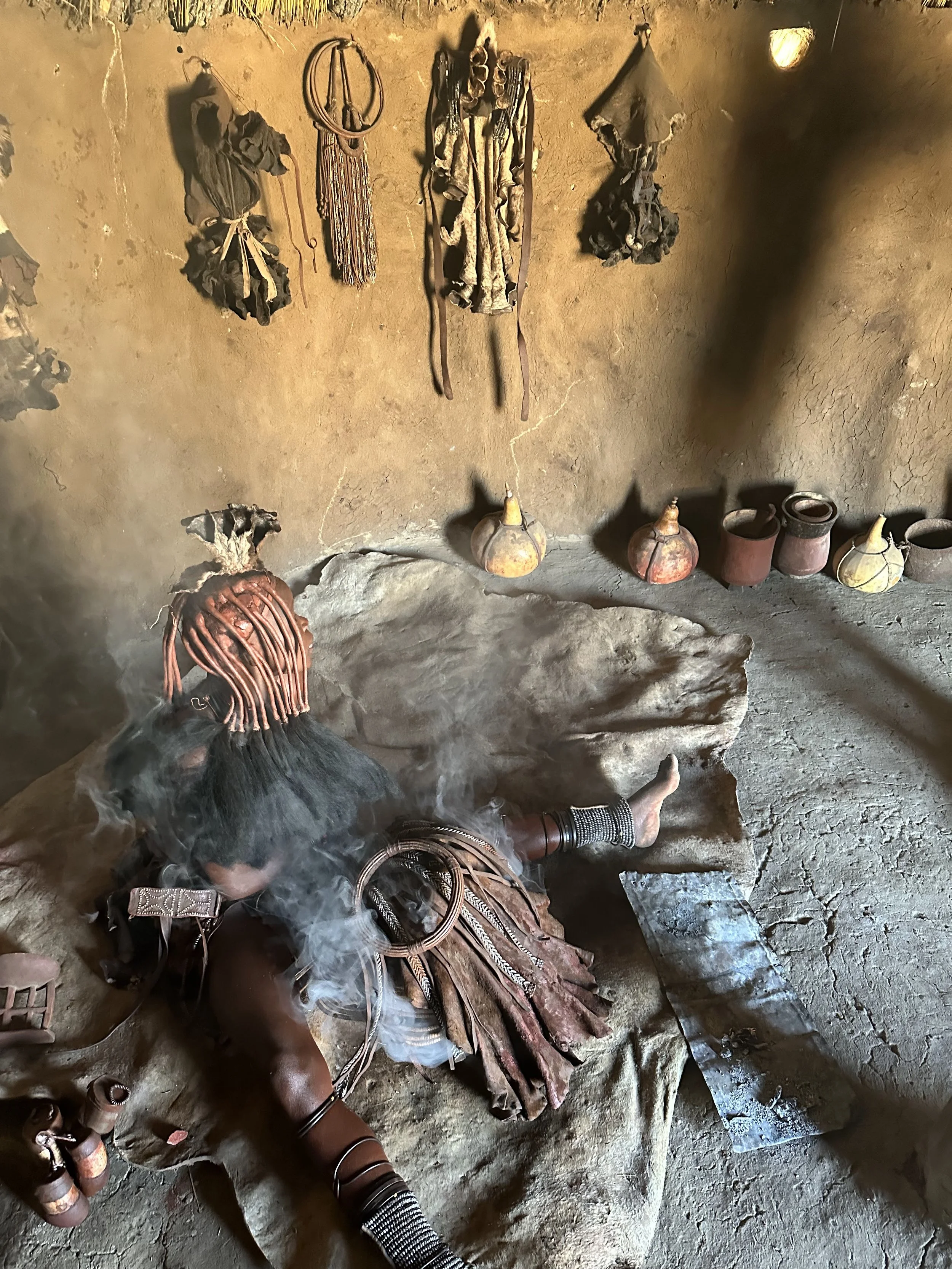
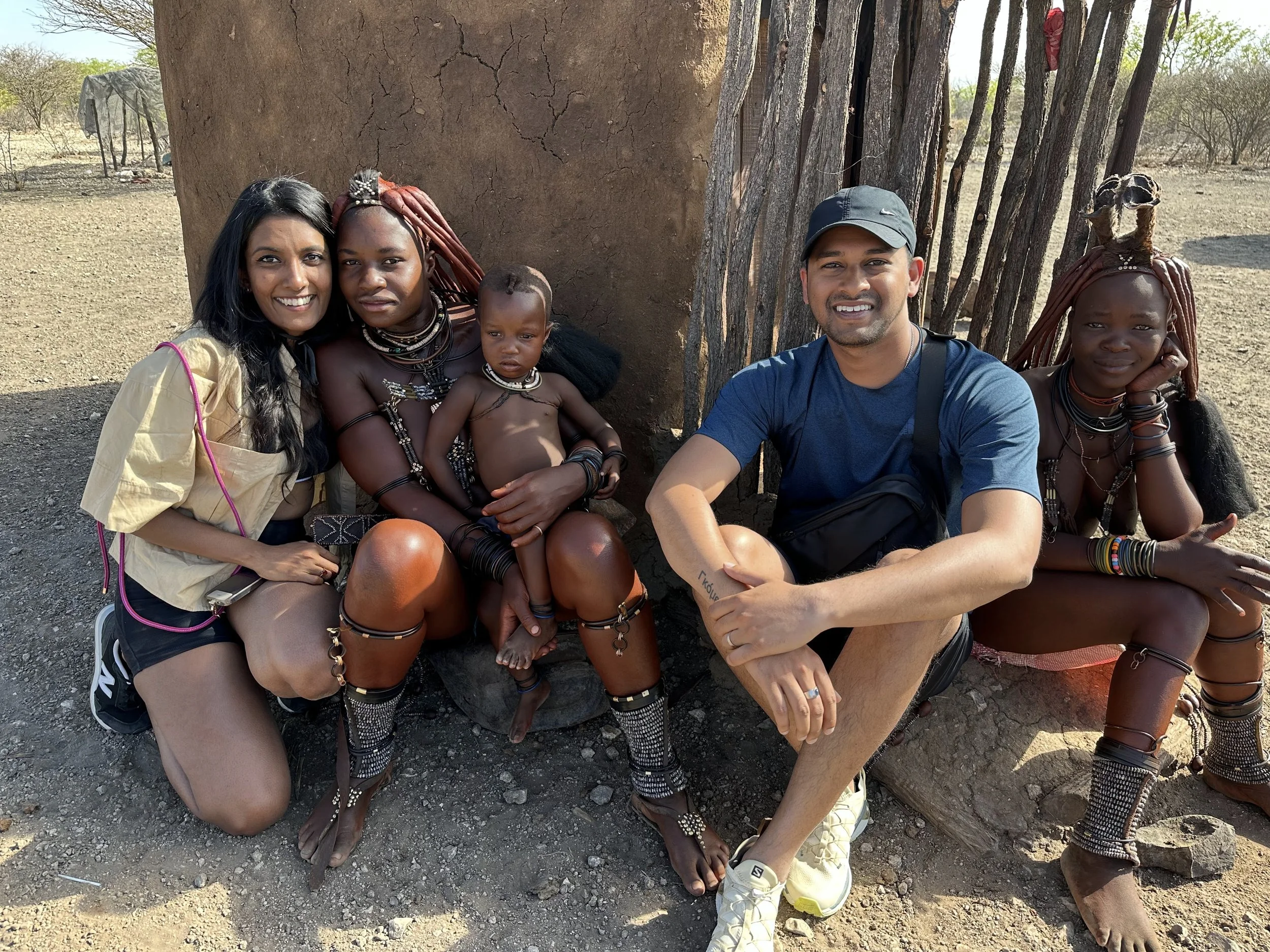
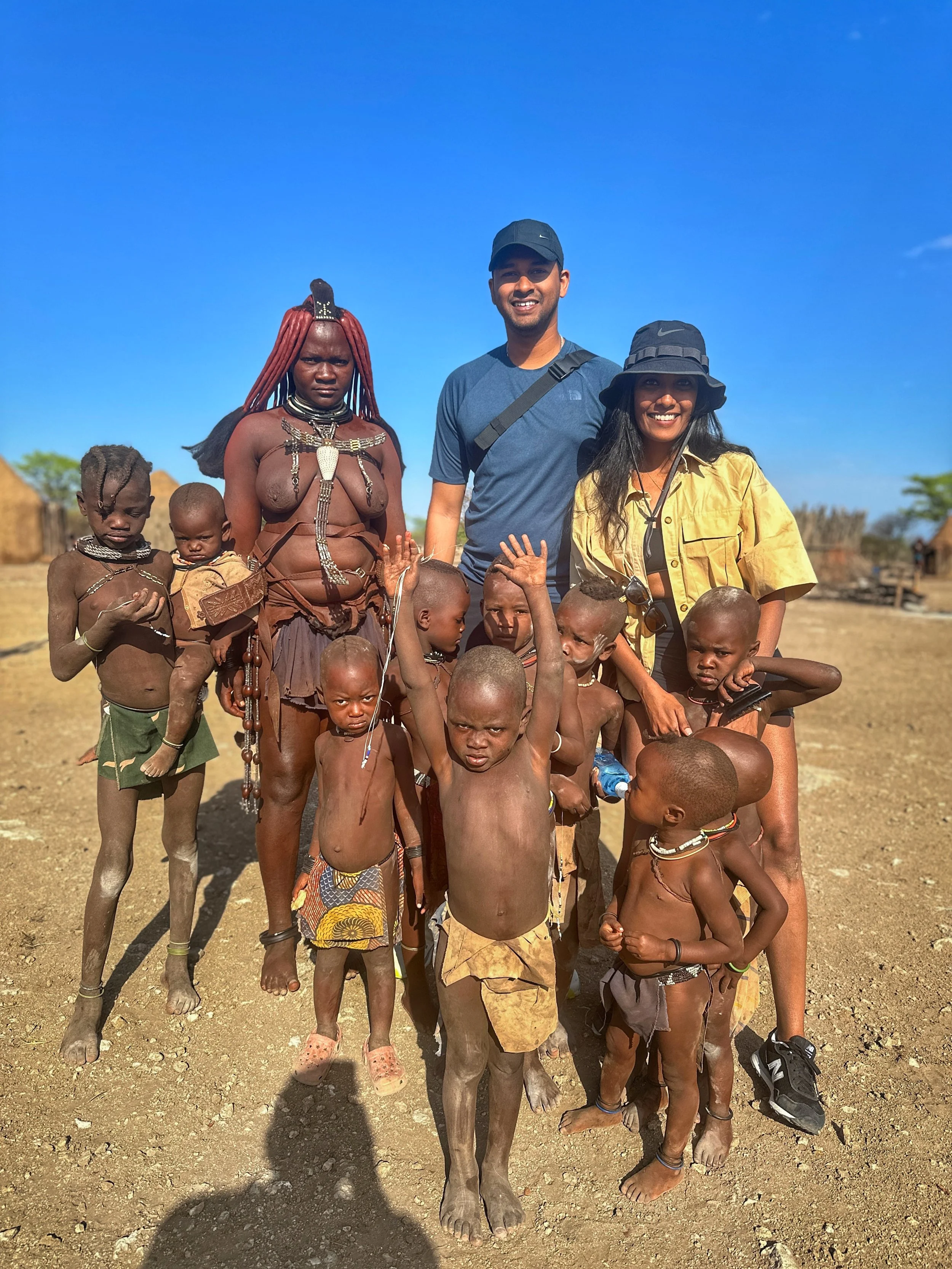
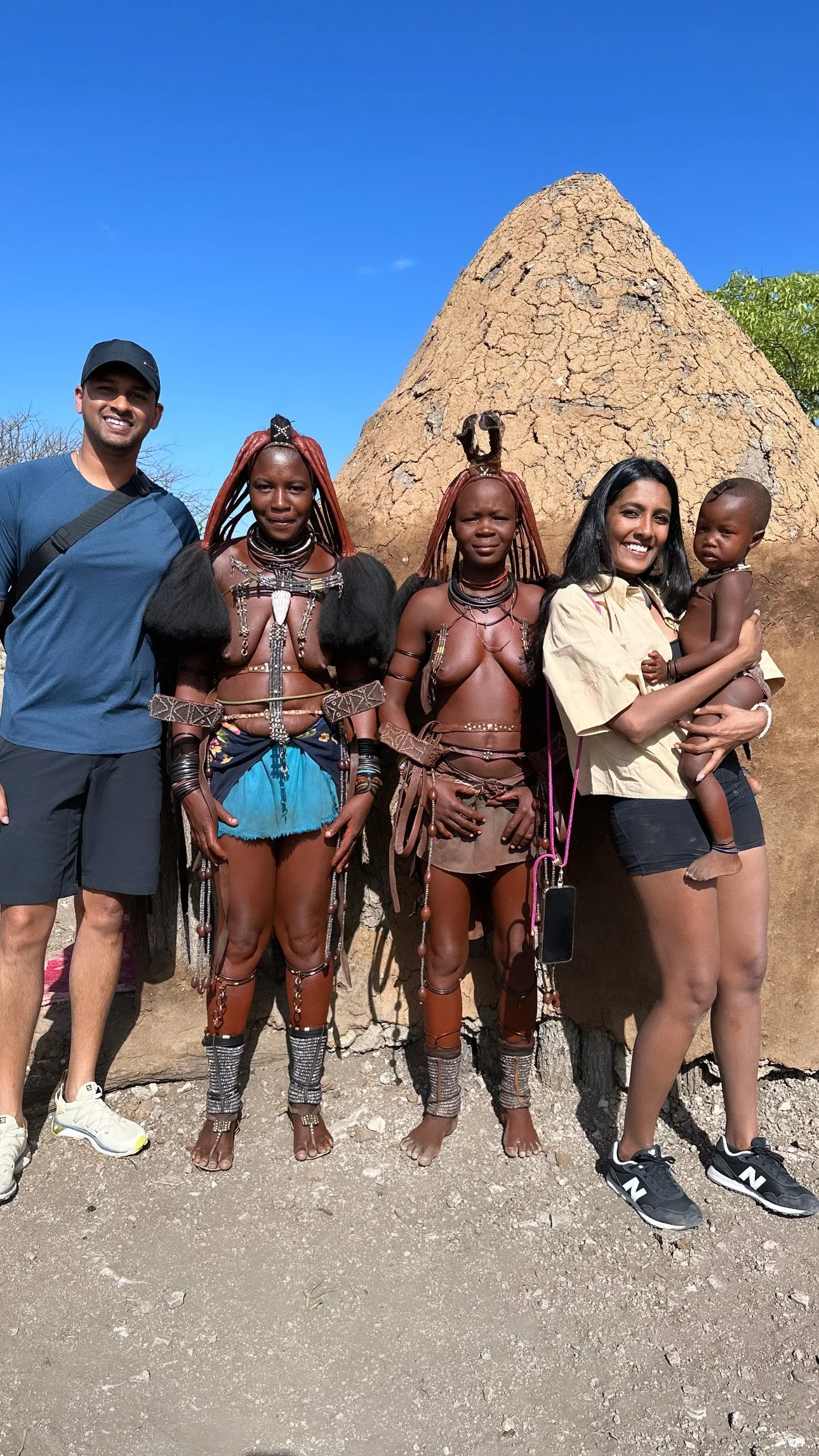
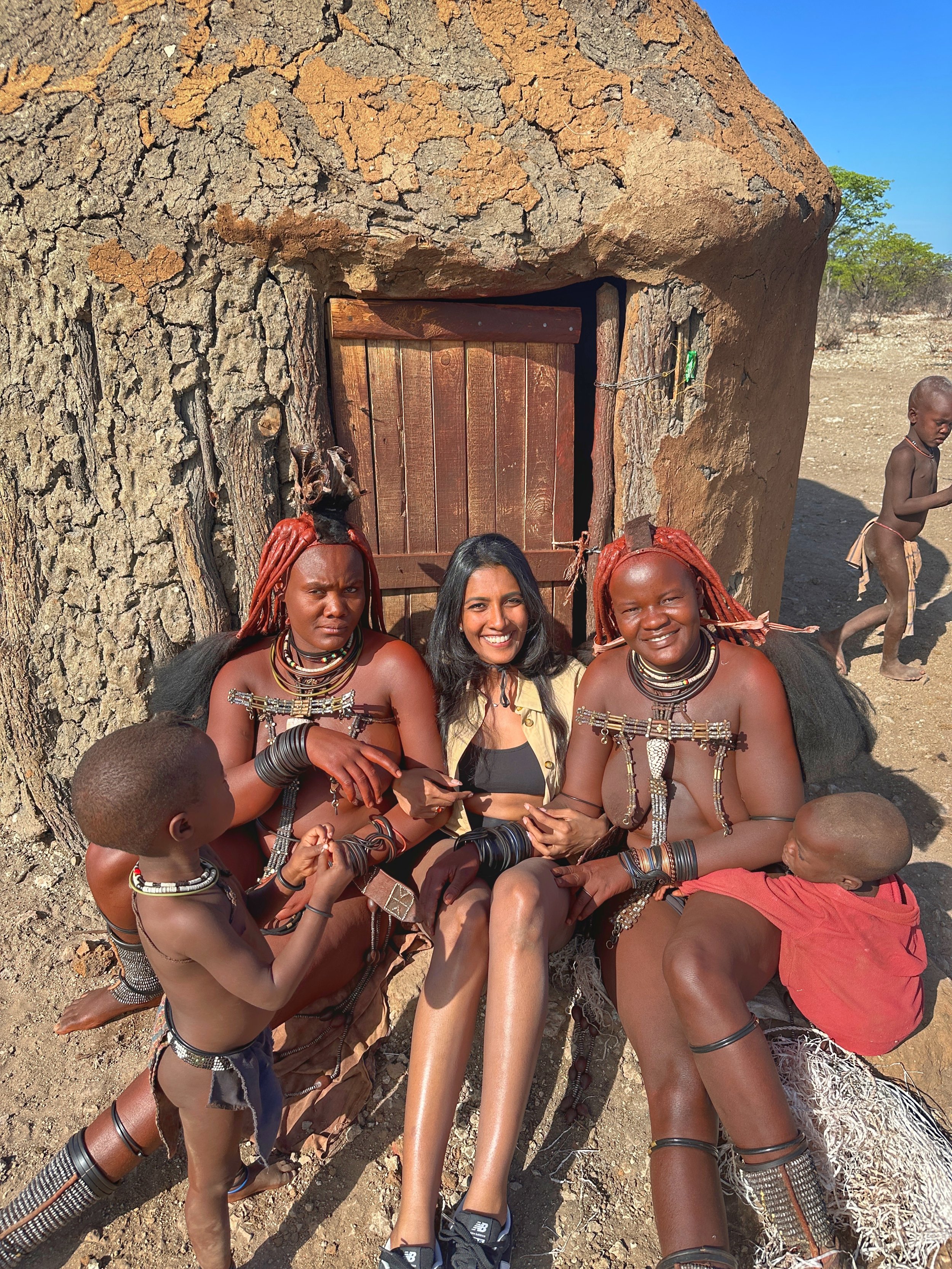
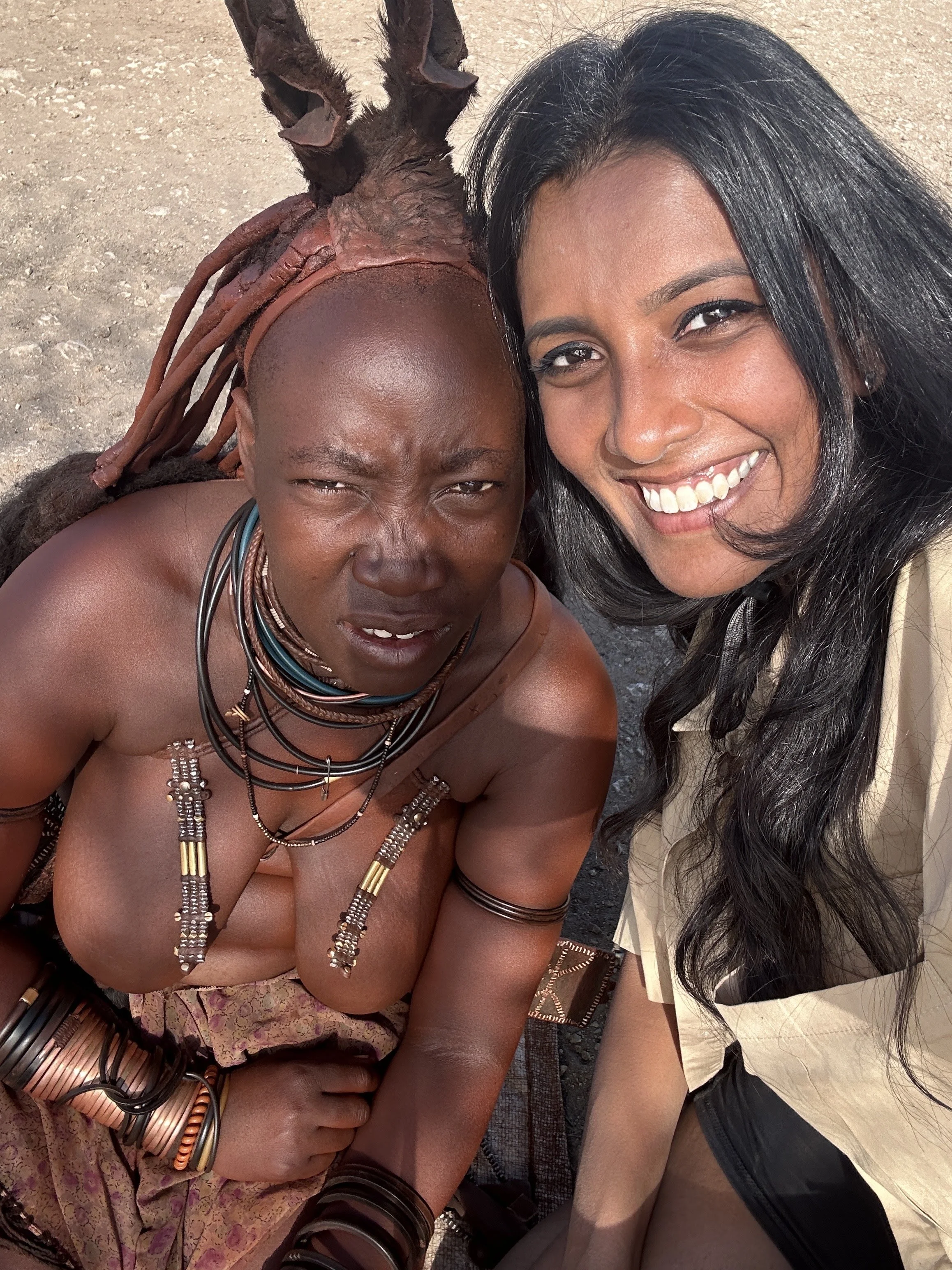
One of the first things we noticed was the distinctive appearance of the Himba women. Their skin and intricately braided hair were coated in otjize—a mixture of butterfat, red ochre and aromatic herbs. More than a cosmetic practice, the paste protects the skin from the harsh desert sun and insects while symbolising beauty, identity and cultural heritage. Against the backdrop of Namibia's dusty landscape, the rich red colour was both striking and deeply symbolic.
As we walked through the village, we learned about the meaning behind the women's hairstyles. Each style reflects a stage of life, indicating whether a girl is a child, has reached puberty, is ready for marriage, or is already married. In a culture where traditions are passed down through generations, even the smallest details carry significance.
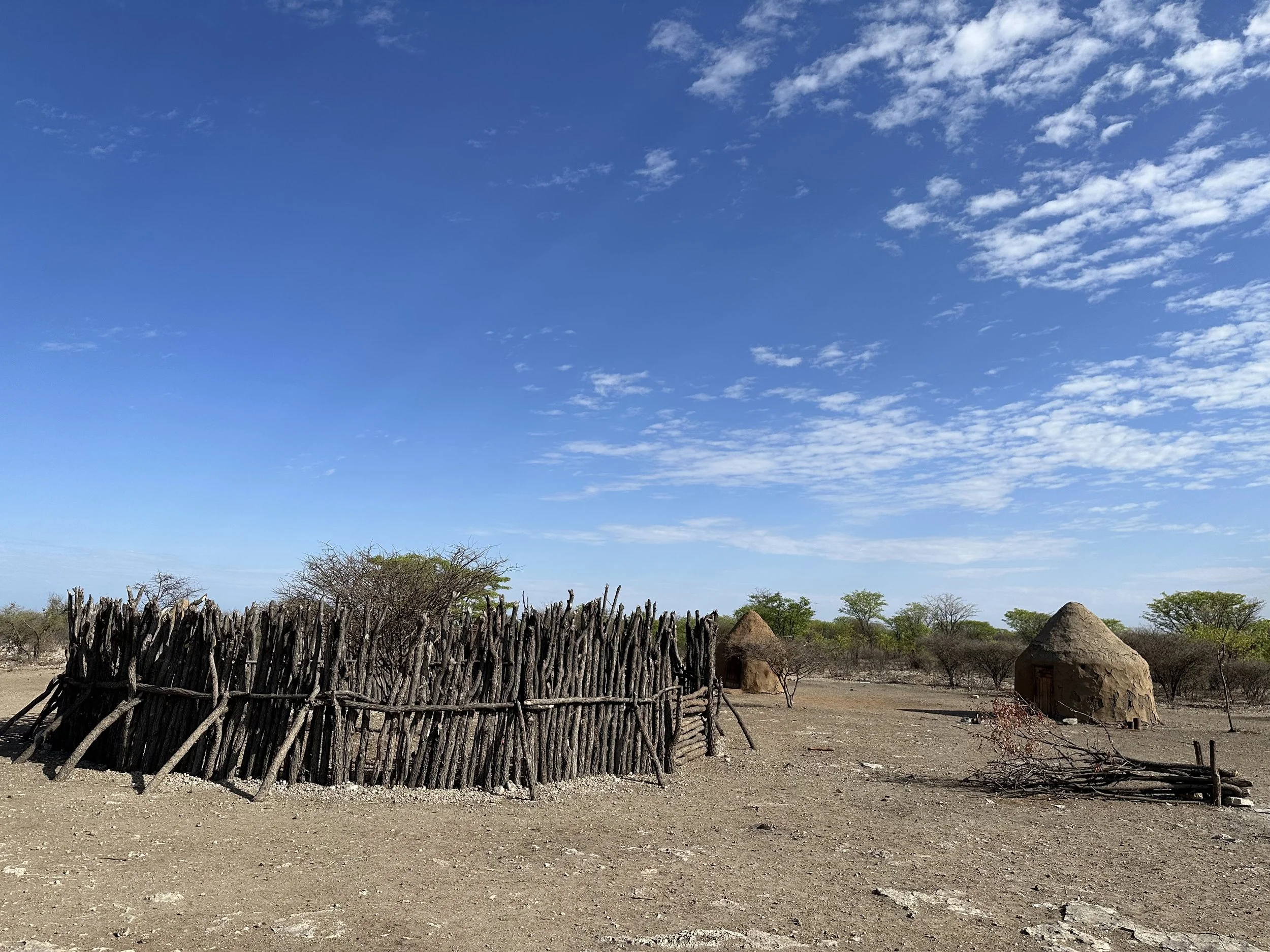
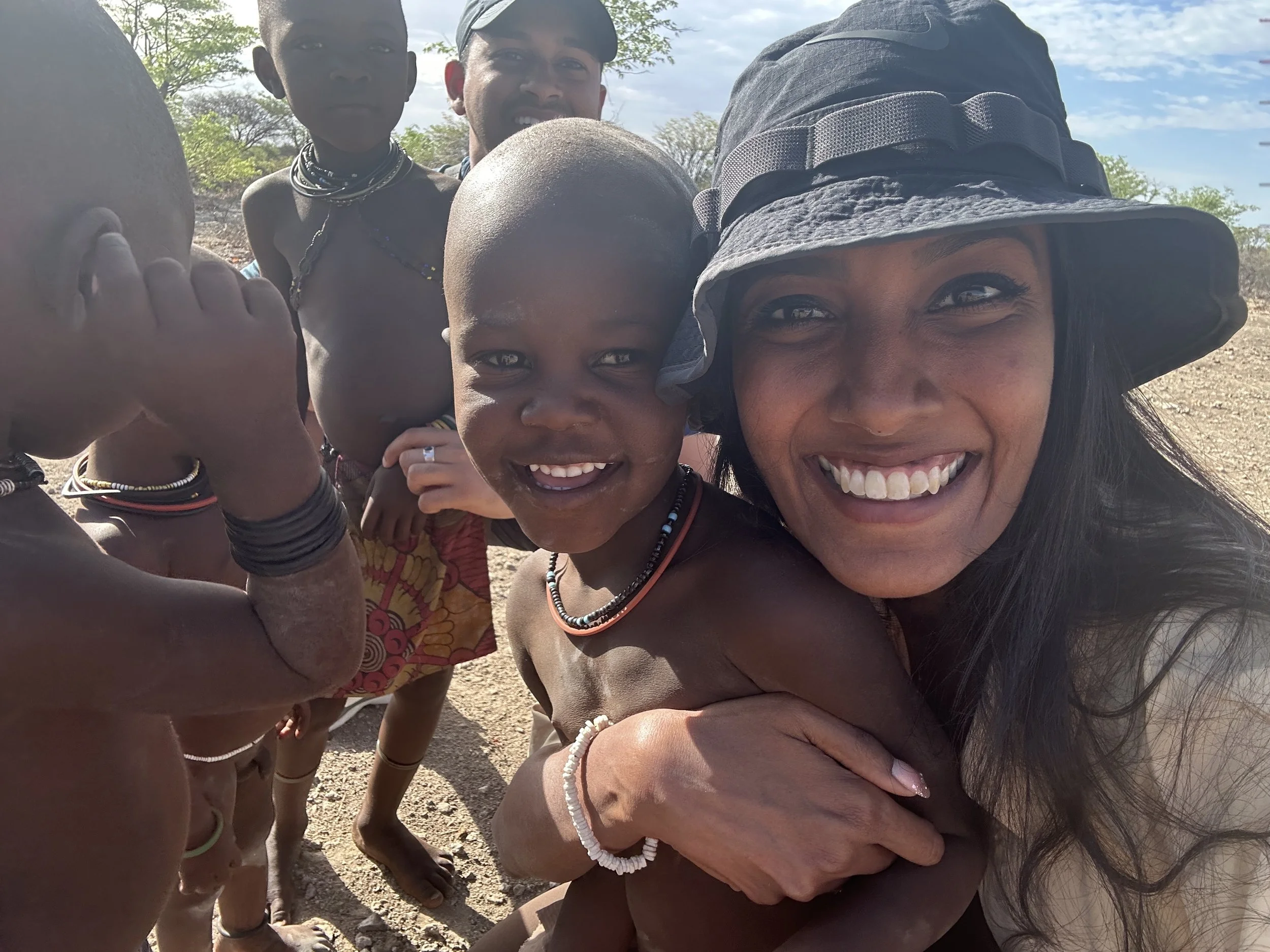
The village itself was simple yet thoughtfully designed. Circular huts built from wood, mud and dung surrounded a central gathering area where daily life unfolded. Children played freely between the homes while goats wandered nearby, and families carried out their daily routines much as their ancestors have done for centuries.
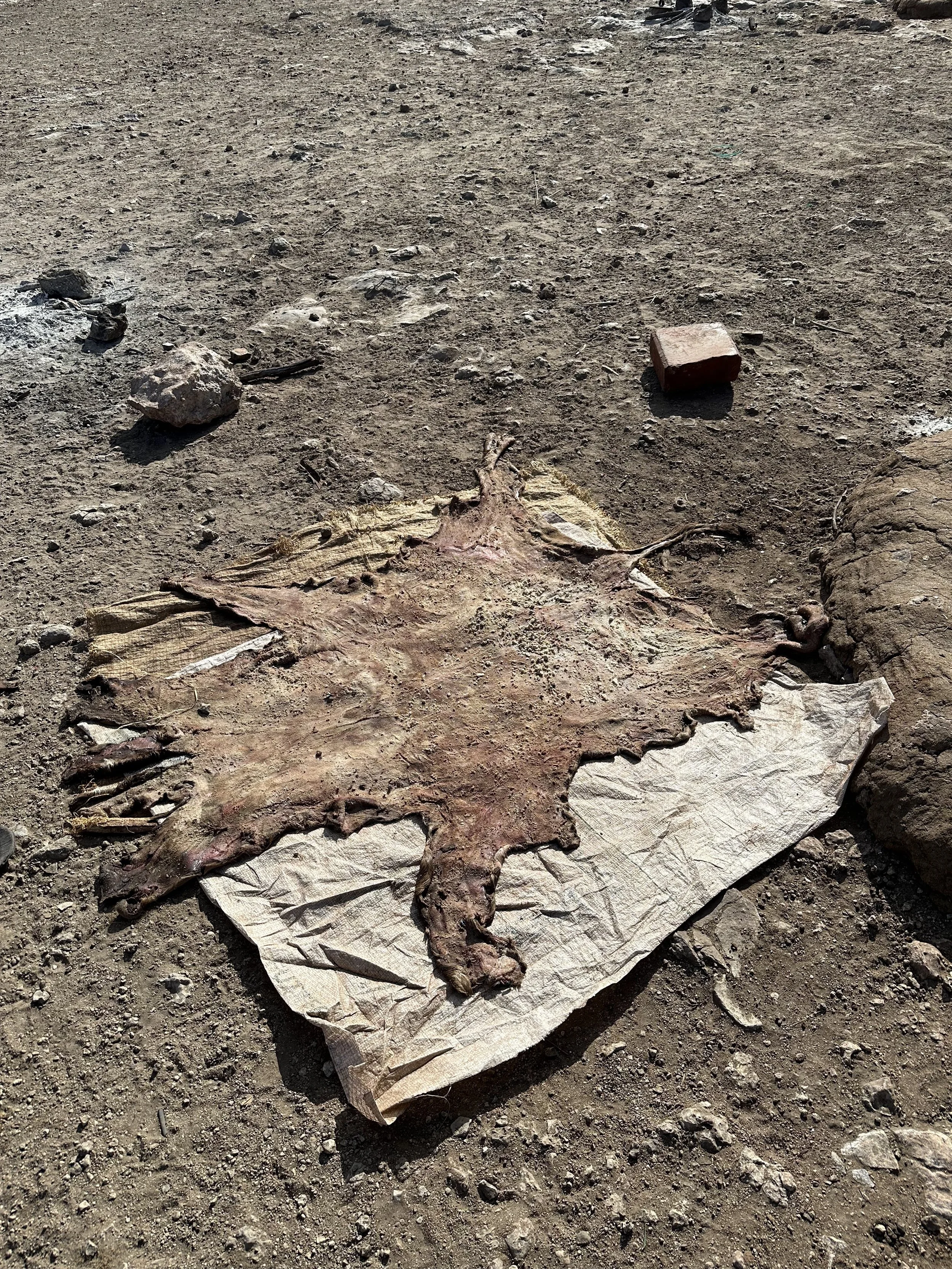
The Himba also shared how they make jewellery from iron, copper, shells and leather, with each piece reflecting personal identity, family ties or social status. Their craftsmanship was beautiful not only for its intricate detail but also for the stories each ornament carried.
The curiosity flowed both ways. While we were eager to learn about their traditions and way of life, many members of the village were equally interested in us. They smiled warmly as they observed us and some gently touched our hair and skin with genuine curiosity and one lady asked if she could marry my partner HAHA
As our visit came to an end, we left with far more than photographs. We carried with us a greater appreciation for a community that continues to preserve its traditions while navigating the challenges of the modern world. Visiting the Himba village was a reminder that meaningful travel is built on curiosity, respect and the willingness to learn from cultures different from our own.
Otjize Making
Field Notes:
Do support the local communities by purchasing handmade jewellery and other souvenirs
